Education 200 years ago and now
Vladimir Makovsky's painting "In the Village School" of 1883 depicts
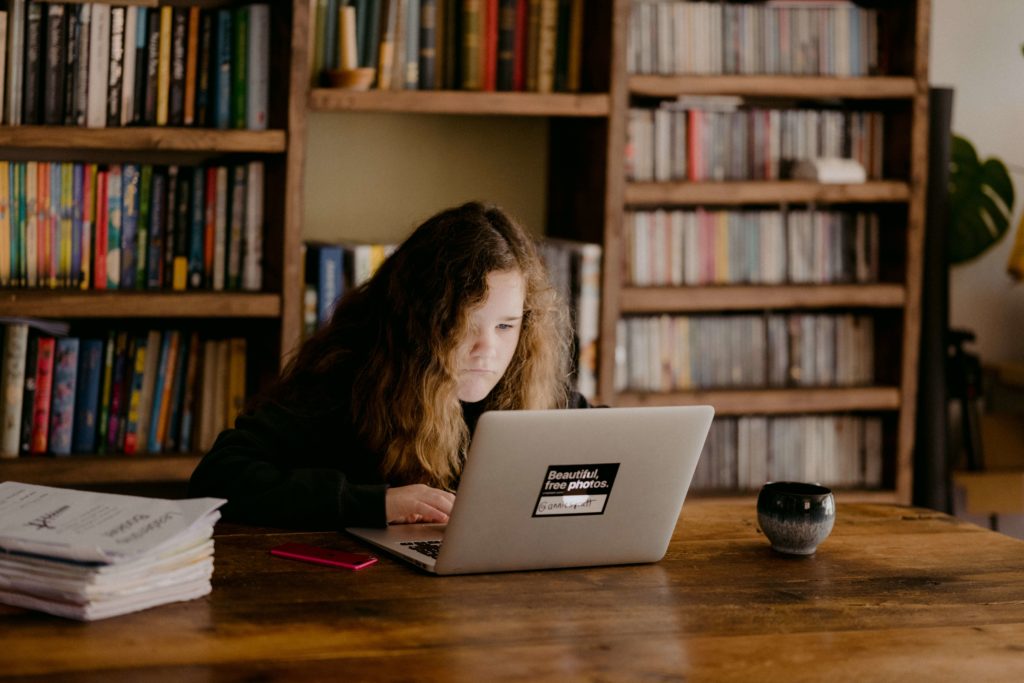
Now training formally goes the same way:the teacher is at the podium, students with tablets or laptops take notes, there is a heated discussion of issues. It turns out that the basis has not changed, but the scope and capabilities have greatly expanded.
 “Education has not changed in 200 years: a teacher at the podium, students with tablets or laptops taking notes”
How online has overtaken offline
Even a generation ago, students wrote essays andcoursework was written by hand, and materials were looked for in books. Now all these databases are stored in the cloud, and technology allows us to search for the necessary data using keywords. Finding any information has become much easier.
Online education has made it possible to study in differentcountries and languages. This is proved by the numbers: in 2021 in Russia, more was spent on online education than on full-time education (226 billion versus 214 billion rubles). For comparison, in 2019, only 19 billion rubles were spent on online education, and in two years the market has grown more than 10 times.
Moreover, in schools and universities there are more and more services and opportunities to conduct classes remotely - this was facilitated by the pandemic.
 Online education is already spending more than face-to-face education
App guides
Technology is a powerful tool thatchange not only the learning process itself, but also the roles of teacher and student. If earlier the teacher was a sage giving information, now his role is shifting, he becomes a guide. And students are taking more responsibility for learning by using technology to gather information.
New services make knowledge transfer morecreative, playful - such applications are not afraid to adapt to the fact that the concentration of students' attention has changed a long time ago. Now, when students are distracted, they are not scolded, but involved. Mobile apps sometimes come in the form of fun games that allow students to remember a fresh thought process from a different perspective. The popularity of Khan Academy, Quizlet and Google Classroom is connected with this.
All this facilitates the learning process, but also carriesdifficulties. Due to the variety of directions, it is more difficult for schoolchildren to decide on the choice of the path. To make it easier to decide on this, there are special services. For example, the Round app helps students choose a career path and gives them a chance to try different hobbies and professions. And companies can talk more about the opportunities they offer to workers and start working with future talent as early as adolescence.
The education sector in recent years has rapidlyis changing and pulling along adjacent directions - career guidance and additional education. This frightens someone, but one can only adapt to this reality: the teacher is no longer the main one, but the student must, using new technologies, also engage in self-education. At the same time, experts are preparing us for even more futuristic scenarios - VR, AR, and even knowledge that goes directly to the brain.
Read more:
Physicists have found a universal "clock" in space: they are more accurate than atomic
Archaeologists have found drawings of creepy people with huge heads: who they were
The James Webb telescope took the first picture of Jupiter: it shows 9 moving targets at once