Researchers routinely collect blood from bottlenose dolphins to assess a wide range of parameters
The researchers used samples collected inperiod from 2013 to 2018. Each animal underwent a complete physical examination, including a study of the work of the heart and lungs, ultrasound for pregnant women and a blood test. The resulting array included genetic material and tissue samples from 76 dolphins affected by the oil spill. As a control group, scientists used data from dolphins living off the coast of Florida, which were not reached by the oil spill.
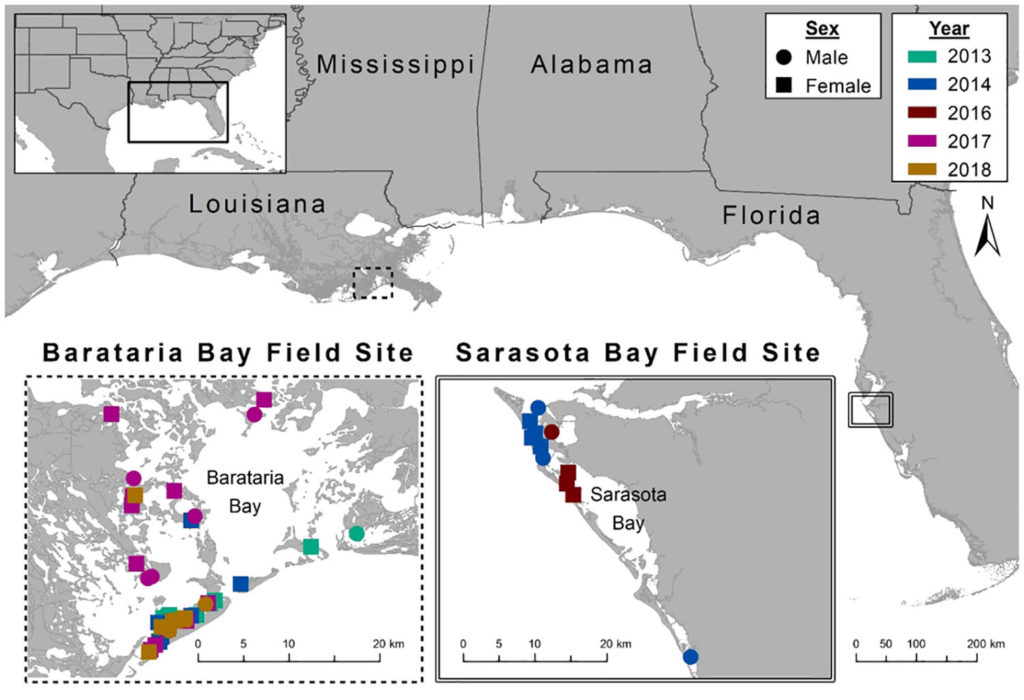 Locations where sampling was carried out. On the left is an infected group off the coast of Louisiana, on the right is a control group from Florida. Image: Jeanine S. Morey et al., PLOS ONE
In the collected samples, the researchers foundthousands of genetic mutations. For example, dolphins living in the area of the spill had an 8.3-fold increase in the expression of the PRG3 gene, a human counterpart associated with lung problems. The researchers speculate that this change likely leads to lung growth problems and shortens the lifespan of affected dolphins.
In addition, a large number of violations werefound in genes responsible for immune function. At the same time, as scientists noted, most of the mutations occur in 2013 (the earliest measurements), but there are also later ones. This means that the Gulf of Mexico is still recovering from the accident.
Deepwater Horizon crash on April 202010 was the largest sea spill in history. About 800 million liters of crude oil leaked into the sea after an explosion on an oil platform in the Gulf of Mexico. After the spill, the corpses of thousands of sea creatures were found off the coast.
Read more:
The largest migration in the history of the Earth will affect all living organisms on the planet
Astrophotographers have collected a detailed photo of the Moon from 200 thousand images
Nearly half of cancer cases linked to preventable risk factors