Paleontologists have found the remains of bony fish, bizarre "crocodile-like" amphibian bones, and 11
Ichthyosaurs are an extinct group of marine reptilesremains of which are found all over the world. These animals dominated the aquatic environment at the same time as dinosaurs after the great (Permian) extinction. It is believed that these land animals adapted to life on the high seas and occupied a niche vacated after the extinction of the traditional marine inhabitants of that time.
The vertebrae of ancient ichthyosaurs found on Svalbard in rocks that representcalcareous deposits deposited around decomposing remains on an ancient seafloor about 250 million years oldThis means that these reptiles were already common about 2 million years later.after the Permian extinction.
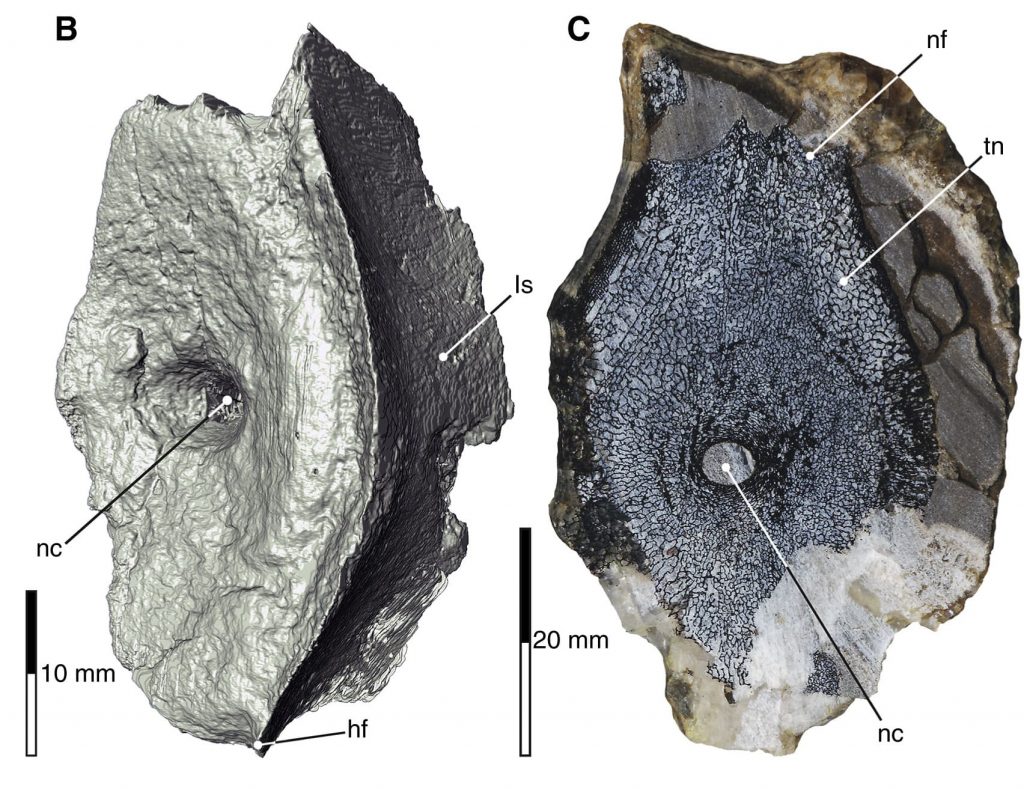 CT scan (left) and longitudinal section (right) of one of the found vertebrae. Image: Benjamin P. Kear et al., Current Biology
At the same time, the vertebrae found do not correspond to the ideas about the ancient "predecessors of ichthyosaurs".They are identical to the bones of geologically much more recent reptiles with larger bodies.What's more, the internal microstructure of the bones reflects adaptive signs of rapid growth, increased metabolism, and an all-oceanic lifestyle.
New data refute traditionalideas about the development of ichthyosaurs: these animals, apparently, switched to a marine lifestyle even before the start of the great extinction. The idea that terrestrial reptiles, after the extinction of marine predators, invaded shallow coastal areas and adapted to the aquatic environment does not find support. Probably the first marine tetrapods appeared before the disaster, but survived the mass extinction, and not just occupied a free niche.
Read more:
2,700-year-old temple found in Sudan He surprised scientists
Biochemists have identified the most likely substance that "launched" life on Earth
Named a vitamin that protects the brain from dementia
On the cover: artistic illustration of marine life in the early Triassic period. Image: Esther van Hulsen