Researchers from Fudan University in Shanghai have developed an implantable self-charging battery for
Tumor cells usually have a low leveloxygen, a condition known as hypoxia. To treat cancer, various groups of researchers have developed drug delivery systems that target areas of low oxygen. But this approach has shown only limited success due to inadequate or uneven levels of hypoxia in solid tumors.
The battery, developed by scientists, consists ofbiocompatible polyimide and zinc electrodes that sustainably consume oxygen during the discharge and self-charge cycle of the battery. The operation of the device modulates the level of hypoxia in the tumor microenvironment.
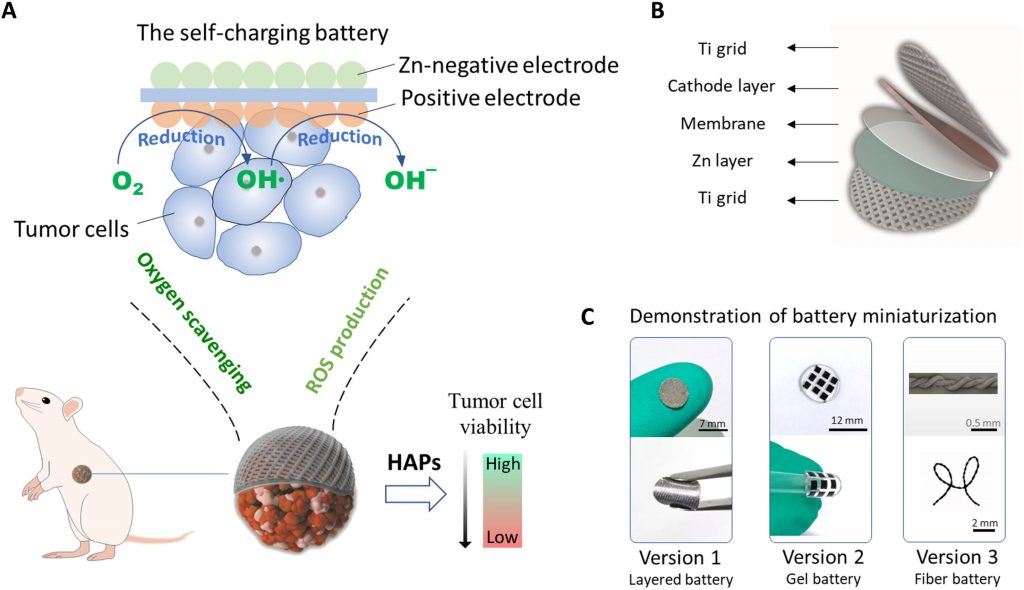 An implantable device that reduces the level of oxygen in the tumor environment: principle of operation (A), device (B) and design options (C). Image: Jianhang Huang et al., Science Advances
Sustained oxygen consumption causesintratumoral hypoxic conditions for 14 days, which helps hypoxia-activated drugs kill tumor cells. In a study in mice, the scientists showed that the combined use of a battery and anticancer drugs achieved over 90% effectiveness. At the same time, in 80% of mice, tumors were completely destroyed as a result of treatment.
Traditionally for the treatment of cancerdiseases are treated with surgery, radiation or chemotherapy. These treatments can leave some of the cancer cells behind, causing the disease to recur and cause severe side effects. Targeted therapy does not affect the functioning of healthy cells, and therefore is easier to tolerate.
The authors of the study note that mice inThere were no serious side effects from the therapy during the study. But clinical trials will be required to confirm the efficacy and safety of the new cancer treatment in humans.
Read more:
For the first time, a fish living at a depth of more than 8,300 m was filmed
Scientists have figured out the nature of strange radio signals from a planet similar to Earth
The study showed that tyrannosaurs were different from their "cine" appearance