Paleontologists from the University of Wisconsin at Madison have discovered the unusual remains of a reptile that lived in
Remains of the fossil reptile Beesiiwo cooowuse -one of the species of rhychnosaurs - were found in the mountains of Wyoming in the USA. The researchers were able to collect the fossilized parts of 5 rhynchosaurs in exposed rock parts of the ancient formation, at least three of them belong to a previously undescribed species. Among the identified fragments belonging to Beesiiwo cooowuse were the upper and lower jaws.
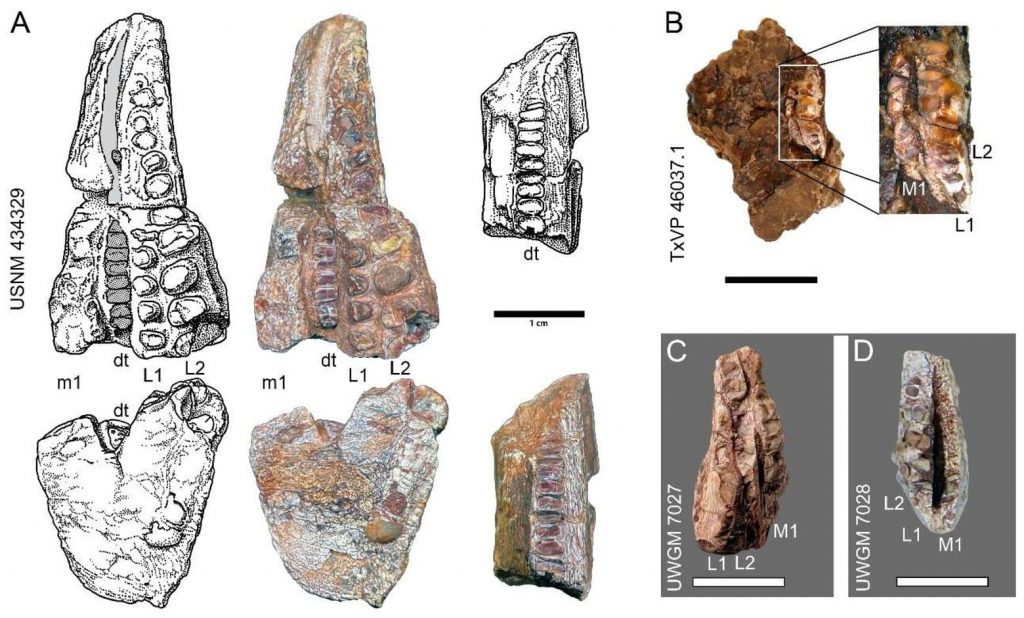 Fragments of the jaw of Beesiiwo cooowuse. Image: Adam J. Fitch et al., Diversity
After carefully examining the fragments withOn CT scans, paleontologists found that this squat reptile had a parrot-like beak. Interestingly, unlike the giant creatures that inhabited the planet at the end of the Triassic period, Beesiiwo cooowuse was not a large animal. Analysis of the found fossil remains indicates that the adult weighed from 5 to 7 kg and reached a length of about 60 cm.
Based on the analysis of fossilized pollen andof plant remains found in the same formation, paleontologists came to the conclusion that in the habitat of these animals there were conifers, ferns and horsetails. Beesiiwo cooowuse may have used its beak-shaped mouth to cut or trim leaves, scientists say. But exact data on the nutrition of these animals is not yet available, they add.
Researchers believe that between 250 and 227 millionyears ago, the herbivorous reptile Beesiiwo cooowuse was common in what is now Wyoming. The new species was named in the language of the local Indians: it means “large lizard from the Alcove region,” located in central Wyoming.
Read more:
There was a photo inside the second deepest underwater sinkhole in the world
See what happened to Mercury when it got as close as possible to the Sun
Scientists are ready to recognize the new tree as the oldest in the world
On the cover: artistic illustration of Beesiiwo cooowuse. Image: Gabriel Ugueto, University of Wisconsin–Madison