During the pandemic, Russian medicine made a leap into digital. For example, in Moscow United
This process began even before the pandemic.Its vectors are outlined in the roadmaps of the National Technology Initiative (NTI) HealthNet and NeuroNet. Platforms based on artificial intelligence will help doctors make diagnoses, patients can get an alternative opinion, and developers can create new medical services using tools using AI. Among them are CoBrain-Analytics, Botkin.AI, Celsus, as well as the developments of NTI competency centers. In the future, new solutions may be created through the launch of a technology competition.
Identify depression by MRI
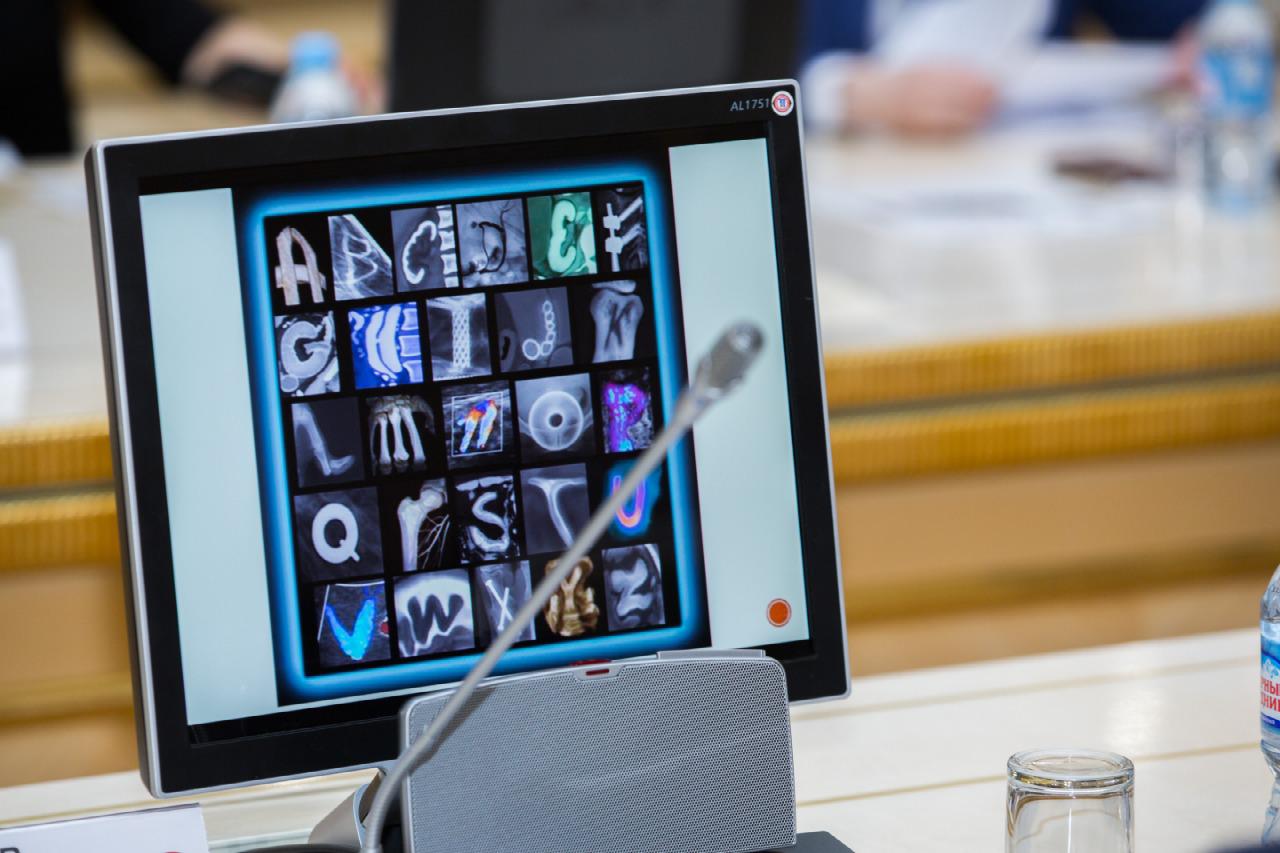
CoBrain-Analytics is a platform that withusing AI, it helps doctors save time and improve the quality of diagnostics, and developers create new services based on AI for medicine. It was developed by Skoltech as part of the NTI Neuronet roadmap.
There are three main products on the platform:
- CoLab is a collaborative workspace fordevelopment and certification of medical AI. With its help, teams, startups and other companies can create new technologies, conduct research, seek solutions to scientific or commercial problems.
- 2nd opinion - application library and knowledge basefor doctors and patients who will receive here personal recommendations and an alternative opinion on their diagnosis by uploading their own data - for example, a photo of a skin rash or an x-ray.
- MedEducation is an educational part for doctors, where lectures and specialized courses are available for doctors.
AI on the platform now detects lung diseases from X-rays and fluorographic images, and can also detect depression based on MRI results. The list of its capabilities is growing.
 Skoltech Communications
Moscow centers are registered on the platformthem. Burdenko, Vishnevsky, Ryzhikh, Kulakova, Solovyova, Pirogova, Scientific Center of Neurology, as well as developers of medical systems based on AI (Care Mentor AI, PhthisisBioMed, Third Opinion), development teams and startups (Z-union, EyeMoove, BioDigital, Biogenom, Kleiber bionis, Sensorylab, MDink, Unim).
In December 2020, Sberbank and Skoltech announceda deal to create an ecosystem for the development of AI in Russia. The library of applications and data sets, which was formed on the basis of the developments of Sber and the CoBrain-Analytica project, is currently one of the largest in Russia.
As of December last year, AI-based medical solutions created by SberMedII and Skoltech were used in 16 regions of the country.
Draw the attention of a doctor
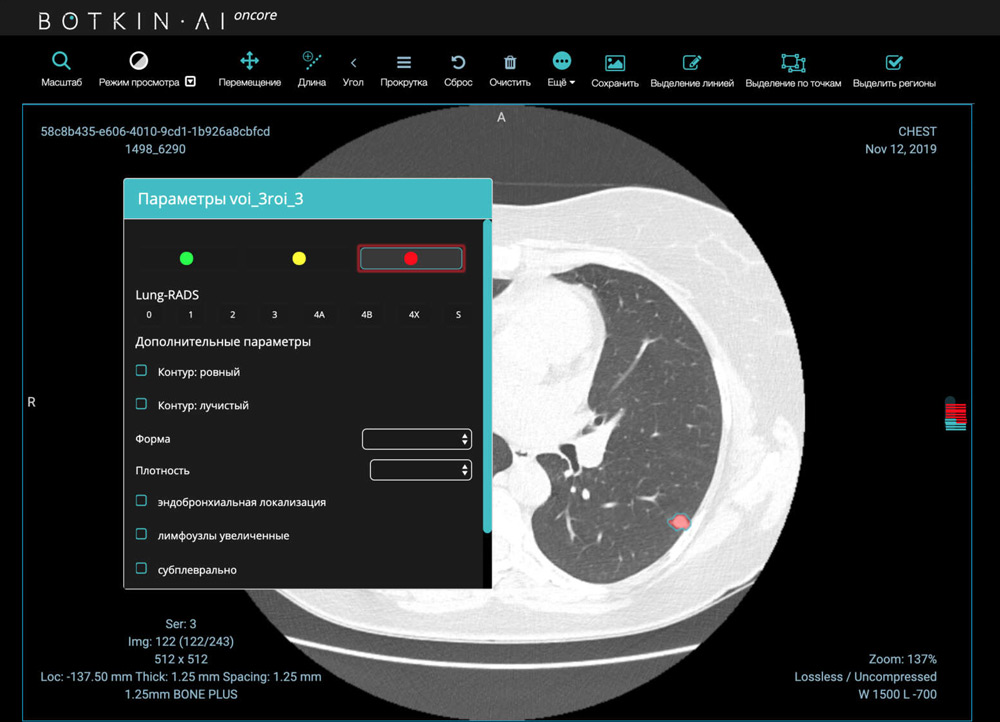
Botkin.AI is a platform that uses AI to analyze medical images: CT, MRI, mammography and X-rays. It helps doctors: reduces the burden on them and at the same time reduces the chance of making a mistake that can cost the patient his life.
The algorithm finds pathologies in medical imagesand marks those areas to which the doctor needs to pay extra attention. The doctor checks them by confirming or refuting the results of the AI analysis - this is how the system learns. In March 2020, developers added pneumonia analysis functionality to the platform, which helped clinics identify patients with coronavirus.
The platform is used in Russia and in pilotprojects abroad. This is the first (and so far the only) platform registered in the country as a "medical device with AI technology of risk class 2b": it can be used in the diagnosis of dangerous diseases, including cancer. The project received the CE Mark certificate, which is necessary for entering the market of European and other countries, and in the plans - a certificate from the American FDA (US Food and Drug Administration - "High-tech").
Botkin developers.AI is named as the project's advantages: high accuracy of image analysis and the presence of a ready-made cloud platform that can be deployed in clinics. The platform has already been integrated with the Unified Radiological Information System of Moscow: 46 medical organizations were connected to the service as of August 2020.
The platform includes:
- models for the analysis of medical images;
- tools for visualizing the results of pathology analysis;
- research markup tools;
- customizable workflows for AI tools and doctors to work together.
 Botkin.AI
Efficiency can be investigated on the platformmedicines. In November 2020, Petrovax, together with Intellodzhik, began testing the effect of Longidaza among patients who had undergone COVID-19. This is one of the first projects in the world where artificial intelligence helps to determine the degree of lung damage - including over time in patients who have undergone coronavirus.
According to CrunchBase, the project has already raised a total of $ 3.8 million. In December 2020, 160 million rubles were invested in Intellogic, the developer of Botkin.AI.
Work with government agencies
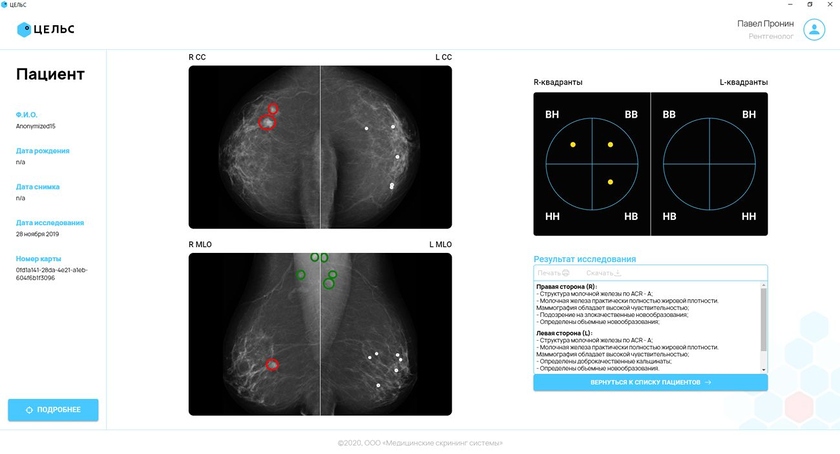
Platform "Celsus" (project of the company "Medicalsystem screening ”-“ Hi-tech ”) helps radiologists and oncologists make medical decisions. With the help of AI, it recognizes benign or malignant changes on medical images, indicates their location and interprets the results according to international standards.
This is the first program based on AI technologies included in the Register of Domestic Software, which gives it the right to work with government agencies.
During the experiment of the DepartmentHealthcare of Moscow on the use of computer vision, the system processed 50 thousand mammography images and 290 thousand fluorography in Moscow polyclinics. As of September 2020, pilot and commercial launches of the platform were implemented in 13 regions of Russia.
 LLC "Medical Screening Systems"
The accuracy of image analysis is 95% for mammography and 93% for fluorography.
In December 2020, the Venture Fund of the Nationaltechnological initiative invested 180 million rubles in the project. The company plans to obtain certification in Russia and abroad and enter the markets of Southeast Asia, the Middle East, Africa and Europe.
Detect tuberculosis
Corporations and industries needsolve applied problems, and scientific organizations - to commercialize their developments. For the connection between science and business, a network of NTI Competence Centers was created. Each of these centers is a consortium that includes technology companies, Russian universities, research organizations, and foreign partners.
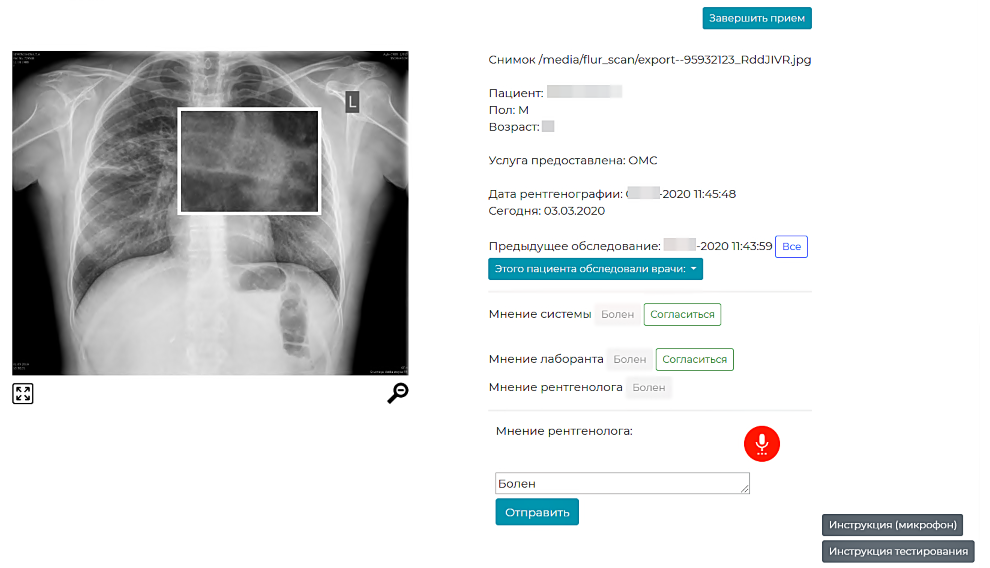
Among the developments of the NTI Competence Center forthe direction "Artificial Intelligence", organized on the basis of Phystech (MIPT), there is a system for supporting medical decisions in the field of fluorography, mammography, cardiography using search engines and deep machine learning technologies. At the moment, an experimental sample of the system has been created.
According to the test results, the accuracy of the analysis is:
- electrocardiographic module - 83%;
- fluorographic module - 86%;
- mammological module - 81%.
The customers of the platform can be both private medical and research organizations, and federal and local educational and medical institutions.
 Fragment of the WSSP interface. Photo: MIPT
NTI Competence Center for Technologystorage and analysis of big data "on the basis of the Moscow State University named after M.V. Lomonosov has developed a cloud service "AntiKoh". The service, which analyzes medical images using AI, is published in the cloud, so doctors of all levels in Russia and abroad have access to it.
The development of the Competence Center diagnosestuberculosis on CT with 93% accuracy and is constantly learning thanks to the use of machine learning. She analyzes the fluorography in 0.8 seconds, after which it gives recommendations with a classification according to the variants of the disease.
The system is also used to detect symptomsCOVID-19. The team created a pilot version of the AntiCorona cloud service. The service is trained to recognize the disease on X-rays and fluorography. These types of examinations are cheaper and more accessible than CT: usually tomographs are in large clinics, and the number of CT specialists is significantly limited.
To train the system, we used markedX-ray images obtained from US clinics and focused on the treatment of patients with coronavirus. The developers received positive predictions about the reliability of COVID-19 diagnostics based on fluorographic images, this is relevant, because almost all medical institutions in Russia are equipped with digital fluorographs.
At the Moscow reference center for radiation diagnosticson the basis of the Diagnostic and Telemedicine Center of the Moscow City Health Department and in 53 regions of Russia, AntiCorona is used to diagnose COVID-19, and AntiKokh is used to diagnose tuberculosis. Thanks to the solution, more than 250,000 medical images have been processed in the Moscow reference center alone.
“The proportion of successfully analyzedstudies exceeds 99% with the following main indicators: sensitivity - 94.0%, specificity - 66.0%, accuracy - 80.0%, area under the characteristic curve - 90.0%, which exceeds the best world indicators of similar systems ", - said Mikhail Natenzon, head of the project "Cloud technologies for processing and interpreting medical diagnostic images based on the use of big data analysis tools" of the NTI Competence Center on Big Data Storage and Analysis Technologies at Moscow State University.
The press service of ANO "NTI Platform" noted that the projects "AntiKorona" and "AntiKoh" attracted 14 million rubles of investments.
Other developments from Russia
There are a number of other projects in Russia related to the use of artificial intelligence in medicine. Several platforms are part of the Helsnet National Technology Initiative Infrastructure Center.
Webiomed platform analyzes anonymized medical data,to predict the possible development of diseases and their complications at the personal and population level. In April 2020, Webiomed became the first AI development in Russia registered by Roszdravnadzor as a medical device.
The system analyzes various medical datapatient, identifies risk factors and suspicions of diseases, forms on their basis forecasts containing a comprehensive assessment of the likelihood of developing various diseases and the patient's death from them. Webiomed uses machine learning, NLP-technologies (Natural Language Processing), predictive modeling.
The project will help leaders in the fieldhealthcare and physicians reduce morbidity and mortality through predictive analytics. The platform from the K-Sky company is used in more than 70 medical organizations in Russia.
Self-health screening systemBiogenom is available in the Play Market. With its help, users can get a transcript of analyzes, check the correctness of treatment. Subscription will be paid in the future. “We are included in the register of the HealthNet NTI Research Center, this fact increases the confidence on the part of industrial partners,” says Alexey Dubasov, CEO of Biogenom. "It is also a positive factor when participating in various competitions."
Technological competitions
Technology competitions can open up entire industries. For example, thanks to the DARPA Grand Challenge, drones have appeared around the world, and the Ansari X Prize has launched private astronautics.
To win such competitions, you mustovercome the technological barrier. But the main thing is not a victory or even a large cash prize, but the fact that a community is built around the competition, new teams are being created. Participants in such contests created the future of the market: for example, Anthony Lewandowski, whose motorcycle at the DARPA Grand Challenge in 2004 fell three meters from the start, then worked on drones at Google and Uber.
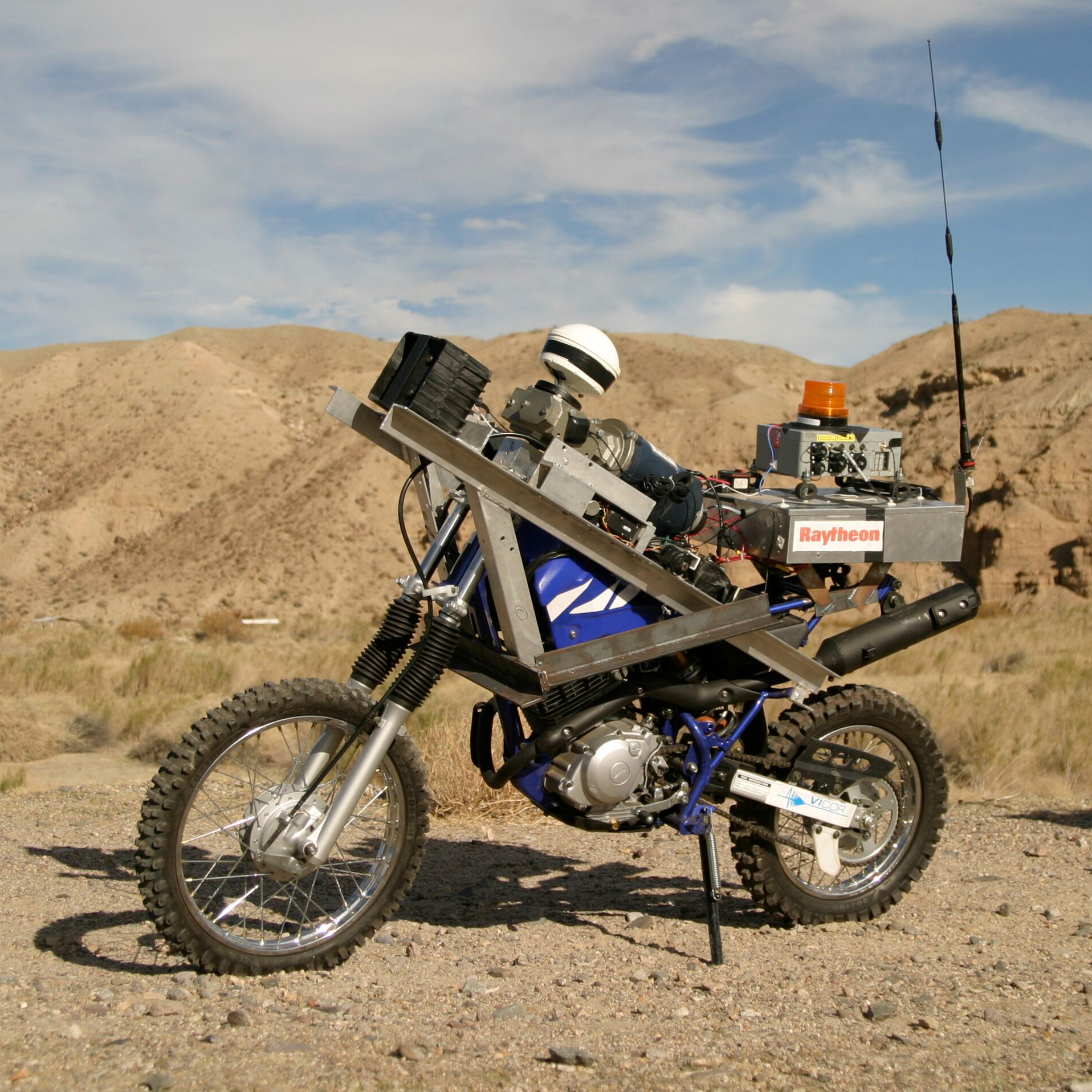 Anthony levandowski
In Russia in 2018 they launched a seriestechnology contests Up Great within the NTI. Then the first competitions were launched: "Winter City" for unmanned vehicles and "First Element" for the creation of hydrogen fuel cell engines.
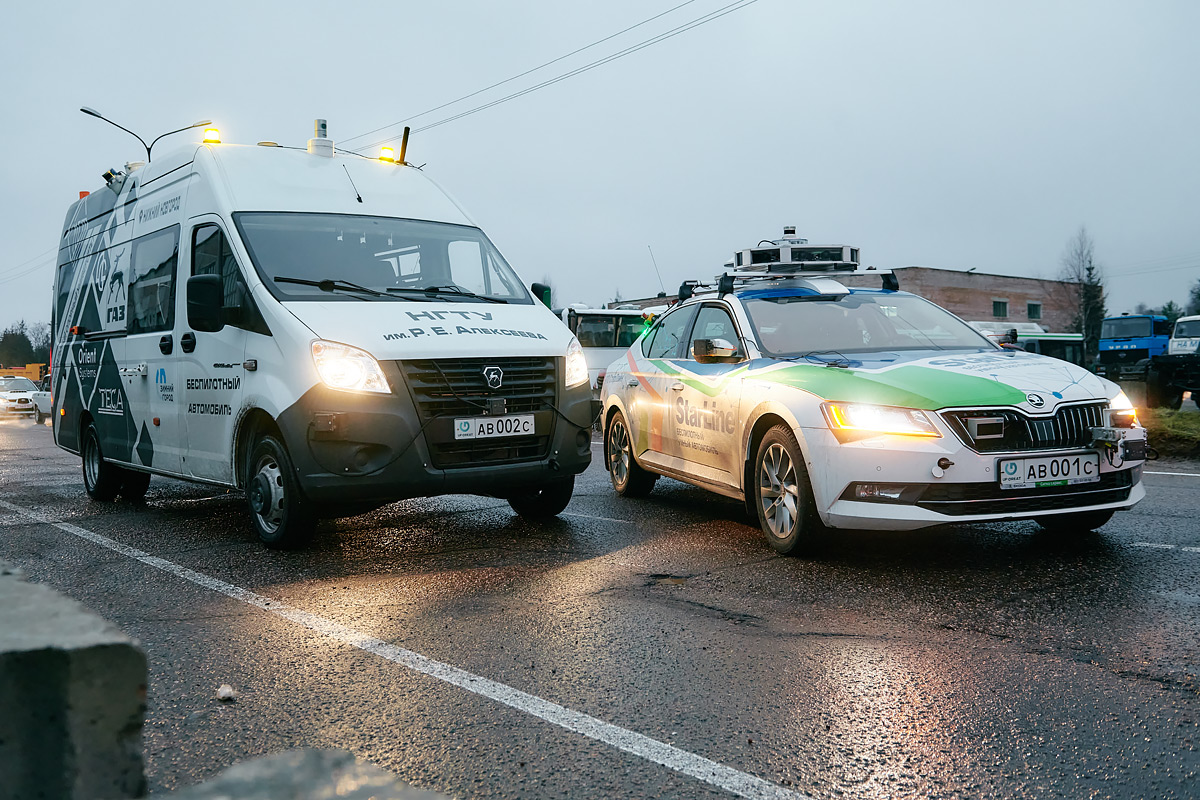 Final of the technology competition "Winter City". Photo: Vadim Frantsev
Now preparing to launch a new technologicalcompetition: participants will be offered to create an AI-based medical decision-making system for making a complete clinical diagnosis based on cognitive analysis of a complex of clinical and laboratory diagnostic data of a patient and information from professional databases of medical knowledge and clinical recommendations.
The AI-based system will have to use all possible patient data, all the available developments of scientists and doctors, to help the doctor make the correct diagnosis.
This should lead to the creation of new companies and technological solutions in the field of AI for medicine.
Market situation through the eyes of startups
Entrepreneurs agree that only pioneers and techno-optimists have an interest in AI medical products.
"Advanced private healthcare organizationsare interested in the introduction of various technologies that increase economic efficiency, the quality of medical care, and improve customer service, - the CEO of Biogenom is convinced. "And they don't care if this technology is based on AI or just a software product."
According to estimates by the K-Sky company (Webiomed), suchThere are now less than 5% of advanced medical organizations in Russia. “Such customers traditionally show high interest in all new products and try to use them,” says Alexander Gusev, development director at K-Sky. “For comparison, in the United States this figure is already about 70%.”
The situation will gradually improve.In the next three years, the figure will grow to 15-20%, Gusev predicts. That is, slightly less than a quarter of organizations will consistently use at least one AI-based product.
Market problems
The founders of AI-based platforms believe that there are problems both on the side of the developers and on the side of the customers.
Александр Гусев отмечает, что почти все продукты now only certain parts of the tasks are being solved: “There is a lack of functionality, poor integration with existing medical information systems and other basic products for automating the work of a medical organization. Therefore, their usefulness in the eyes of the customer is still limited. " The problem can be solved by developing the capabilities of the systems, strengthening teams, and investing in development. But this is hampered by the lack of transparent and understandable monetization schemes.
“The market is rich in startups of different quality, -says Artyom Kapninsky, co-founder of the Celsus project. - If we talk about competitors, then we can recall the experiment of the city of Moscow on the introduction of AI in radiology, which puts all the dots on the i. When the experiment was just being planned, 140 companies were invited, 40-50 responded. As a result, after all the stages of assessment, functional testing, by the end of the year, there were only 15 companies. This year, at a meeting at the Department of Health, it was announced that the experiment was extended to 2021. We sent proposals to 180 companies around the world, responded. In fact, there are very few companies with a finished product that can be considered for application and testing. This is a market trend: many companies are investing in marketing funds that they attract from investors, and are working not to improve their product, but to attract new investment. "
To implement AI projects, regionalreference centers that would be engaged in improving the quality of radiation research, says Mikhail Natenzon, head of the team of developers of the AntiCorona and AntiKokh projects. But in most regions there are no such centers, since there is not enough budgetary funds for their creation and trained medical and technical personnel for reference centers.
"To create reference centers for the regionsit is necessary to help with their design, regulatory support of their work, ensuring the economic efficiency of their operation, ”Natenzon said. These tasks can be solved by the team of developers of the project "Cloud technologies for processing and interpreting medical diagnostic images based on the use of big data analysis tools" of the NTI Competence Center on Big Data Storage and Analysis Technologies at Moscow State University.
The future of artificial intelligence in medicine
Analysts predict that the annual growth ratethe AI market in medicine until 2022 will account for about 70%. “An early analysis of the development of the HealthNet NTI market in 2015 showed that one of the most promising is the digital technology segment, including the development and implementation of machine learning and artificial intelligence algorithms into clinical practice, which was reflected in the roadmap and was reflected not only in the support of a number of projects. , but also the creation of an ecosystem, - confirms Mikhail Samsonov, deputy head of the NTI HealthNet working group. - The COVID-19 pandemic only accelerated this trend and gave a huge impetus to the development of the collection and analysis of structured data obtained from examining patients. At the next stage, we expect to solve even more complex problems in the field of medical decision-making, as well as more effective analysis of unstructured data. "
NTI-supported projects have been used by many clinics across the country to help doctors not miss patients with coronavirus symptoms.
Development and support of such projects is underwayaccording to the Helsnet and Neuronet road maps. It is planned that by 2035, five companies from Russia operating in the segments of this market should enter the top 70 companies in terms of sales in the world. And according to the National Strategy for the Development of AI until 2030, creating conditions for the use of AI in healthcare is one of the key tasks to improve the living standards of the population.
There are already a number of companies on the market thatmay enter the list of the best in the world, and new projects will appear. There is a foundation for this in the form of existing AI platforms, which have received support from the National Technology Initiative. Also, new solutions will create NTI competence centers, where science and business work in conjunction, and participants in a technology competition that will lead to community development and the creation of new teams.
See also:
Uranus has received the status of the strangest planet in the solar system. Why?
Physicists have created an analogue of a black hole and confirmed Hawking's theory. Where it leads?
Abortion and science: what will happen to the children who will give birth