An international team of researchers published the results of the latest experiment in the journal Nature.
For several decades, scientists have been tryingcreate sustainable thermonuclear reactions to produce electricity. Although these studies have made some progress, the main goal of creating a sustainable process is still far away.
The slightest deviations lead to instability,preventing the reaction, the scientists explain. The biggest problem is related to the release of heat, which is measured in millions of degrees. No materials can hold such a hot plasma, so it levitates in a magnetic field.
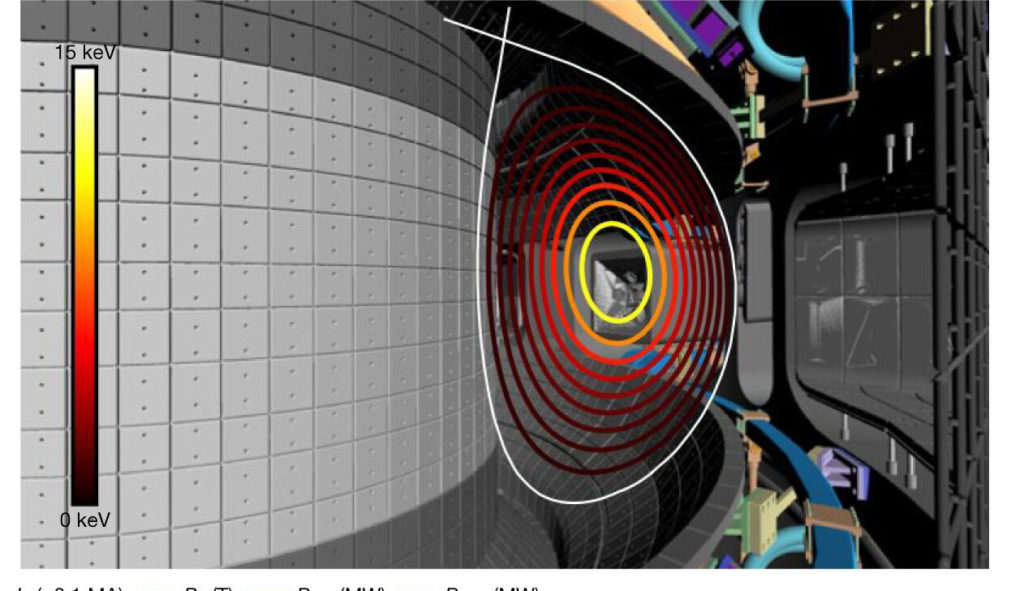 Installation diagram. Image: H. Han et al., Nature
Two approaches are used to control plasma:edge and internal transport barrier. In the first case, an external magnetic field prevents the plasma from escaping, and in the second, a high-pressure region at the center of the plasma keeps it under control. In their experiment, physicists used it.
Researchers note that the useinternal transport barrier results in a much denser plasma. This in turn allows higher temperatures to be achieved in the center. At the same time, the temperature at the edges is lower, which allows you to keep the plasma stable for a longer time.
The scientists plan to refine their installation, taking into account the results obtained in the experiment, in order to develop a system that will work stably for even longer.
Read more:
The ancient Vikings suffered from a dangerous disease. It is caused by a parasite from Africa
Plant on Mars produces oxygen at the rate of an average tree
The largest human organ was recreated in the laboratory. It is twice as strong as ours.