Pilvy Kolk- Member of the Board of the AHHAA Research Center since 2005. Graduated from Tartu with honors
Ahahais a large scientific and educational center in Estonia, existing since 1997. Since May 2011, the main building of AHHAA with an area of more than 10,000 sq. m. m is located in Tartu.
Among the main tasks of the center is raising prestigescience, promoting a scientific approach and increasing public interest in scientific and technological achievements. It includes exhibition halls with interactive exhibits, a scientific theater and a planetarium. The center conducts study tours in Estonia, organizes field shows, exhibitions and public lectures.
The crisis of modern education and ways to overcome it
- INthe reportThe World Bank talks about the crisis of modern education. Your teaching format is an inclusive, interactive science show. Is this the ideal form of presenting knowledge for the school of the future?
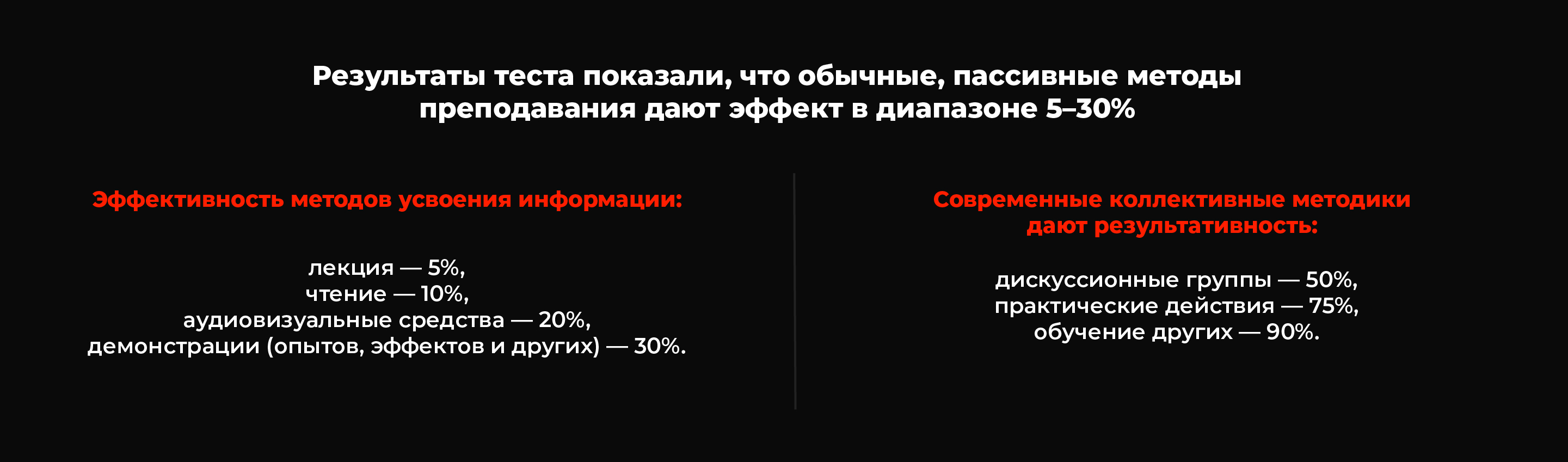
- We believe in an interactive learning process. Ability to solve problems is better absorbed in the process of performing real tasks. Lectures, summaries, reading are yesterday's tools. They are useful, but less effective. A scientific approach is not enough for future schools; students need to learn more.
 Photo: AHHAA Science Center
Research conducted in the 80sThe National Institute of Applied Behavioral Sciences NTL Institute have established the degree of effectiveness of various forms of learning. The calculation was based on three key parameters: student performance assessments, surveys, and material assimilation testing (the ability to recall acquired knowledge over a period of time). During testing, the ability of students to use material at reproductive (reproduce), constructive (solve a related problem) and creative (use knowledge in a non-standard problem) levels was taken into account.
- You actively support educationalSTEM program preparing engineering staff. How justified is such a tough bias towards science and technology? Does STEM kill the humanitarian component of our future?
- STEM is written in many countries as STEAM, where“A” is art (from the English “art” - “Hi-tech”). That is, the artistic component is also very important. Art is an important factor that unites technology and people. In addition, the system is likely to always need a person to make technology relevant. There is no point in innovation if it is not understood or, even worse, they are afraid. I do not believe that STEM will kill the humanities. Most students still prefer to study humanities and for some reason think that STEM is too complicated for them.
STEM(Science - “science”, Technology - “technology”, Engineering - “engineering”, Mathematics - “mathematics”)- a curriculum based on the idea of learningin four special disciplines. STEM integrates them into a unified learning paradigm based on real-world applications. The goal of the program is to provide engineering and scientific personnel to the growing global industry. The program coordinator is the US National Science Foundation. According to the US Department of Commerce, the number of professions in the STEM field is increasing annually by 17%, while other fields are growing by 9.8%, and salaries for STEM specialists are 1.5-2 times higher compared to other fields.
- STEM means creating a maker place - a platform for independent creativity of visitors. How does this fit with the entertainment center format?
- If you hide really complex formulasAfter an entertainment exposition, it will be a pleasant surprise for the visitor to find out that STEM is actually around us. And it can be fun!
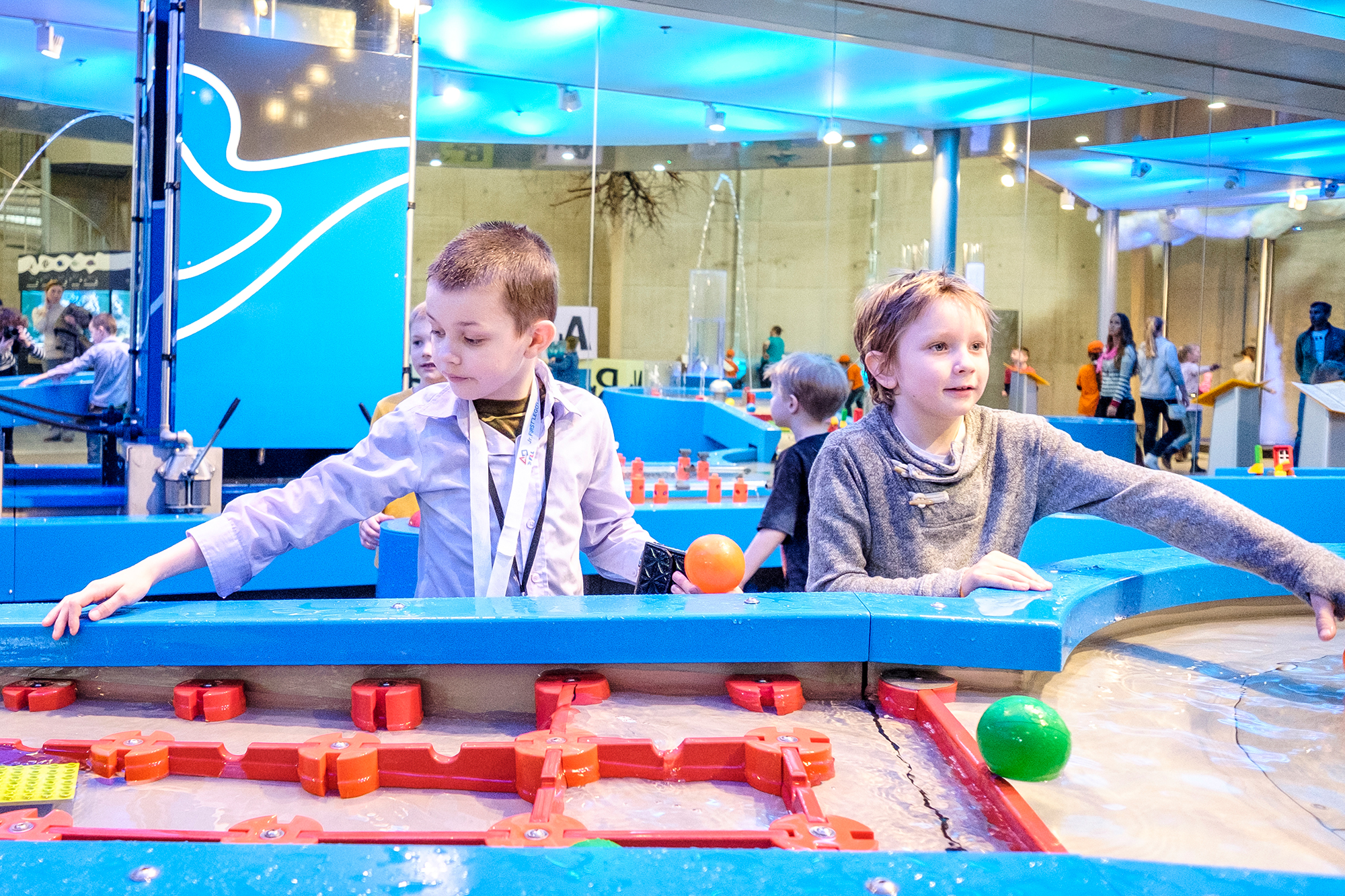 Photo: AHHAA Science Center
- AR / VR technologies are already firmly in the learning process. Are you still trying to do exclusively live shows or are you gradually migrating to new realities?
— We don’t migrate to new realities, or rather, we don’tWe use these technologies everywhere. There are two reasons for this: firstly, every supermarket has VR chairs. That's why we try to be original. The second reason is that the quality of virtual reality is still not as good as the picture in real life. Therefore, you can only experience the 3D effect in our full-spectrum planetarium. Today's technology cannot show all of real life - which means we use it only where possible and necessary.
AR and VR- today some of the most popular trends ineducational technologies. Without having to leave the classroom or home, students are in a completely new and active learning environment. It is now possible to teach physics, chemistry and biology using virtual labs that not only keep students interested but also allow them to practice before they can test the experiments in reality. Medical students can learn anatomy, the intricacies of surgery, and safely simulate medical situations in practice. According to a report from Goldman Sachs, VR/AR education revenue will be around $300 million in 2020, and that figure is expected to grow to $700 million by 2025.
Entertaining and scientific centers as a new form of training
“The AHHAA Center is more than 20 years old, these are two full school generations. How did your program and viewers change?
- For the first 14 years in our center was notpermanent showroom. Therefore, the first generation was slightly less than the second (then our annual attendance was about 50 thousand visitors compared to 220 thousand at present). Then so interactive teaching methods were not used. 3D cinemas, entertainment centers and playgrounds were very different from what they are now. The touch screen was a big novelty in 2004. This means that today we must be more provocative and innovative in order to surprise and attract the visitor. Today's children have already seen a lot. Since opening in 2011, our audience has grown by more than a third.
- Most visitors to the center are children. Do they still like everything that burns, explodes, or instantly freezes? Or does the new generation require something calmer?
- The children are the same. The larger the explosion, the better. They still love steam and fire. This does not change over time.
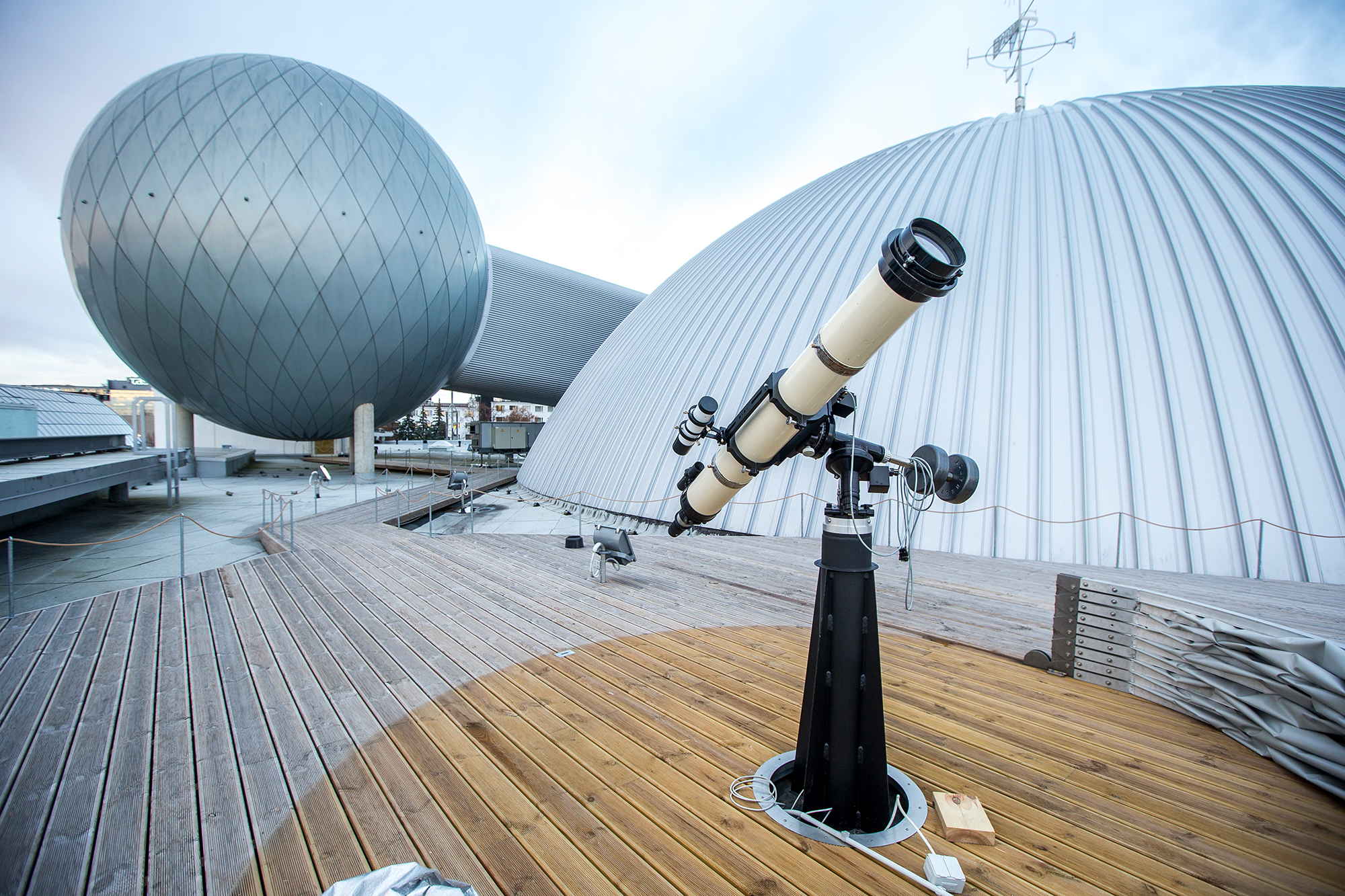 Photo: AHHAA Science Center
- Does the dream of space exist today among young people? Do students still enjoy visiting the planetarium?
- They really like to visit the planetarium. But over time, their vision has changed. In the past, people were very optimistic about space adventures. It has been a long time since people were on the moon, and this has an impact on the current generation. Teenagers are more interested in our planet and its survival than other planets.
— The building of the center has a very unusual shape. Was there any special meaning or hidden meaning in the architecture of the building invested in the development of the project?
- We do not see the sacred meaning in architectureour building. It was originally designed in harmony with the neighboring, the so-called Snail Tower. The project was much larger and different from what we have now. The only idea was to show the various geometric shapes together.
- Despite the futuristic nature of the architecture, the building uses wooden supporting elements. Why use these technologies now?
- It really was a technological challenge. Wooden elements were brought here separately, and it took time to put everything together. Our roof became the leading architectural discovery in the world in 2011. And the wooden parts show that Estonians can use this material in any shape and meaning that they want.
Scientists and students
- What discussions currently occupy Estonian scientific minds the most?
- The Estonian government is not fulfilling itsobligations to science. In 2018, all large parties signed a memorandum on the allocation of additional funds for science. Somehow, they took him back in 2019. Therefore, the main question in Estonia is how to finance science and research in Estonia.
At the end of 2018, all major politicalParties, including the Estonian Conservative People's Party (EKRE), pledged to increase government spending on research and development to at least 1% of GDP over three years. This was an important step, especially after several years of insufficient spending on science. Party leaders signed an agreement in the presence of President Kersti Kaljulayd. The promise was also signed by Juri Ratas, the Prime Minister and leader of the Center Party. Nevertheless, in May 2019, the government announced that it would simply maintain its current funding levels at 0.71% of GDP, that is, it would virtually abandon its previous promises.
- There is a certain stereotype in society"Mad scientist," muttering in obscure language. You are not afraid to invite scientists to public speaking. What are they talking to the audience about? Do they even understand?
- We really select those with whom we work. Not every scientist is a good performer. However, we use good mentors and sometimes even give lectures to scientists. Some of today's scientists worked as lecturers at our center when they were students, and they are brilliant!
The most famous Estonian scholars,Attending the AHHAA Science Center were Plant Physiologist and Head of the EcolChange Center of Excellence at the Estonian University of Natural Sciences, Ülo Niinemets, Professor of Molecular Systems Biology at the University of Tartu, and Mart Lug, the developer of the Center for Synthetic Biology.
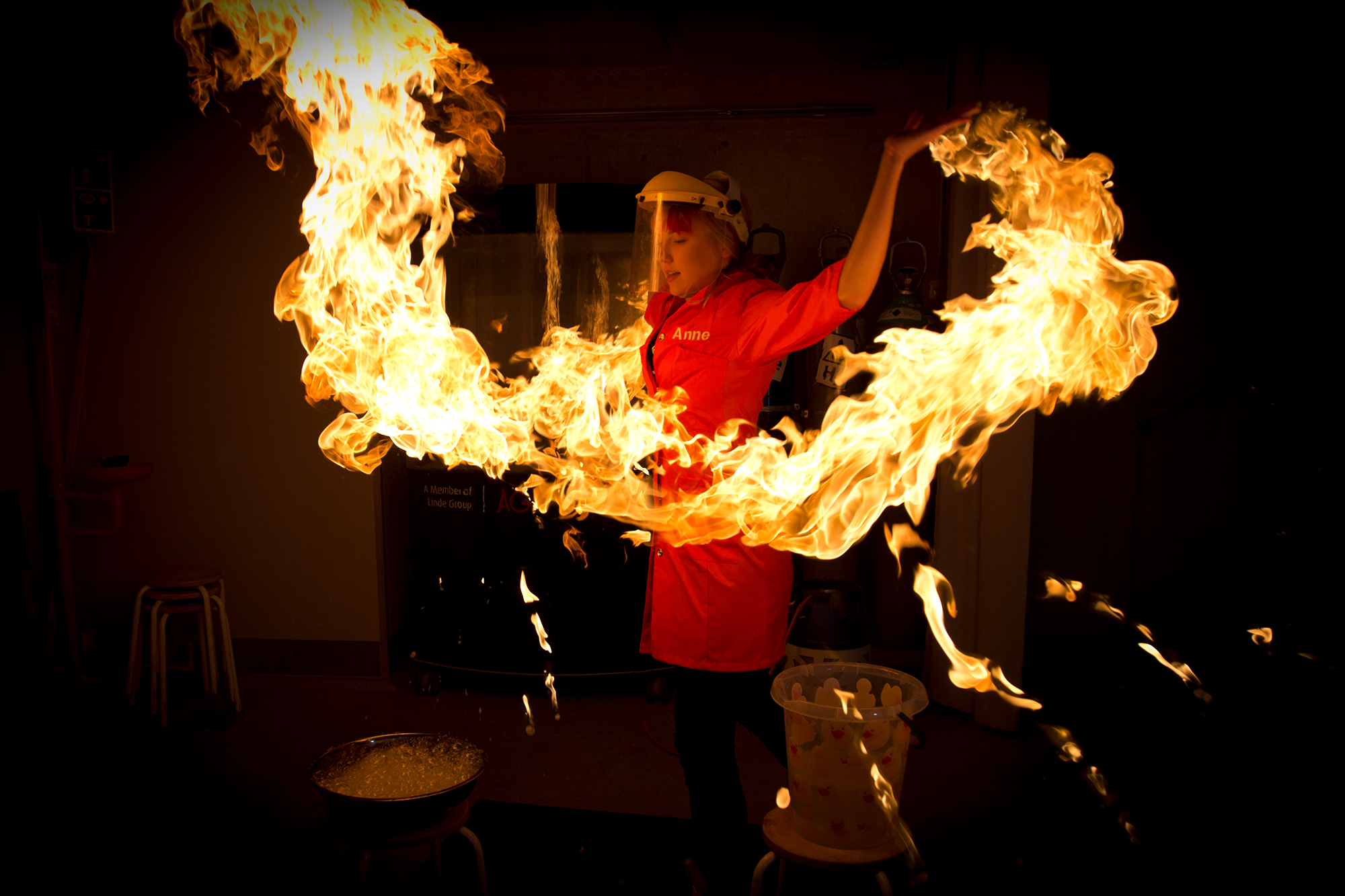 Photo: AHHAA Science Center
- Which category of scientists is more willing to bring their knowledge to the masses - natural science or humanitarian?
- It’s easier to talk about the humanities. The dictionary is the same that we use every day. In order for the physicist to be able to speak publicly about his work, he first needs to translate the text into “human language”. Therefore, the humanities will always have an advantage here.
Professor David Crotty, Journal EditorJournal's Oxford University Press, believes that the fundamental difference between technical and human sciences lies only in assessing the results of activities. For technical sciences, this assessment is the ability to patent one’s research and thereby earn money from its commercial exploitation. For example, if a researcher discovers a cure for cancer, one hopes that the paper describing it will then be used to solve the problem. Therefore, scientists working in these areas willingly publish the results of their work in open sources.
On the contrary, humanitarian researcherspublish the results of their research without hope for any subsequent profit. The study is the end point, and this perhaps explains why many humanitarian scholars do not want their studies available for free: they feel that the only way to generate income is to publish their work.
- Do you feel pressure from the Internet? It is no secret that a huge part of the data on the network is fake or “science-like”. Are you often visited by “scientific supporters,” for example, flat Earth or eugenics?
- We really feel the pressure andresponsibility for providing only verified and scientifically proven information. Lack of critical thinking begins with parents and is easily transmitted to children. We have a lot of work to do. Last year we organized a public discussion with followers of the theory of a flat earth, and it was a success. We should just move on.
- How much is the Estonian state interested in centers like yours today? In your opinion, what role should the state play in popularizing science and developing such centers?
— All states that have high scores in PISA tests have research centers.
PISA test(Program for International Student Assessment,from English “program for international assessment of students”) is a test of students’ competence, the ability to apply in practice the knowledge acquired in educational institutions.
It is part of an international student assessment program in Western Europe and the United States.
Therefore, if a country wants to have smart people, itshould have a scientific center in which informed and educated people will be educated. The state must somehow support these centers, since they cannot live solely on the income from the sale of tickets.