Survivors of the Black Death passed on genes for resistance to the plague to their descendants, but this comes at a cost
"Black Death" - again and again
"Black Death", or the bubonic plague pandemicXIV century, caused by the bacterium Yersinia pestis, claimed the lives of 30 to 50% of the European population in just five years. Afterwards, outbreaks of the disease were observed on the continent every few years. And yet each subsequent one claimed fewer lives than the previous one. For a long time, scientists could not understand why.
Plague bacillus (Yersinia pestis) is a type of gram-negative bacteria from the Yersiniaceae family. The infectious agent of bubonic plague can also cause plague pneumonia and septicemic plague.
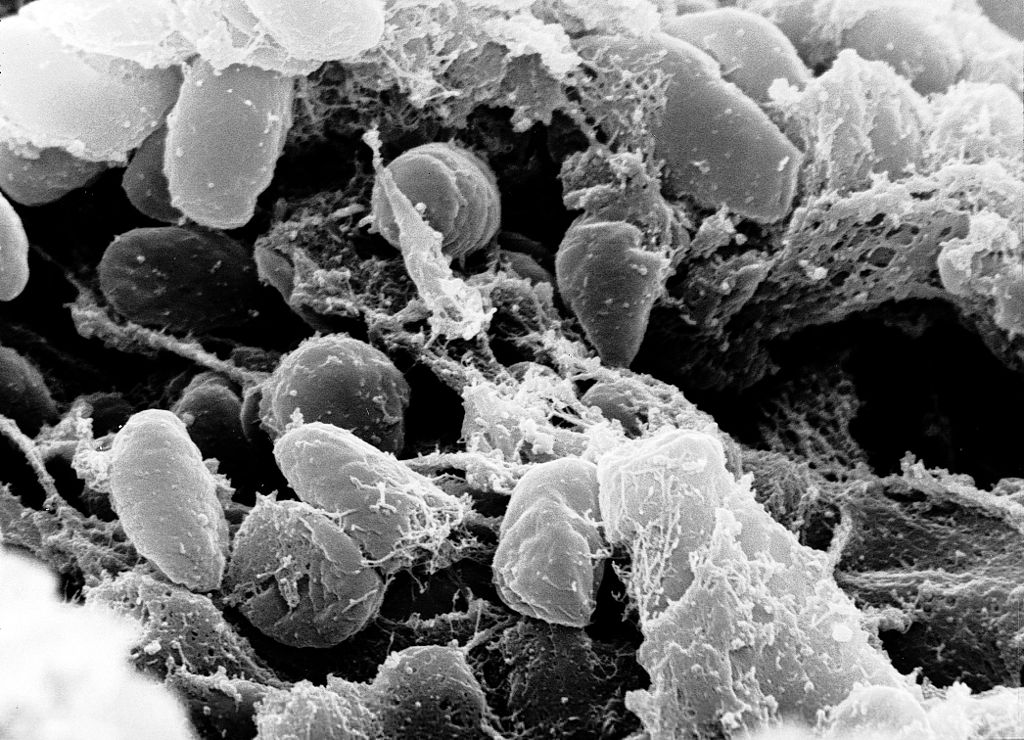 Rocky Mountain Laboratories, NIAID, NIH
According to one theory, the mortality ratedecreased due to evolutionary changes in the bacterium Y. pestis or developed European cultural practices related to hygiene. However, the improvement in survival could also result from rapid natural selection caused by the pandemic. Scientists hypothesize that in this scenario, people with plague resistance genes survived more often and thus passed them on to the next generation at a higher rate.
Idea validation
To test this hypothesis, experts collected more than 500 DNA samples from the remains of people who died before, during or shortly after the Black Death swept through England and Denmark.
The researchers extracted DNA for analysis.from the remains buried in London's East Smithfield plague pits. This is a cemetery of approximately 2 hectares, which was used for mass graves between 1348 and 1350. They collected 318 samples from Smithfield and other sites in London, as well as 198 samples from five sites in Denmark. DNA was obtained from people who died 500 years before the Black Death began and up to 450 years after its end. Moreover, many of these samples were taken from people who were at the “epicenter of the events.”
Experiment with parts of a gene
The DNA turned out to be highly degraded and mixedwith other environmental DNA, including that left by microbes. Therefore, biologists studied only small areas of it. They focused on about 350 specific genes that are involved in the immune system, as well as about 500 broader genomic regions previously associated with immune disorders.
Among the genes associated with immunity,The team identified 245 gene variants—that is, specific “flavors” of different genes. Their peculiarity is that they spread especially strongly among Londoners after the start of the pandemic. Four of them were found in samples from Denmark.
A wide range of genes work, scientists saytogether to trigger an immune response against pathogens such as Y. pestis. It follows that many of these genes will be subject to natural selection during the pandemic. In addition, the samples from England and Denmark may have different patterns of variation in these genes.
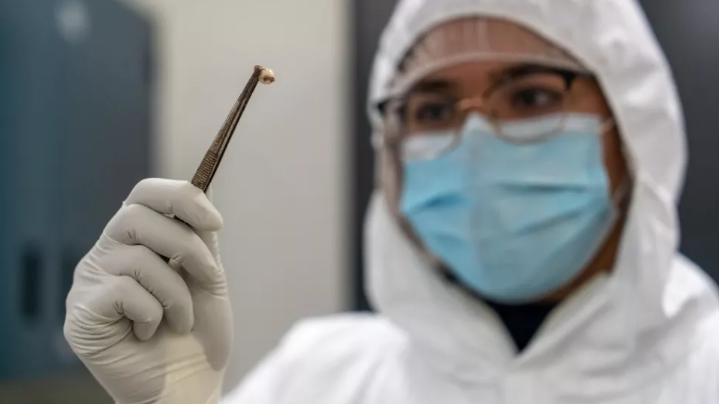 Using DNA extracted from the teeth of people who died before and during the plague pandemic, the researchers found genetic differences.
Image courtesy of Matt Clark/McMaster University
To find out whether the flagged genes protect peoplefrom the plague and how, they collected immune cells known as macrophages from living people. Biologists analyzed their genetic makeup and then exposed the cells to Y. pestis in Petri dishes.
"Red flag" for immunity
One gene - ERAP2 - turned out to be a key weapon inarsenal of immune cells. At least in petri dishes, macrophages carrying two copies of the ERAP2 version killed Y. pestis is more effective than macrophages with or without one copy of the gene variant. ERAP2 contains instructions for making a protein that helps immune cells display particles of foreign invaders such as bacteria on their surface. This raises a "red flag" for other immune cells, calling on them to help fight the virus.
Macrophages also secrete substances calledcytokines to rally the immune system to fight pathogens. It turns out that the set of cytokines secreted by cells varies depending on which versions of the ERAP2 gene they carry.
You have to pay for everything
The post-plague version of ERAP2 really gavecarriers have an advantage over the Black Death, although studies in laboratory dishes do not fully reflect what happens to a person in real life, scientists emphasize.
And yet, this protection from the plague could be expensivecost. According to a report in the Journal of Clinical and Translational Gastroenterology, the version of ERAP2 that protects against Y. pestis is a known risk factor for Crohn's disease. The study authors noted that other genetic variants noted in the new study are associated with an increased risk of autoimmune diseases, including rheumatoid arthritis and lupus.
However, during the pandemic this did not matter,scientists emphasize. “The urgency of the pandemic made compromise inevitable,” they explain in a commentary on the Nature article. Similar compromises likely occurred during other historical outbreaks, before and after the Black Death. Echoes of these events can still be seen in the DNA of modern people.
Read more:
NASA revealed the origin of Haumea - the most mysterious planet in the solar system
Living organisms have made Mars uninhabitable
The liver can work for more than 100 years: scientists told how this is possible