Computer simulations based on data from the OSIRIS-REx mission showed that thermal cracks can
Microscopic images taken withUsing the PolyCam camera installed on board the OSIRIS-REx mission ship, they captured the surface of the asteroid in high resolution. The researchers found in the pictures and mapped more than 1.5 thousand cracks in the rocks. Some of them were no larger than a tennis racket, others were larger than a court.
In his work, published in the journal NatureGeoscience, planetary scientists have shown that most of the cracks that form on the surface of rocks are directed in one direction. They are predominantly aligned in a northwest-southeast direction. This indicates that they were formed under the influence of heat fluctuations during the day.
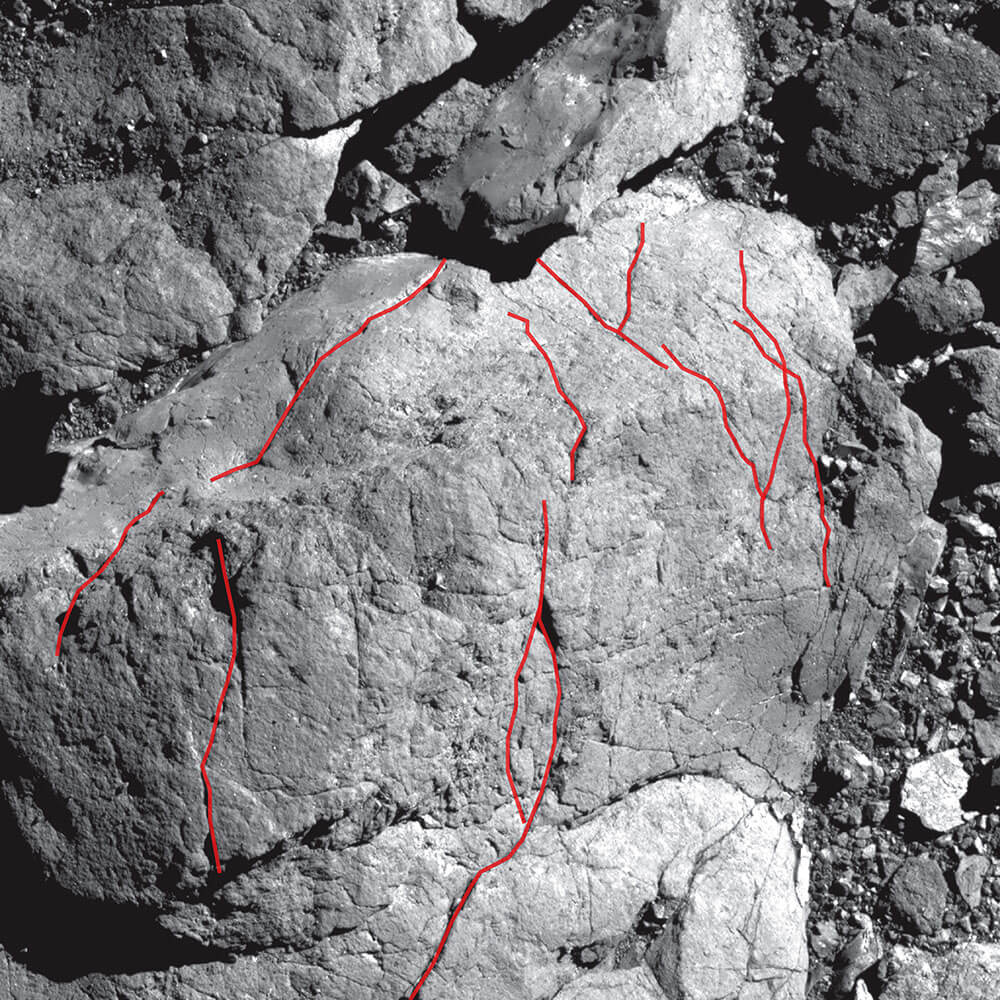
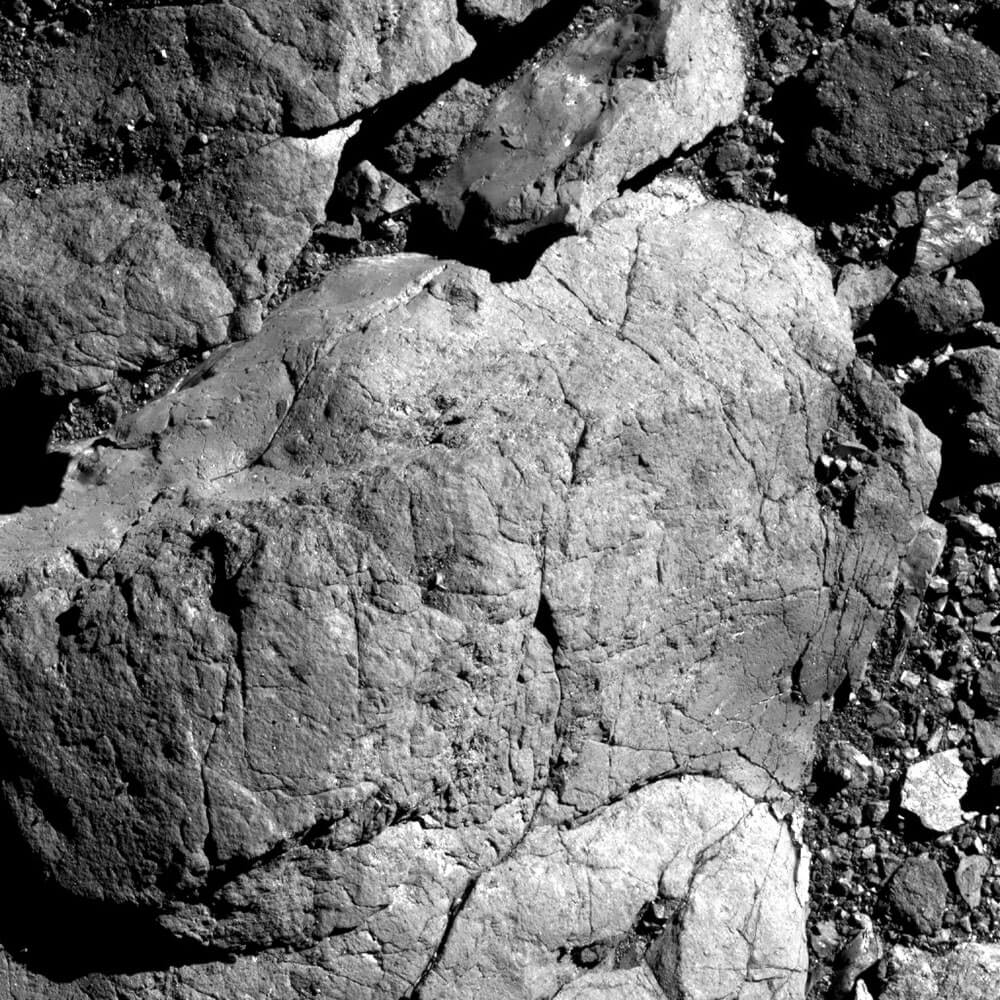
The cracks in the rocks are oriented from northwest to southeast. Images: NASA/Goddard/University of Arizona
Rapid temperature changes on Bennu createinternal stress that splits and destroys rocks, scientists say. It is like cold glass cracking under hot water. The sun rises over the asteroid every 4.3 hours. At the same time, daytime temperatures can range from 127°C during the day to -23°C at night.
The researchers note that if landslides orthe impacts would move the boulders faster than the cracks would spread, they would point in a random direction. Since this is not the case, scientists believe that the Sun is the main reason for the geological evolution of the asteroid's surface.
Computer simulations based on measurements of these cracks have shown that it takes between 10,000 and 100,000 years for rocks on the surface of Bennu to break down.
We thought that asteroid surface regenerationtakes several million years. We were surprised to learn that the processes of aging and weathering on asteroids happen so quickly, from a geological point of view.
Marco Delbo, senior researcher at the University of the Cote d'Azur and one of the authors of the study
Cover image: Asteroid Bennu. Source: NASA/Goddard/University of Arizona/Lockheed Martin
Read more:
Physicists have found a universal "clock" in space: they are more accurate than atomic
Archaeologists have found drawings of creepy people with huge heads: who they were
The James Webb telescope took the first picture of Jupiter: it shows 9 moving targets at once