An international team of physicists, chemists and biologists led by the University of Cambridge used
In their work, the researchers tried to understandwhy ring-shaped molecules, quinones, are able to “steal” electrons during photosynthesis. Such molecules are widespread in nature and can easily accept and donate electrons, but their role in photosynthesis remained not fully understood.
The researchers used the technique of ultrafasttransient absorption spectroscopy to study the behavior of quinones in photosynthetic cyanobacteria. By observing the electrons, the scientists found that the protein scaffold on which the initial chemical reactions of photosynthesis take place is "leaky", allowing the electrons to escape. This leakage helps plants protect themselves from being damaged by bright or rapidly changing light.
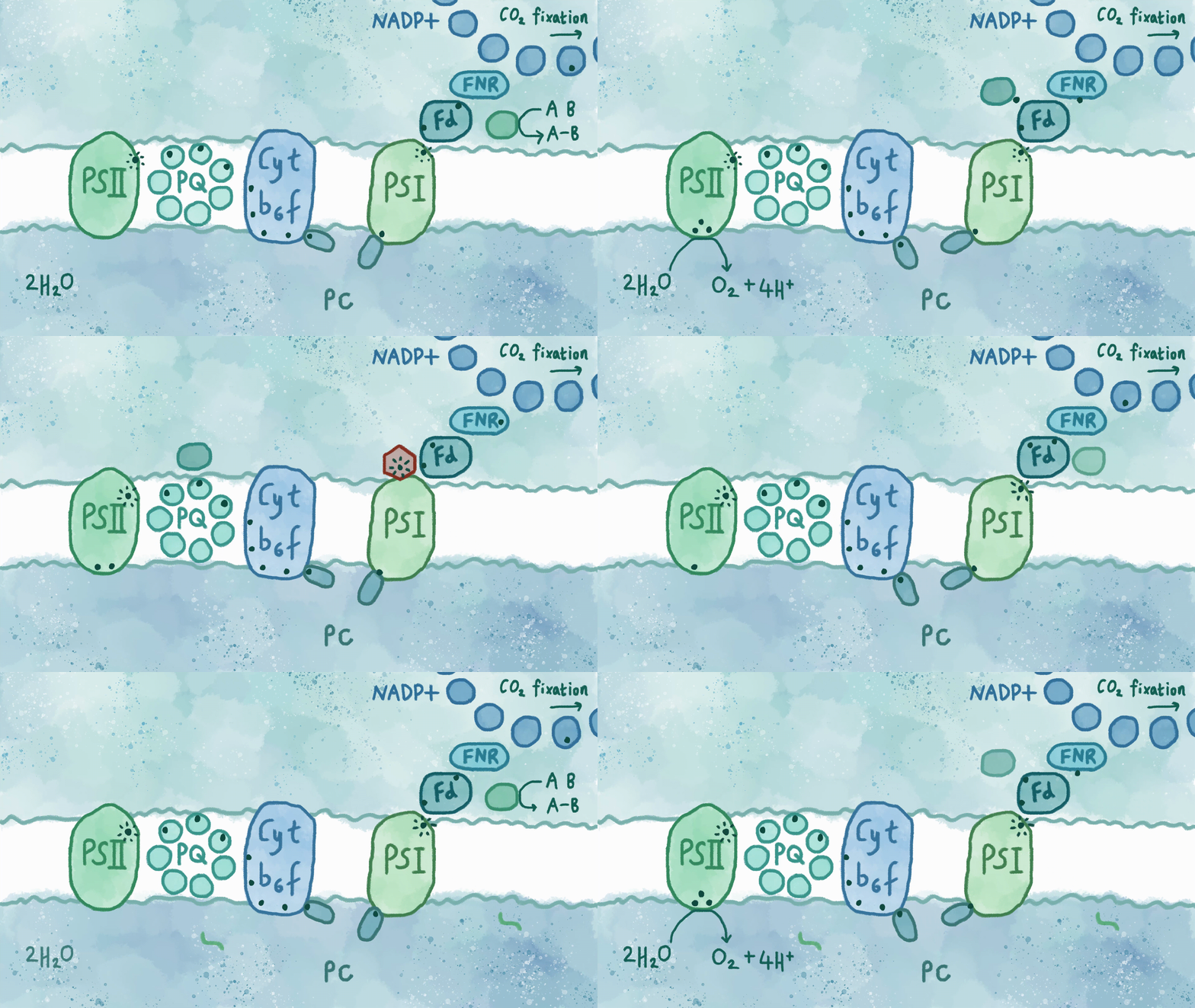 Photosynthesis process illustration. Animation: Mairi Eyres, University of Cambridge
The authors of the study believe that such a leakelectrons can be used. The ability to extract charges at an early stage of photosynthesis can be used to efficiently obtain clean fuel from the Sun. In addition, the ability to regulate photosynthesis will make crops more resilient to intense sunlight.
Many scientists have tried to extract electrons fromearly stages of photosynthesis, but came to the conclusion that this is impossible because the energy is so hidden in the protein framework. The fact that we can get them early in the process is amazing.
Jenny Zhang, research coordinator at the University of Cambridge
Read more:
The key theory of quantum physics has finally been proven. Main
NASA helicopter showed sunset on Mars. It doesn't look like earth.
'Legendary' cat-fox that lives on an island in Europe may become a new subspecies