South Korea has a very high level of antibiotic use. She is even qualified as
The Korea Institute of Science and Technology announced,that a research team led by researchers Jung Kyung-won and Choi Jae-woo from the Water Cycle Research Center has developed a highly effective absorbent material using PET bottles.
Currently the most famous methodAn effective removal of antibiotics from water is the use of a porous carbon composite synthesized by pyrolysis. Porous carbon composites adsorb antibiotics in water, thereby removing them. However, since the organic ligand commonly used for the synthesis of organometallic scaffolds is very expensive, the cost of such treatment materials is too high for widespread practical use.
Organic ligand- a necessary element for the synthesis of metal-organic frameworks. Serves to bind metal ions.
To develop a more cost-effective solution,The research team focused on regular PET bottles. PET is a high molecular weight compound obtained by the polymerization of ethylene glycol and terephthalic acid, the latter of which is also used as an organic ligand.
Scientists have recovered high purity organic ligandfrom PET bottles and used it to synthesize a highly effective adsorbent material that could effectively remove antibiotics from water in an environmentally and economically more profitable way. The team managed to develop an environmentally friendly material that can be easily separated from the mixture after the adsorption process using a simple external magnetic field.
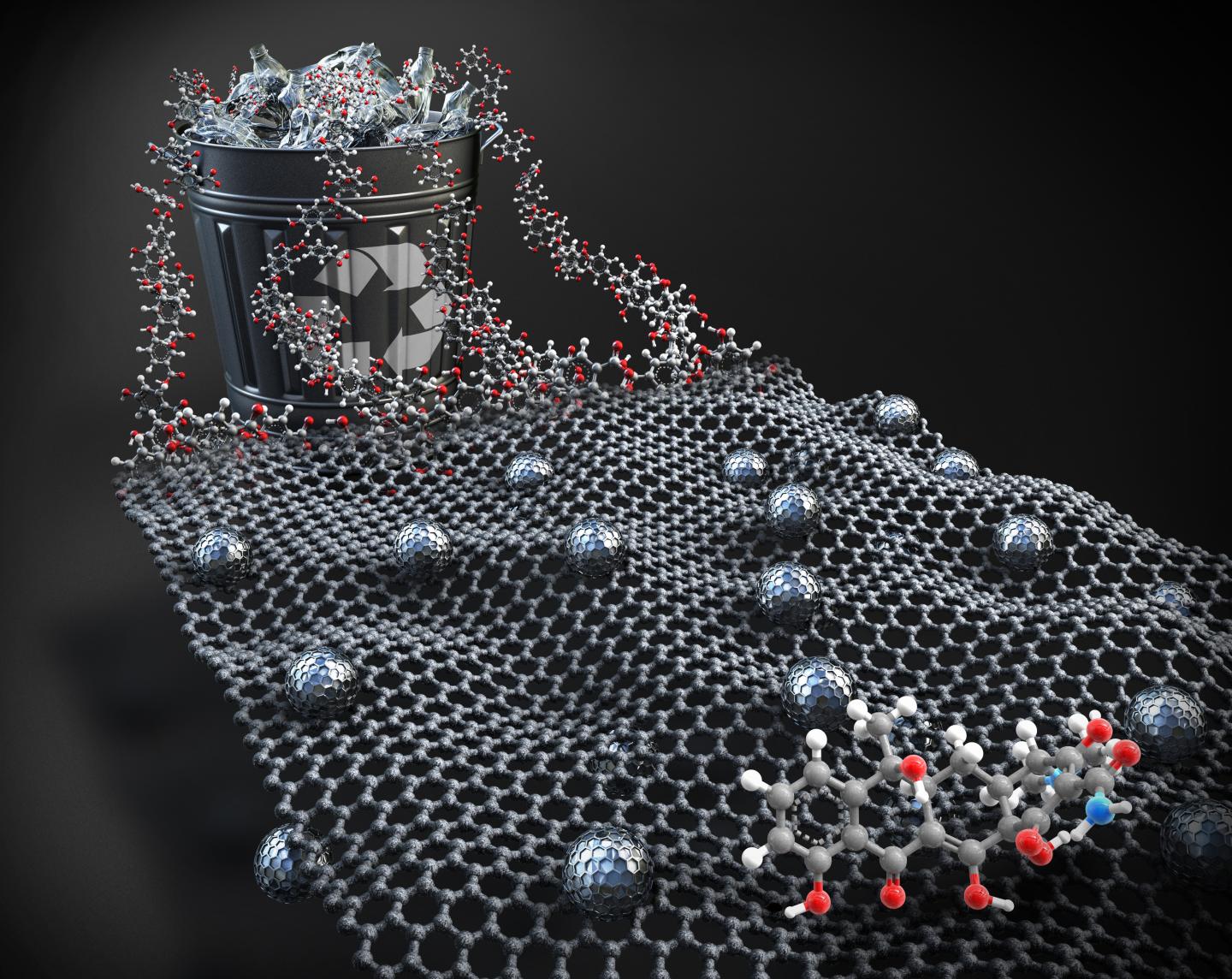 PHOTOS OF THE CONSUMPTION OF AN ADSORBENT PROVIDED BY THE KOREAN INSTITUTE OF SCIENCE AND TECHNOLOGY (KIST).
The research team has already checkedthe effectiveness of the porous carbon composite in terms of its ability to adsorb tetracycline from water is an antibiotic used to treat bacterial infections. Tests have shown that the developed material is able to remove 100% tetracycline in about 90 minutes under normal water conditions (pH 6), which is several times faster than when using adsorbents developed previously. In addition, the adsorbent can be reused. Even after repeated use, the material retained 90% of its adsorption properties, which indicates a high degree of stability and wide applicability for water treatment.