Content
- Video review
- Specifications
- Appearance and equipment
- Software
security
- Cameras
- Performance and Benchmarks
- findings
They say that in ancient China the most inveteratecriminals were forced to understand the range of Xiaomi smartphones. The same device can be called differently for different regions, have variations, and also come out under a sub-brand. Today we will talk about POCO M4 Pro, a budget smartphone by design, but not in the current realities.
Video review
Technical characteristics
 |
Poco M4 Pro Specifications |
|---|---|
| Network | 2G, 3G, 4G |
| Firmware | MI UI 13 on Android 11 |
| Screen | 6.43″, 2400× 1080 points,AMOLED, 90 Hz, touch 180 Hz, 1000 nits (peak), DCI-P3 |
| Chipset | MediaTek Helio G96 Mali-G57 MC2 |
| Ram | 6/8 GB LPDDR4X |
| ROM | 128/256 GB UFS 2.2 |
| SIM and memory card | nanoSIM + nanoSIM/microSD |
| Camera | Main: OmniVision OV64B, 64MP, f/1.8, 1.4µm (4 in 1), 1/1.52” Shirik: Sony IMX355 8 MP, f/2.2, 118° degrees Macro: GalaxyCore GC02M1 2 MP, f/2.4 |
| Selfie | Sony IMX471, 16 MP, f/2.4 |
| Battery | 5000 mAh |
| Charging | USB-C 33W |
| Wireless interfaces | Wi-Fi 802.11a / b / g / n / ac Bluetooth 5.0 GPS L1, GLONASS G1, Beidou: B1, Galileo E1 IR emitter |
| NFC | there is |
| Biometrics | Fingerprint scanner at the end face unlock |
| Sound | Stereo, 3.5mm |
| Water protection | IP53 |
| Dimensions and weight | 159.87 x 73.87 x 8.09mm 179.5 g |
Appearance and equipment
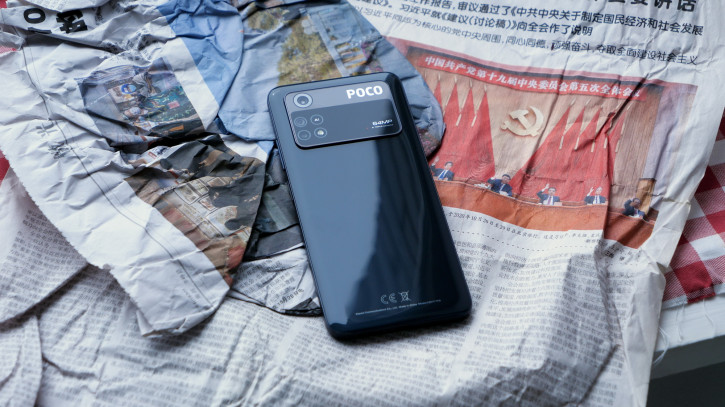
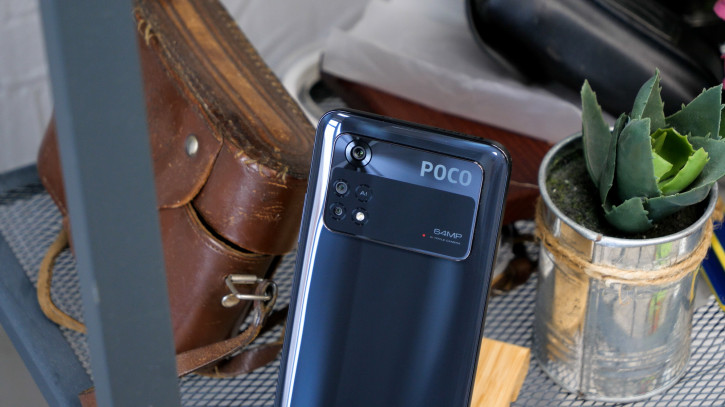
The smartphone comes in a branded bright boxcolors along with 33W power adapter, USB-A to USB-C cable, transparent silicone case, protective film applied to the display, SIM eject needle and documentation. The cover has moderately protruding protective corners on the front side and a minimal border around the photoblock. The latter, coupled with a significant (and, in fact, decorative) cutout for the cameras, raises concerns for safety. Otherwise, an excellent full-fledged kit, unlike flagships for 100k+. *I look askance at the Samsung Galaxy S22 Ultra (review, video review)*.

The lid and frame are made of plastic, the display isprotected by impact-resistant Corning Gorilla Glass 3. The sloping edges of the lid provide a comfortable grip, while the flat display makes it easy to apply the screen protector/glass.
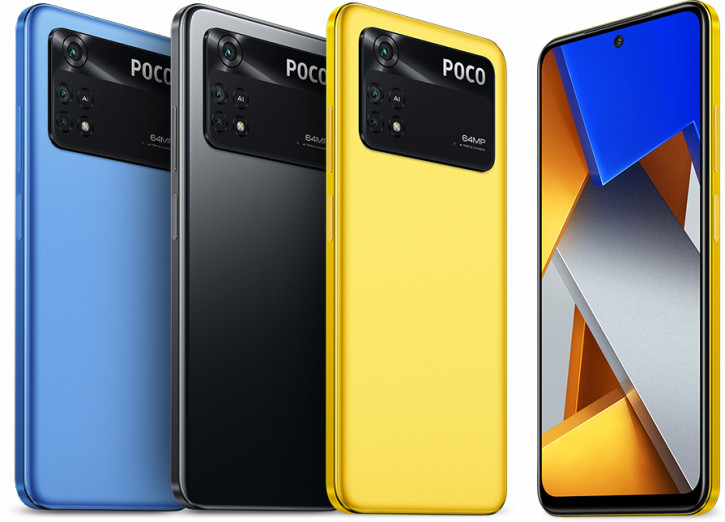
Much brighter solutions coexist with the classic black coloring.
Of the features of the interfaces, it is worth paying attention to the following points:
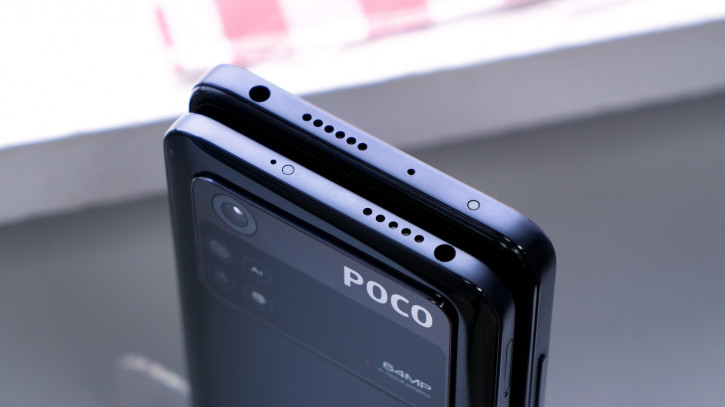
- The fingerprint scanner is built into the power button. Works accurately and quickly: a momentary touch is enough to unlock. However, the awakening of the smartphone takes a good second.
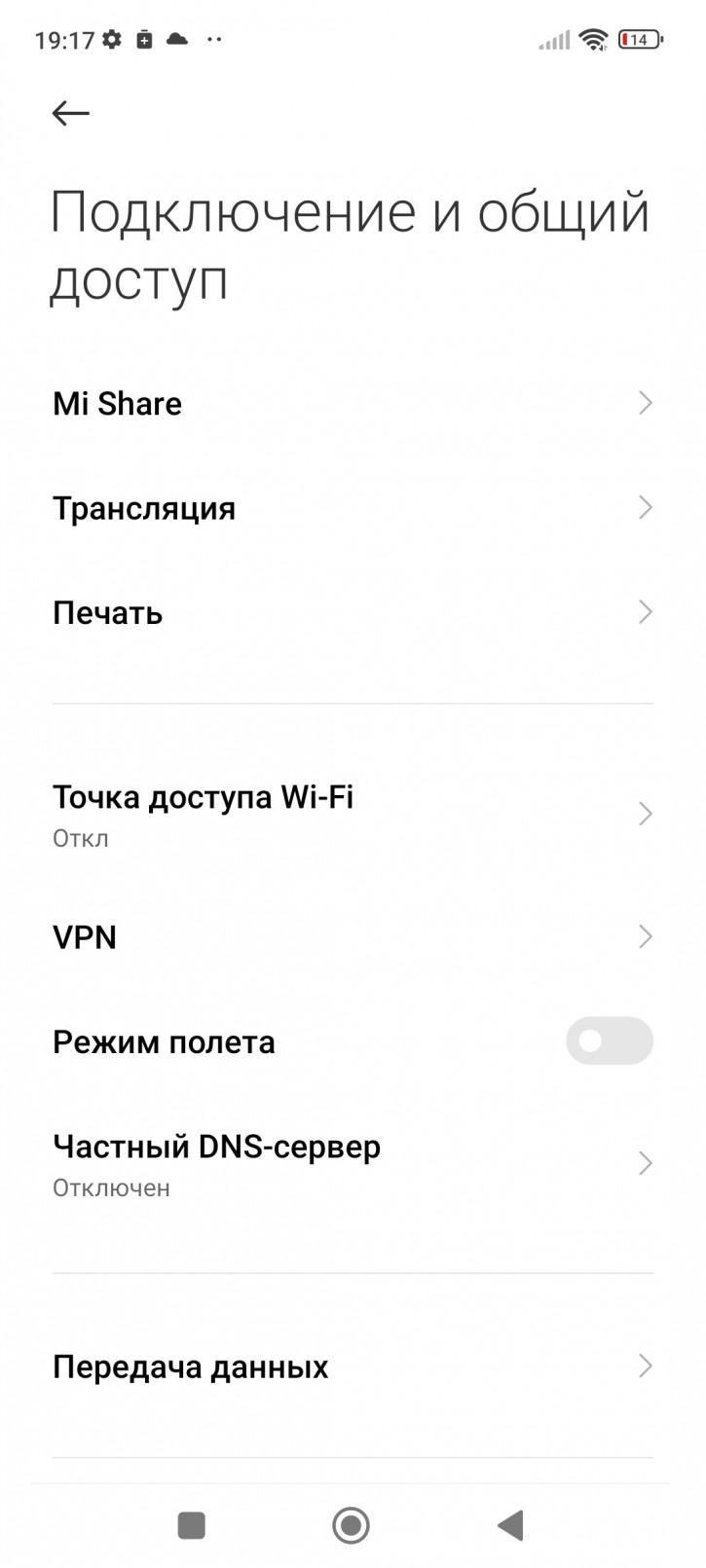
- An IR emitter is located on the upper end, which allows you to use your smartphone to control home appliances.
- Multimedia and conversational speakers form notthe highest quality, but still a stereo pair. The speaker holes are not symmetrical: with a horizontal grip, not blocking one of them with your hand is a big deal.
- Vibration is normal. Buzzing.
- The 3.5mm audio jack is located on the top end.Its very presence pleases, but still I would like to see it in the lower end (subjectively, of course, but a smartphone is usually placed “head” down in a pocket).
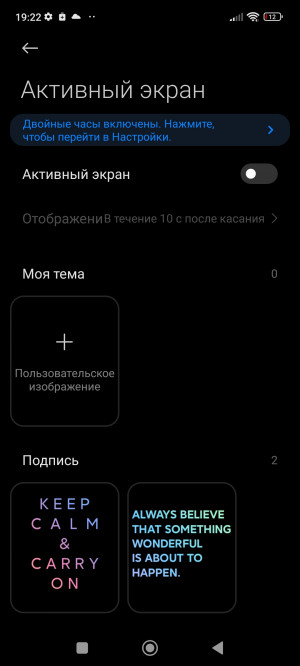
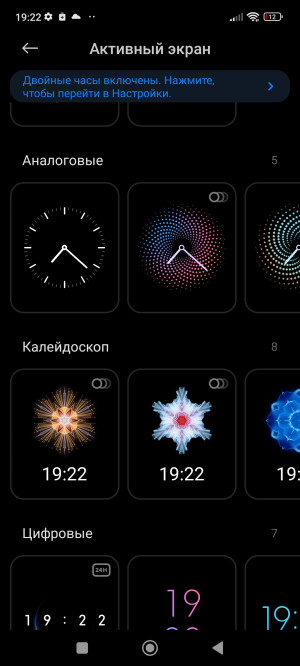
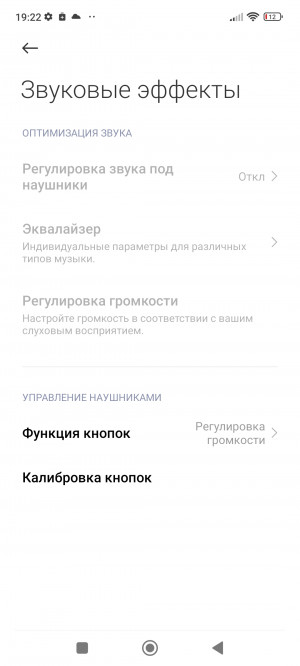
The display uses 6.43″AMOLED matrix with a resolution of 2400× 1080 points. The screen pleases with a clear picture and an increased refresh rate of 90 Hz, which works successfully regardless of the situation (except for certain games, like COD). Among the features, I note the strange operation of the light sensor (often I had to manually increase the brightness to comfortable values) and the lack of PWM reduction technology. Users sensitive to this parameter will have a hard time.

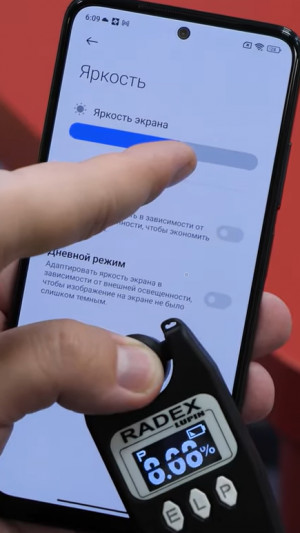
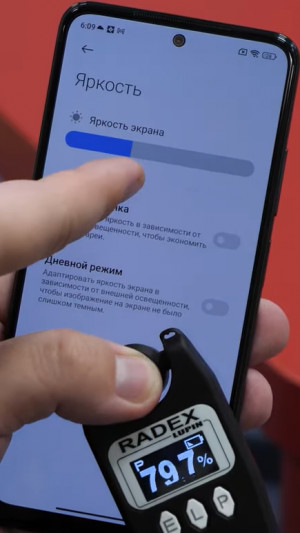
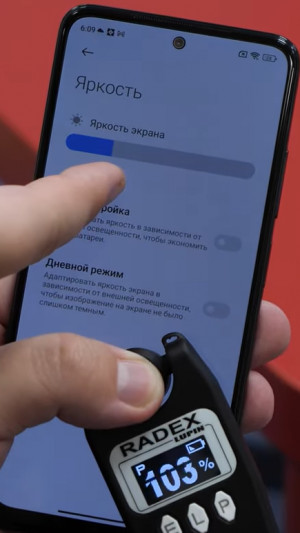
PWM
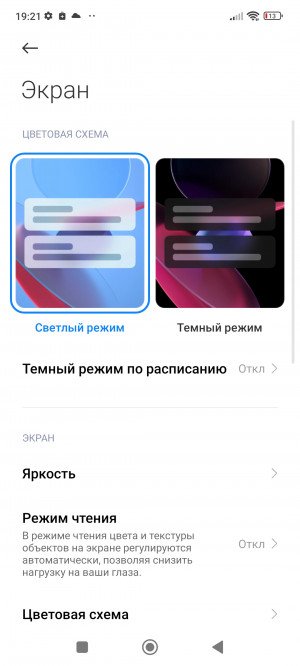
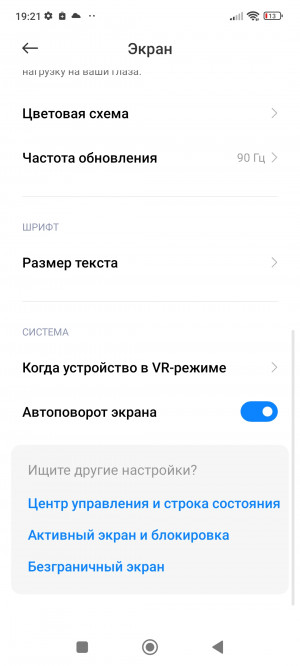
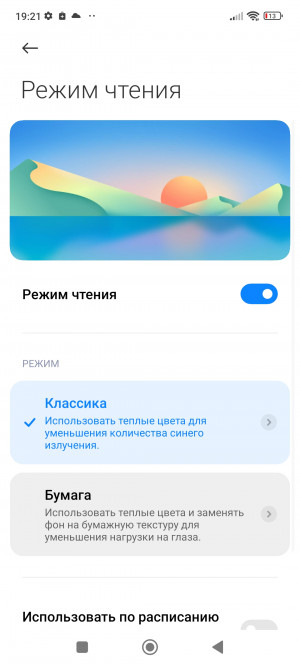

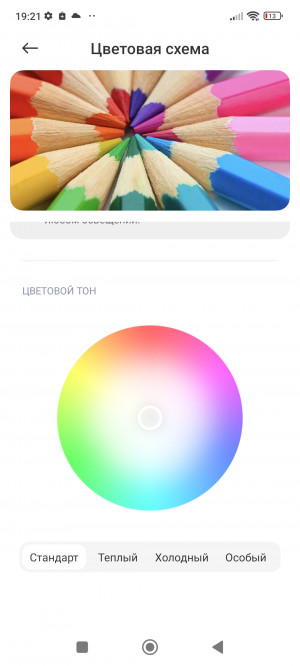
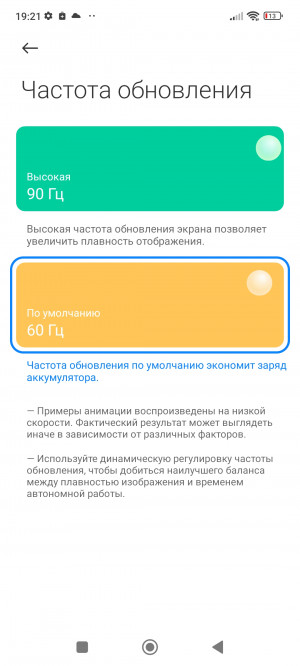
Display settings
Software
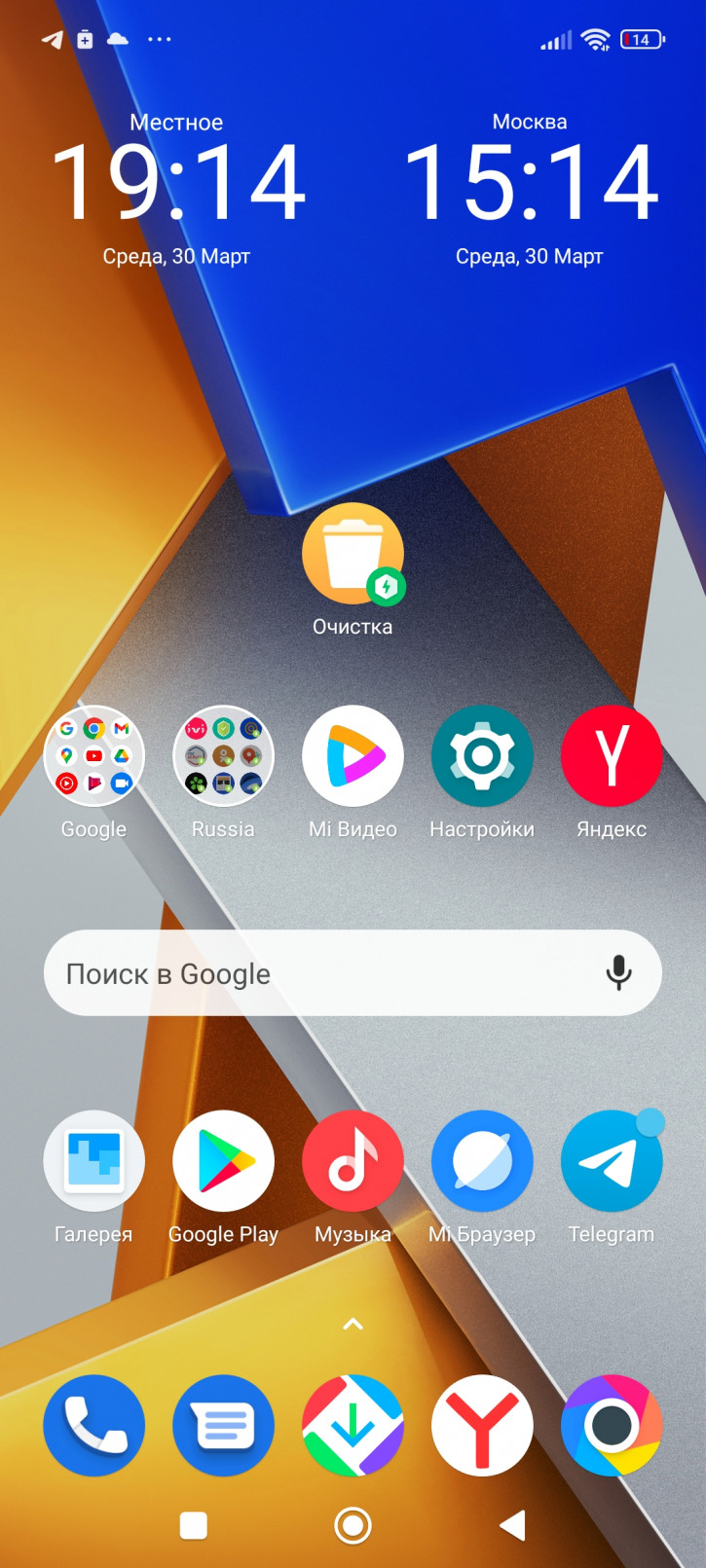
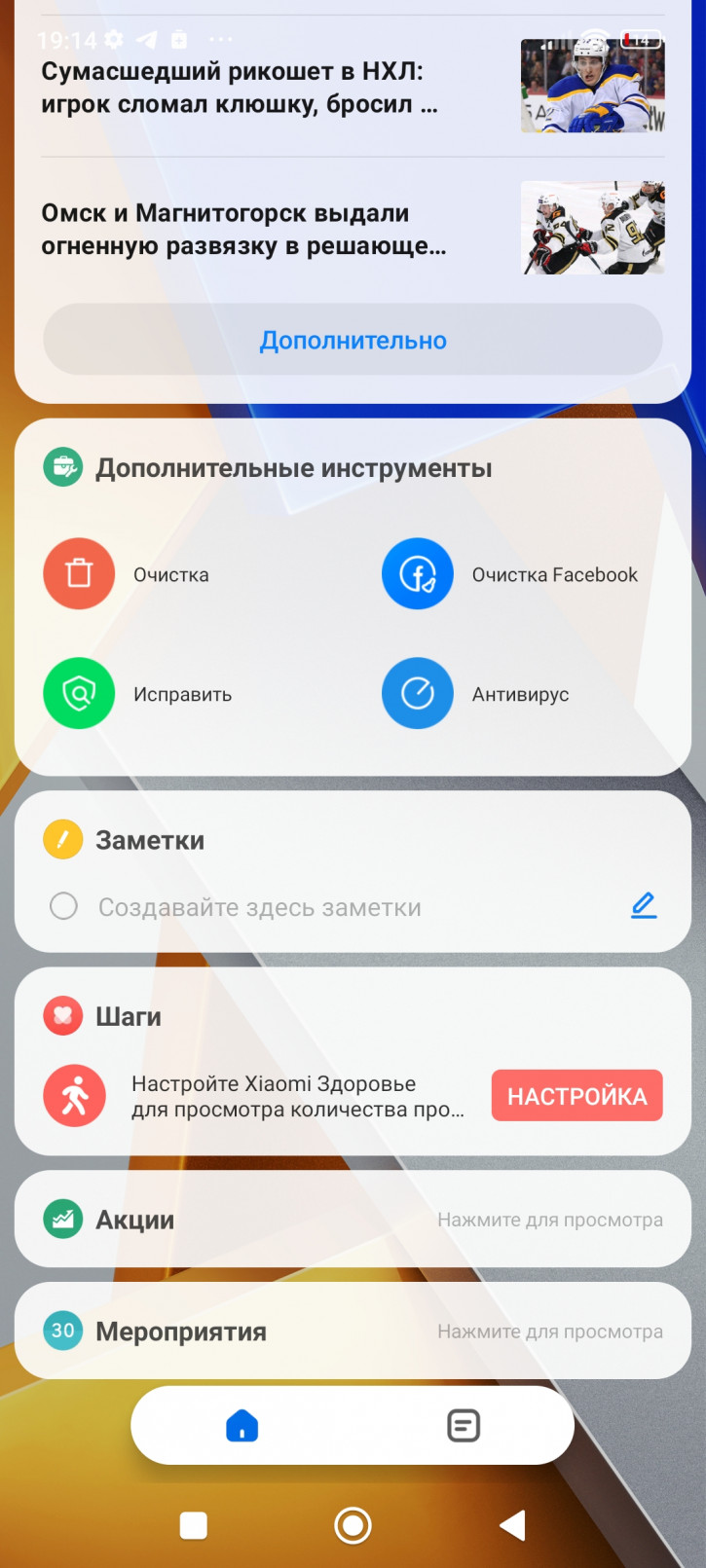
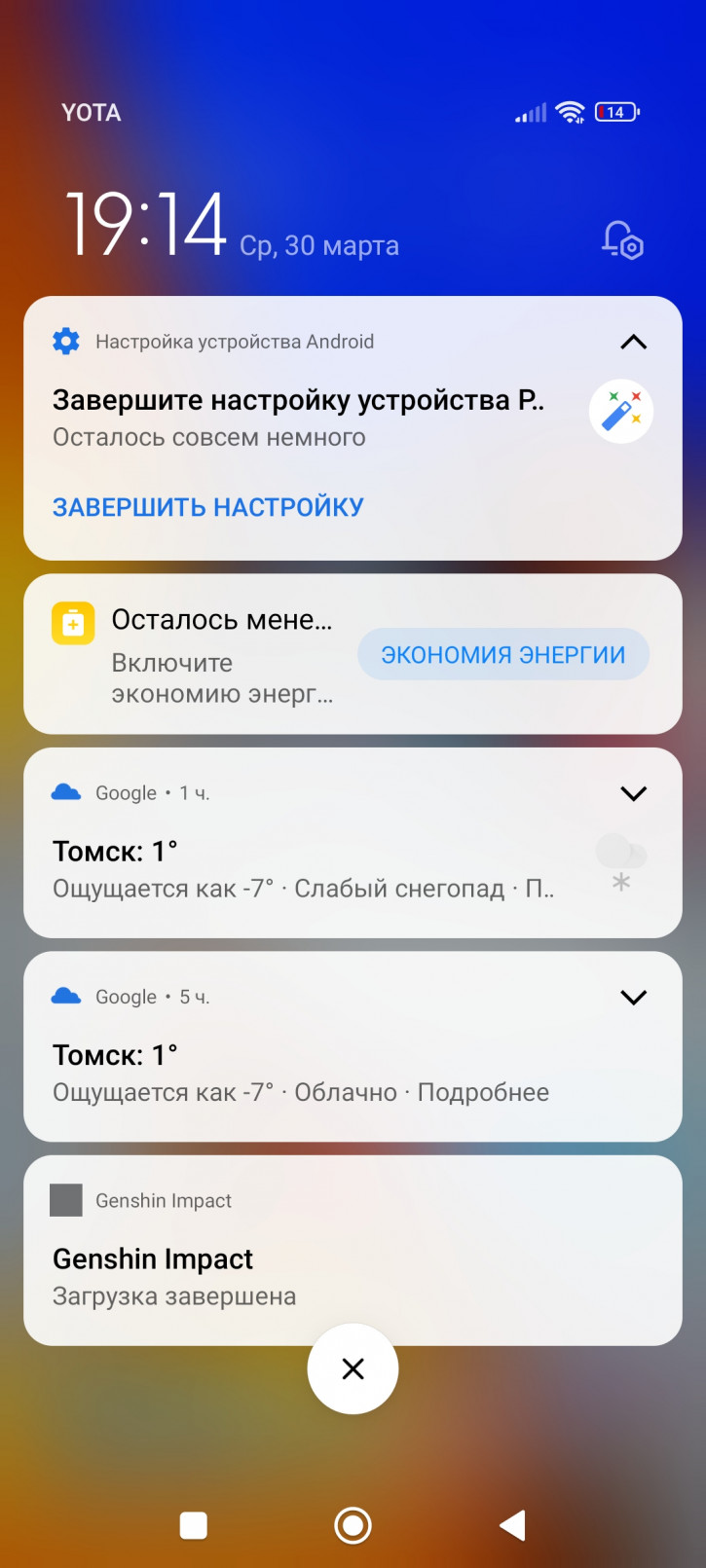
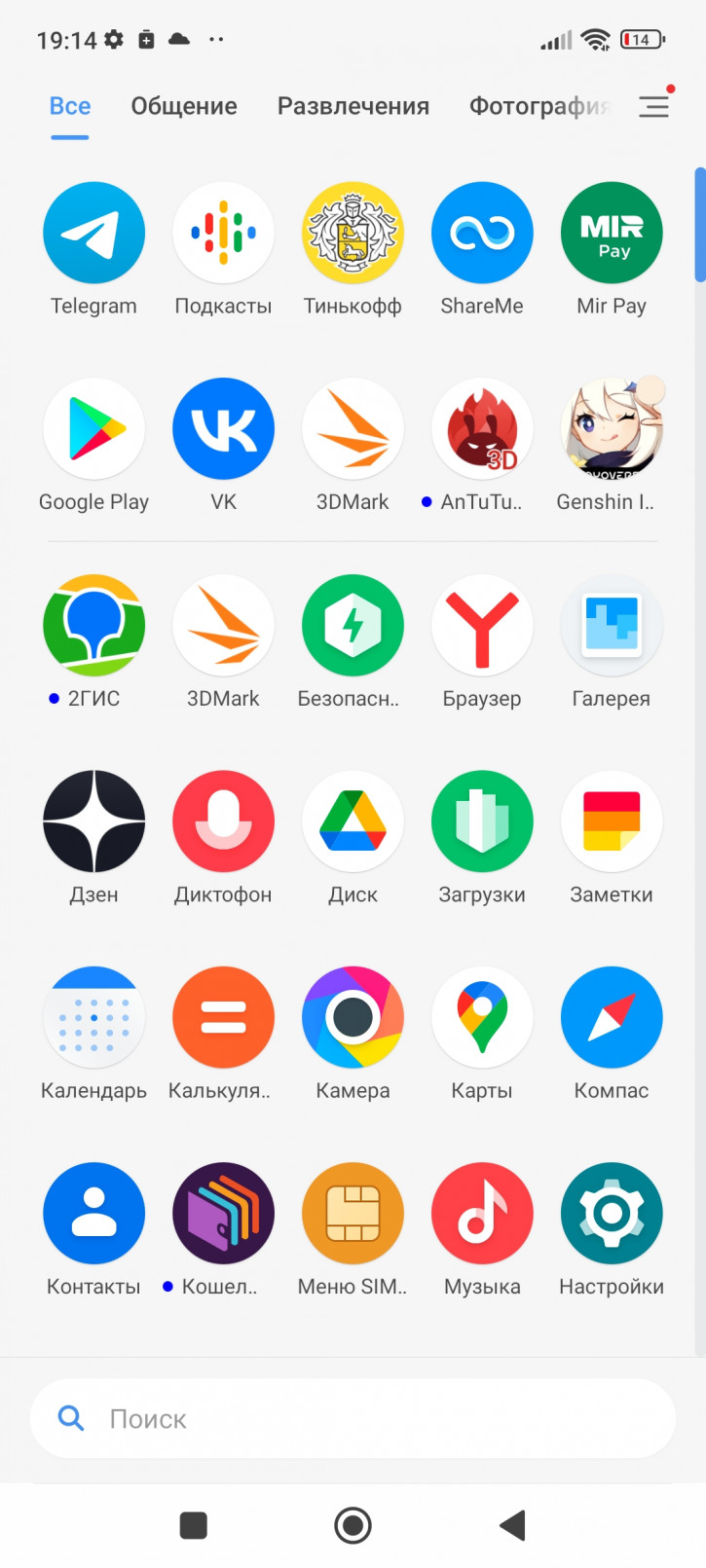
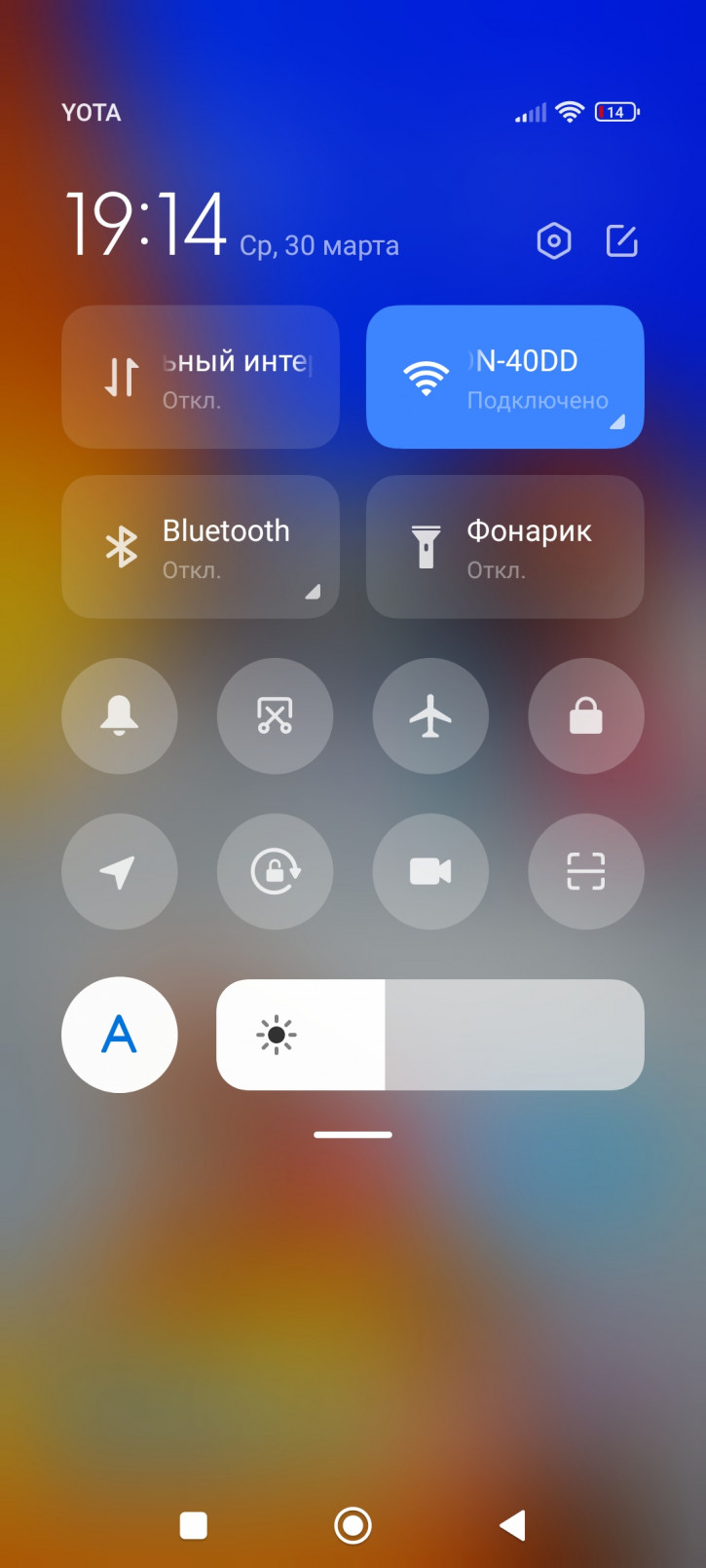
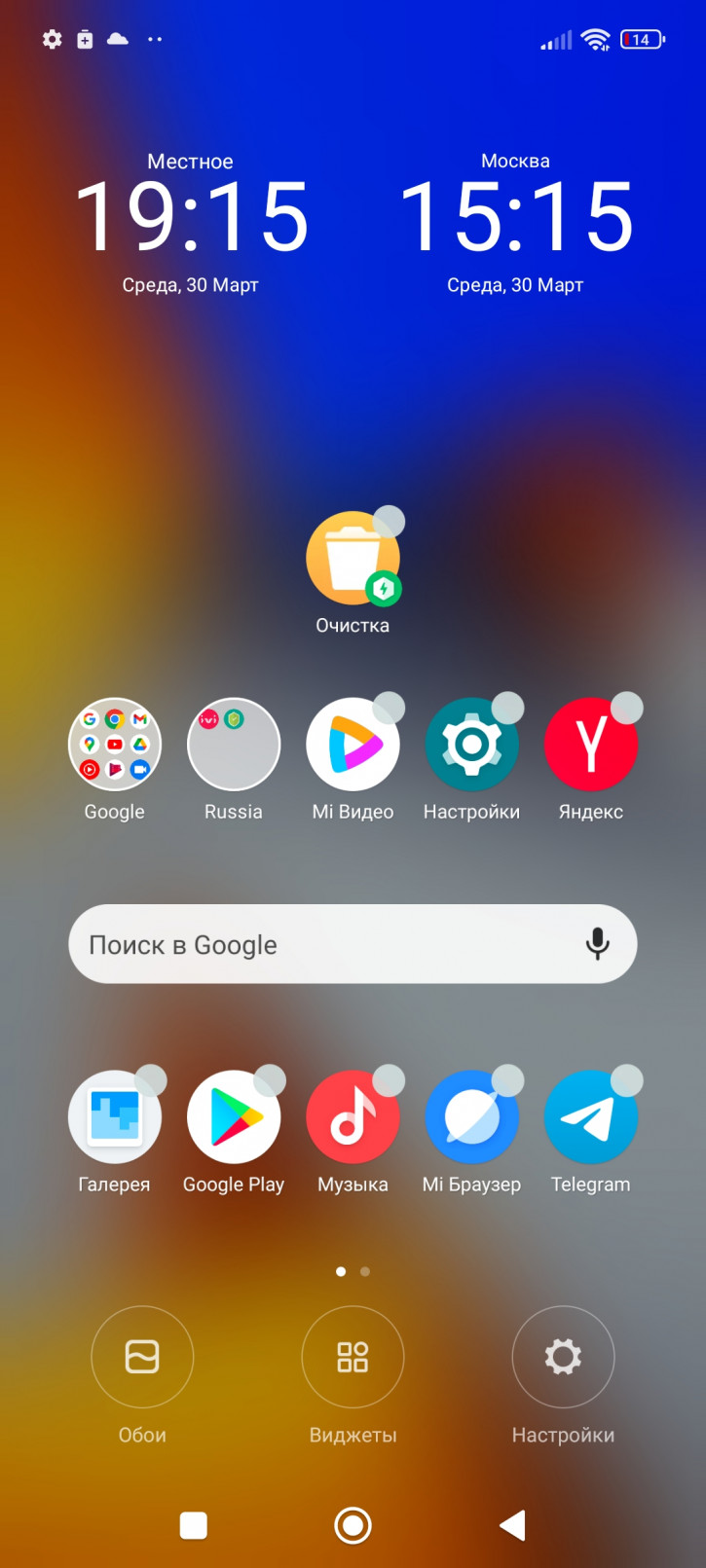
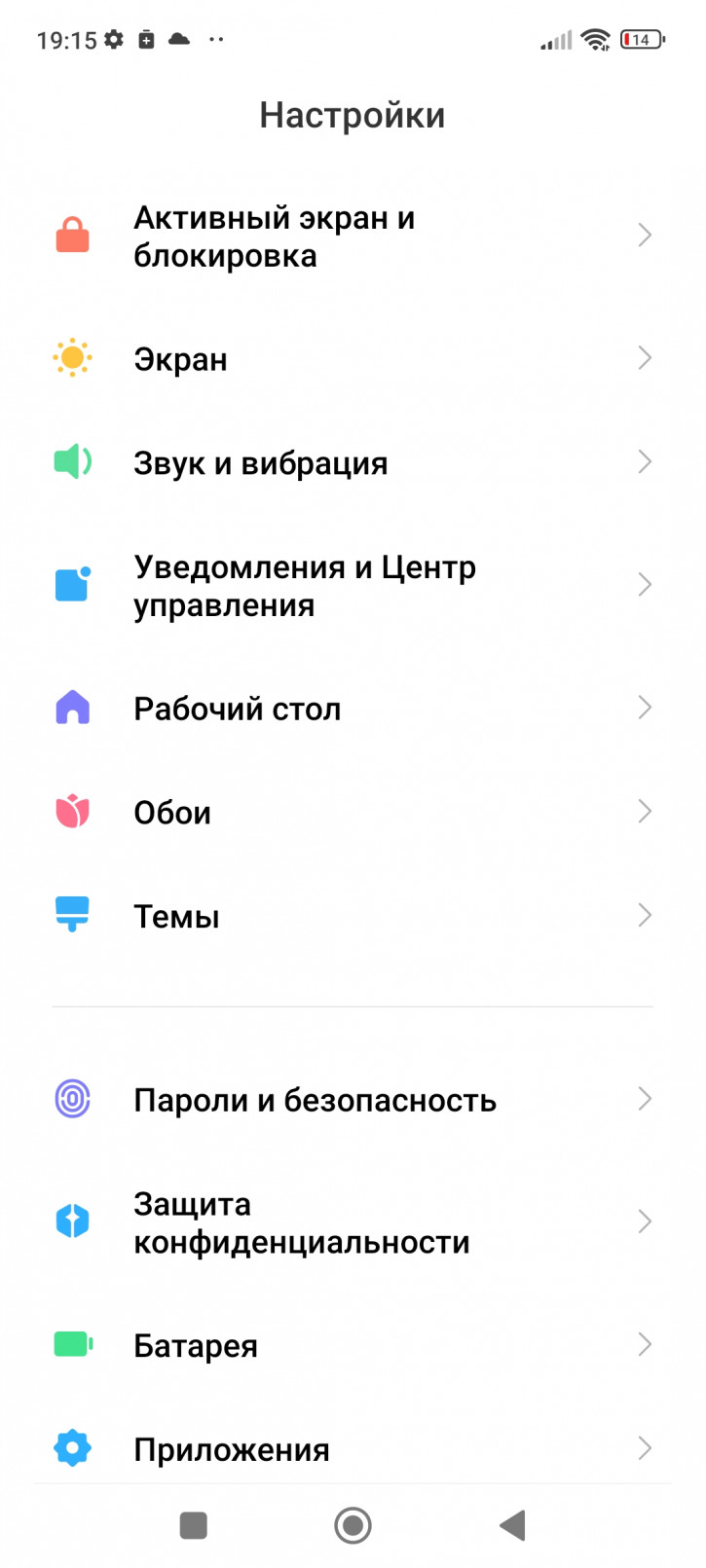
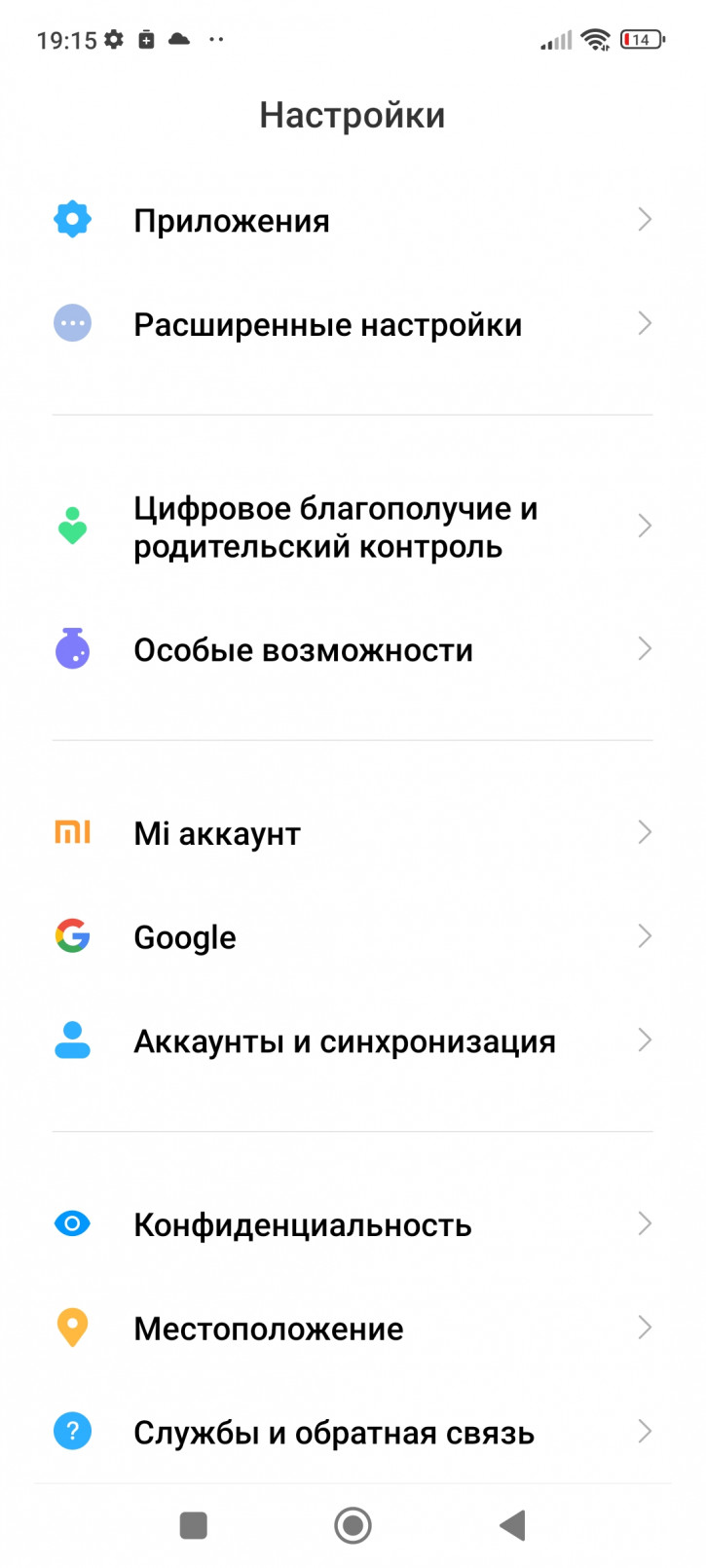
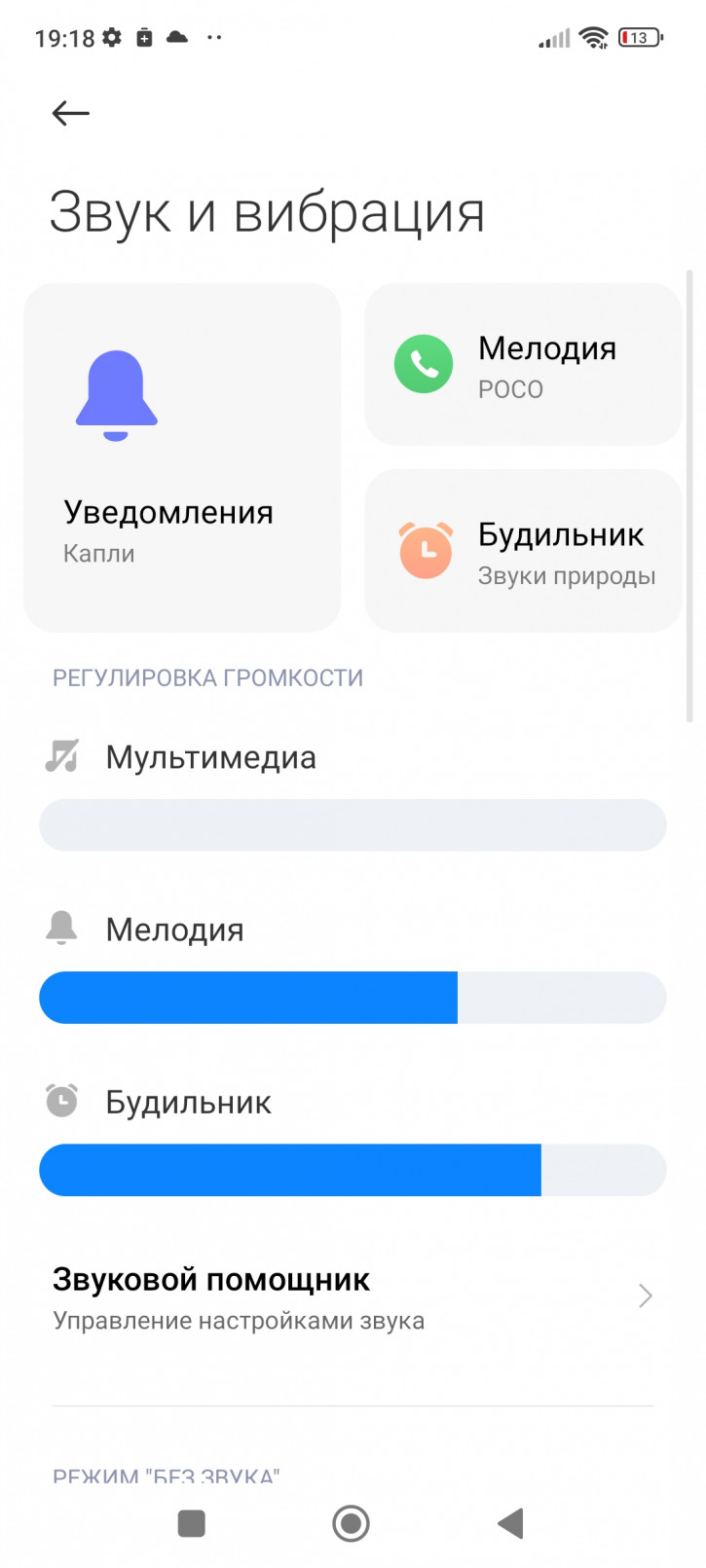
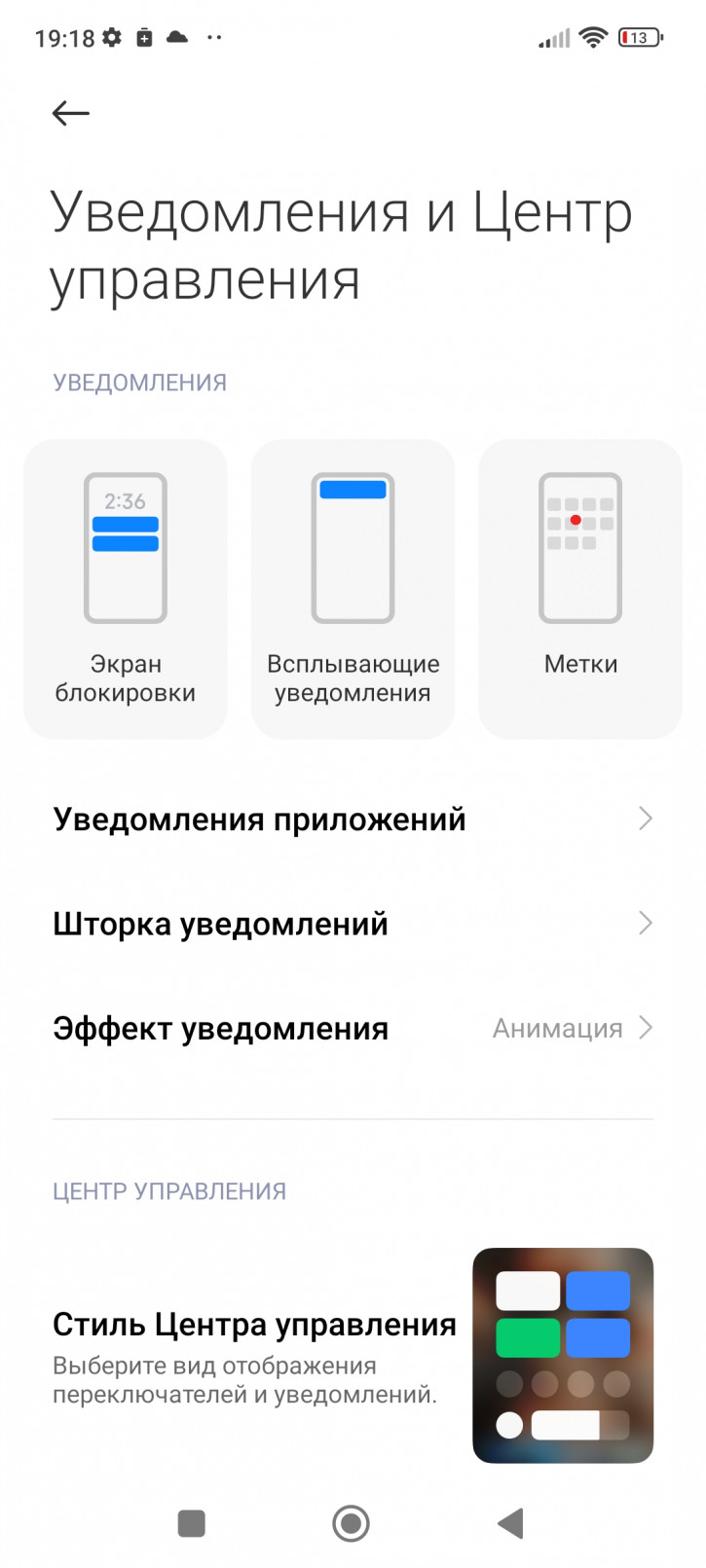
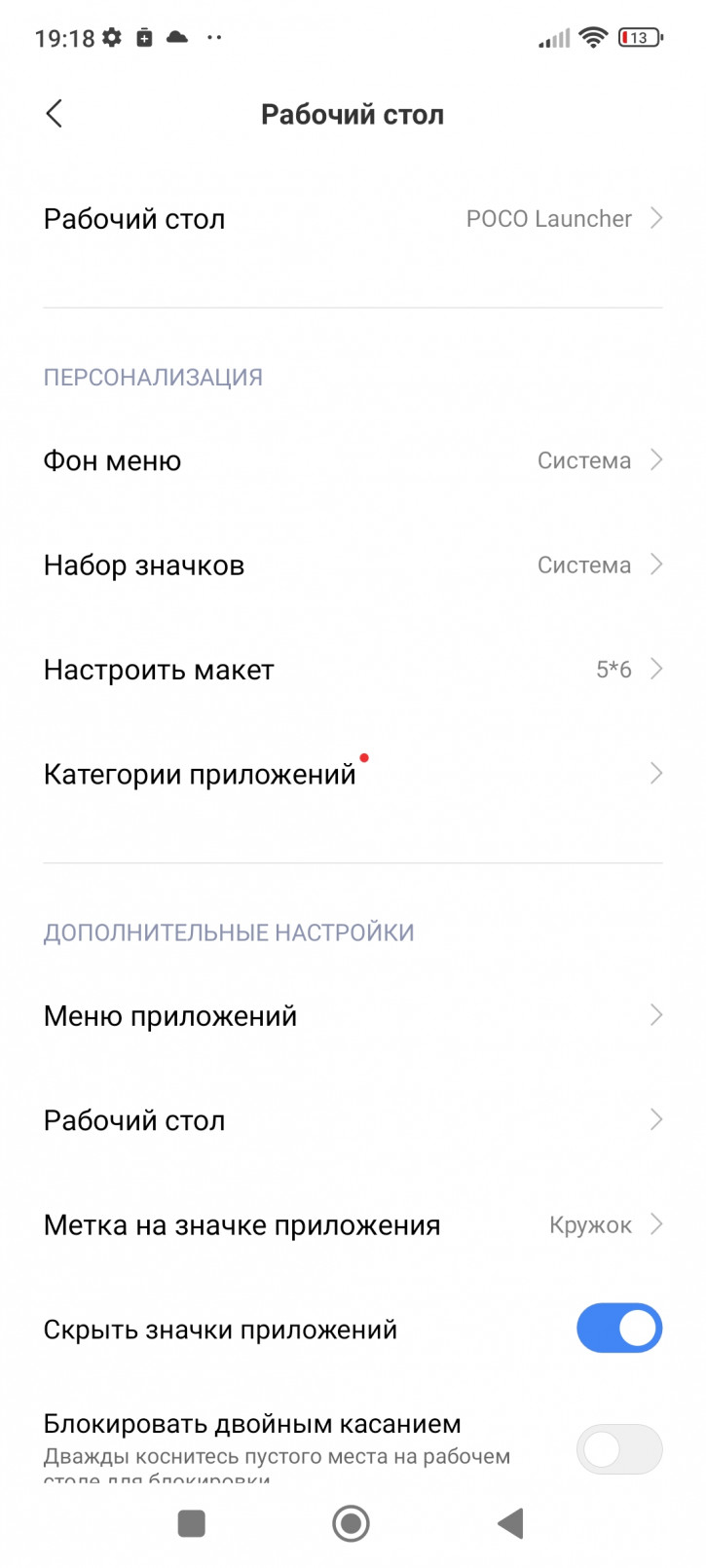
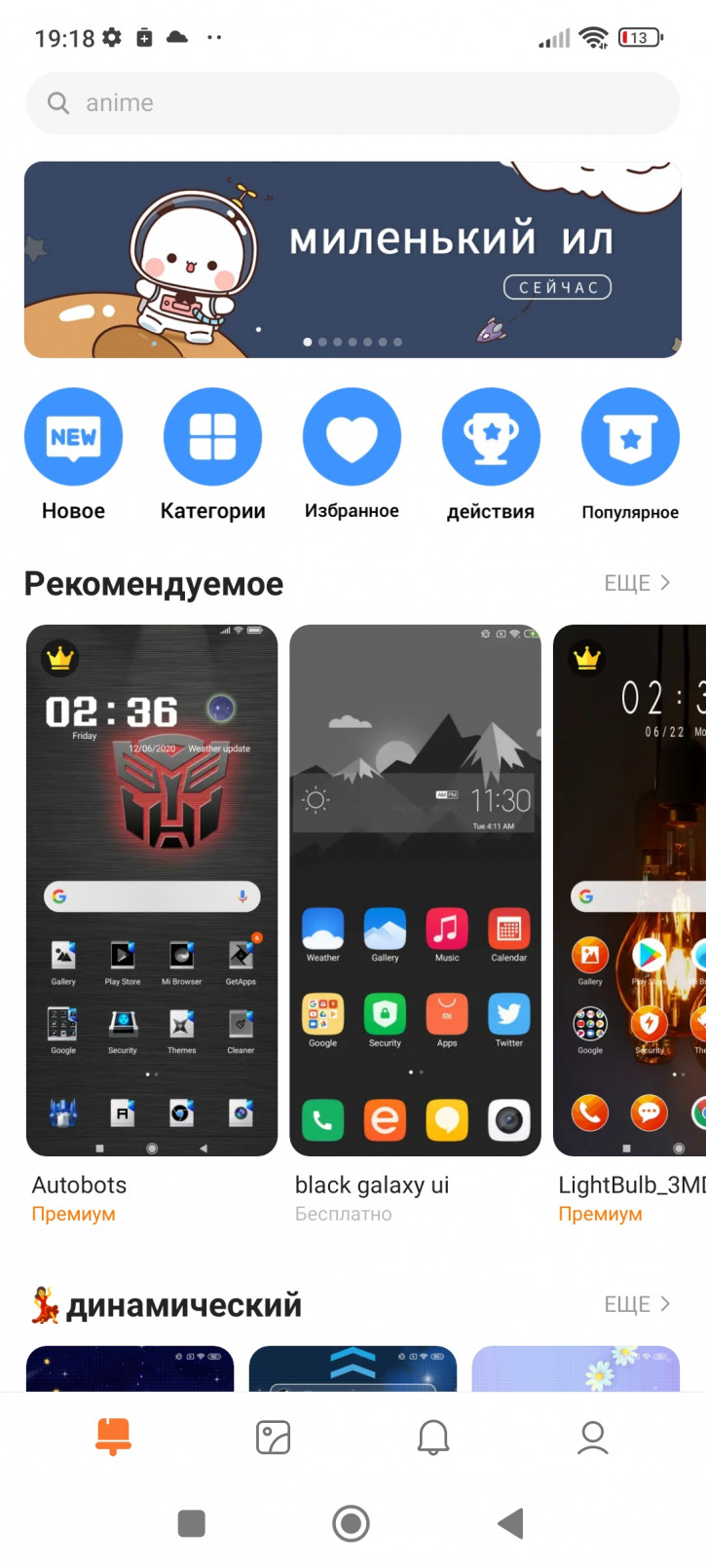
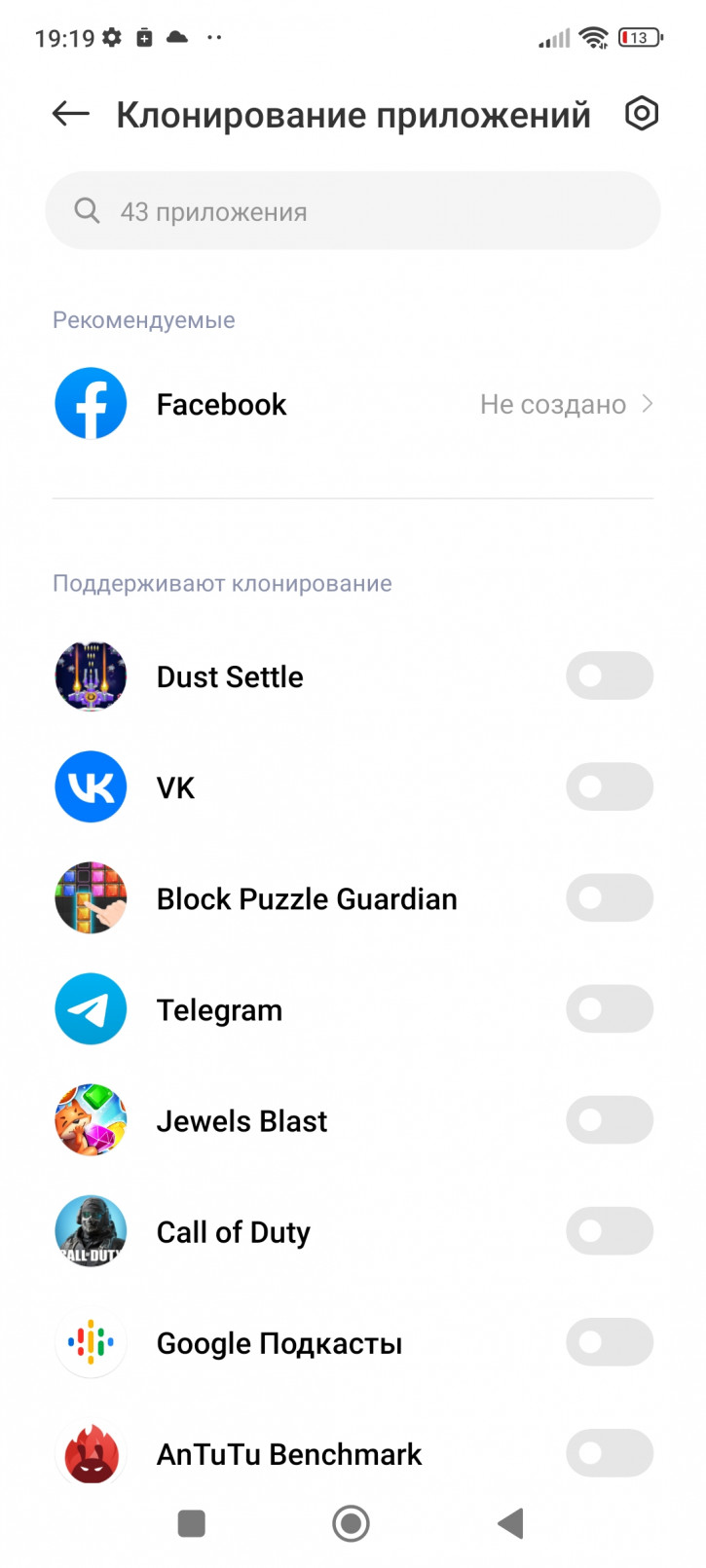
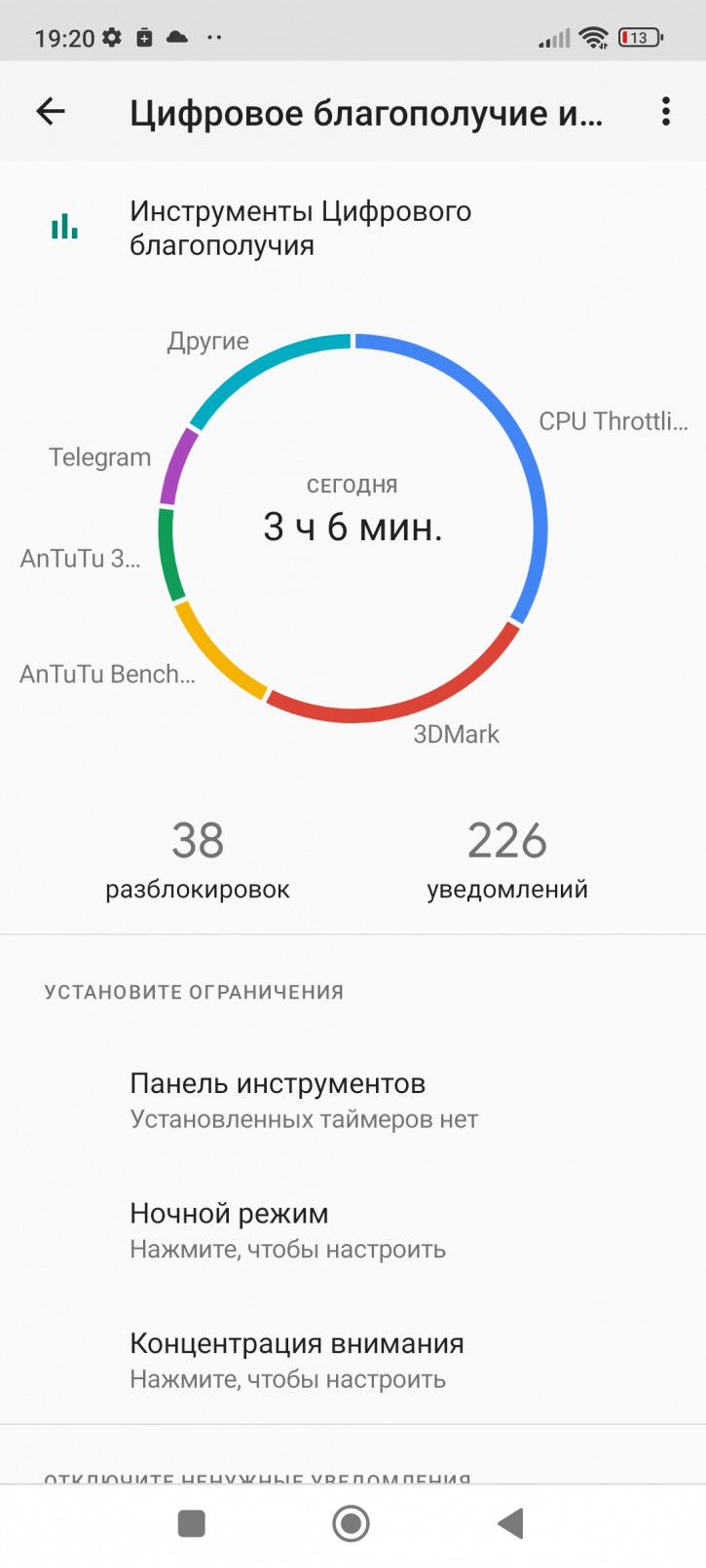
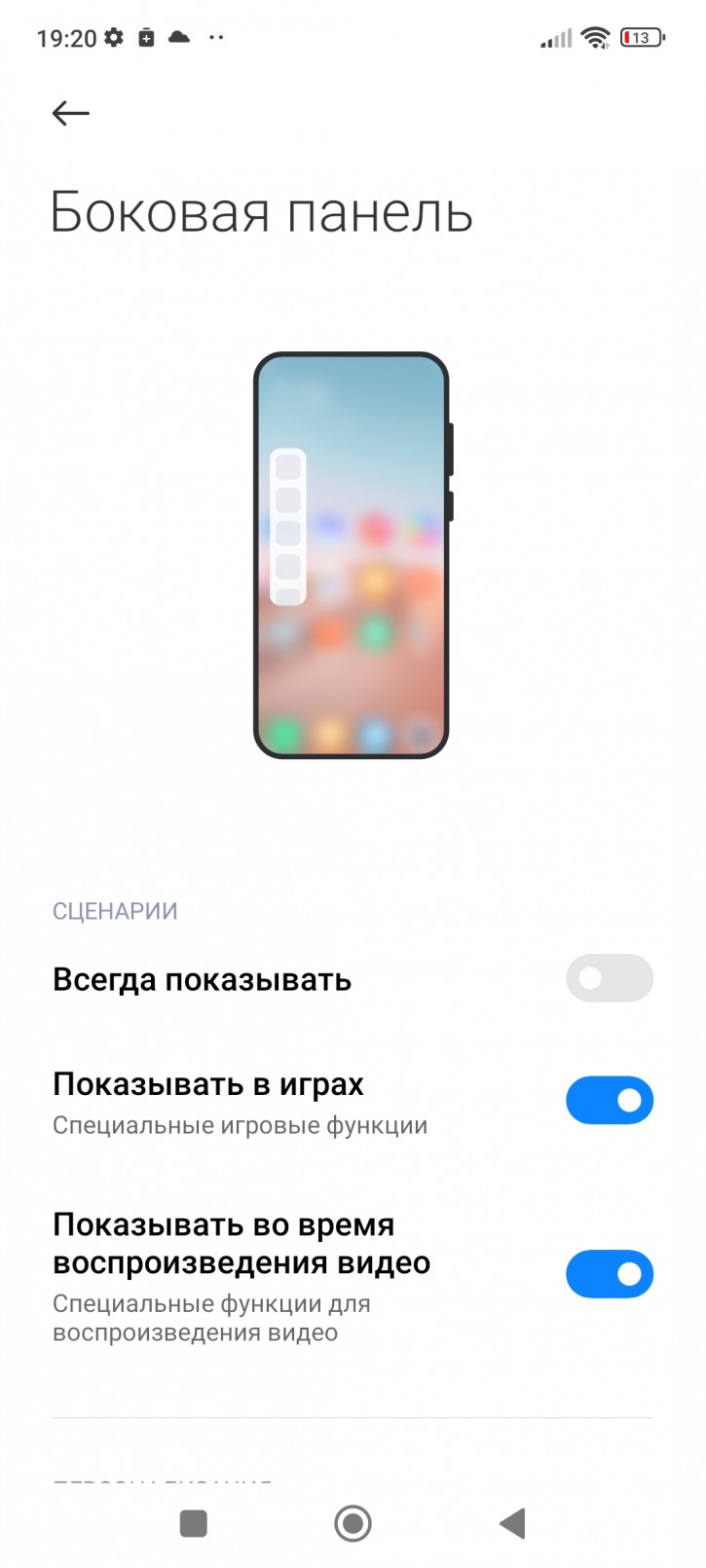
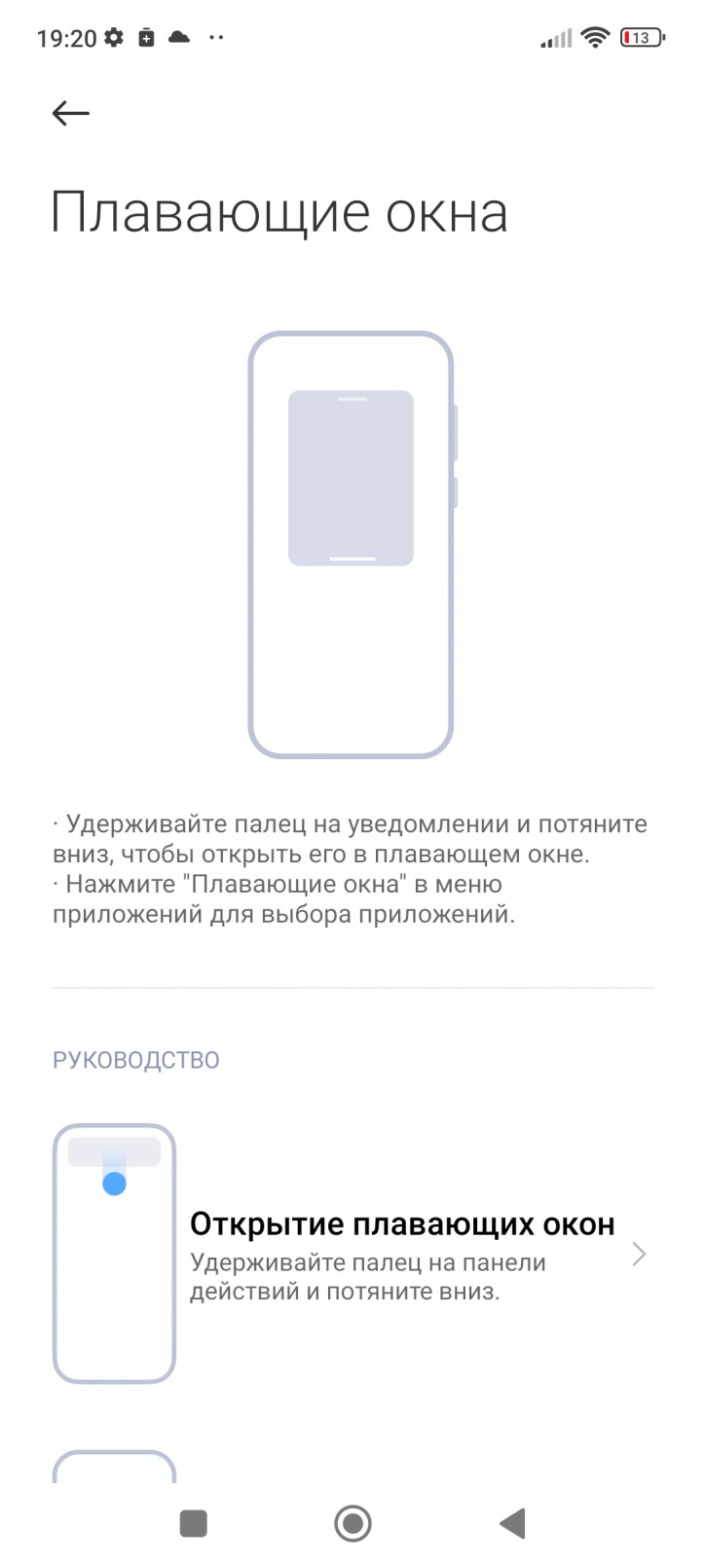
Poco M4 Pro runs on Android 11 in a proprietaryshell Xiaomi - MI UI 13. At the first start, the system throws the user with a whole heap of visual noise: there are application recommendations, and frank advertising in local applications, and bright multi-colored icons, and a ton of pop-up spam, and a bunch of shortcut icons, “and then yes Well, in short, everything is here.” Of course, if you wish, you can clean up this bacchanalia to a more or less adequate state.

During testing, except for problems with the sensorlighting, I did not encounter frank bugs, crashes and other instabilities. Questions are raised, perhaps not always by the fast response of the system to pressing, microlags that occur from time to time and the need to manually activate the refresh rate of 90 Hz (why is this not done by default?).







Cameras
Responsible for the photo and video capabilities of the smartphonefour sensors: main OmniVision OV64B with a resolution of 64 (→16) megapixels, matrix size 1/1.52” and f/1.8 aperture, wide-angle Sony IMX 355 with 8 megapixels, f/2.2 aperture and a capture angle of 118°, a 2 MP macro plug and a 16 MP Sony IMX471 front camera.
In good light, the main camera canget sensible shots with very good detail and quite realistic colors. Shirik suffers from a clear lack of detail for shooting panoramas and has a smaller dynamic range than the main camera. In contrasting scenes, “burning out” of light areas is noticeable.
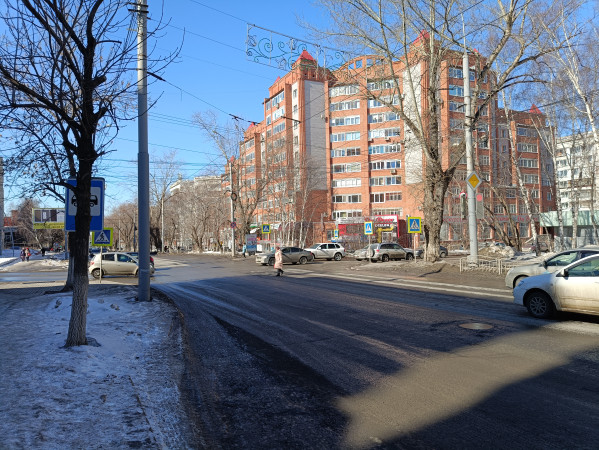
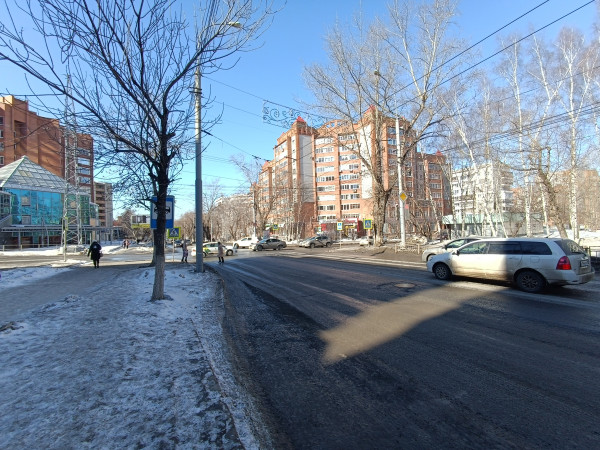












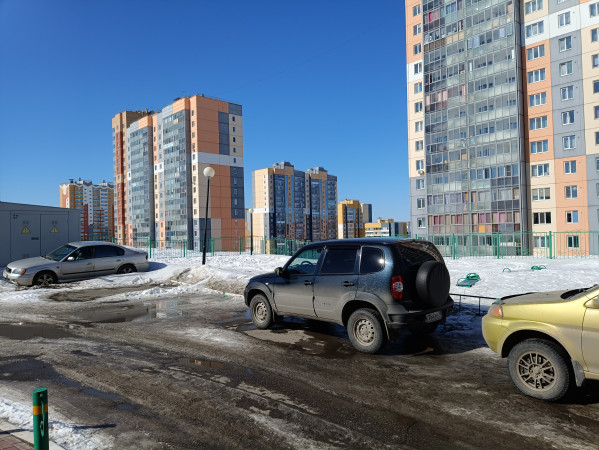
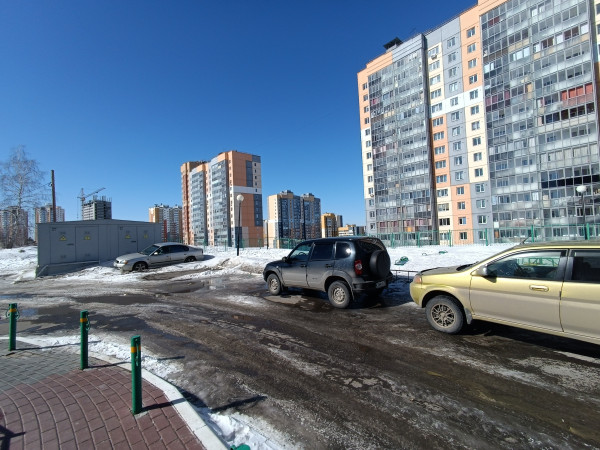


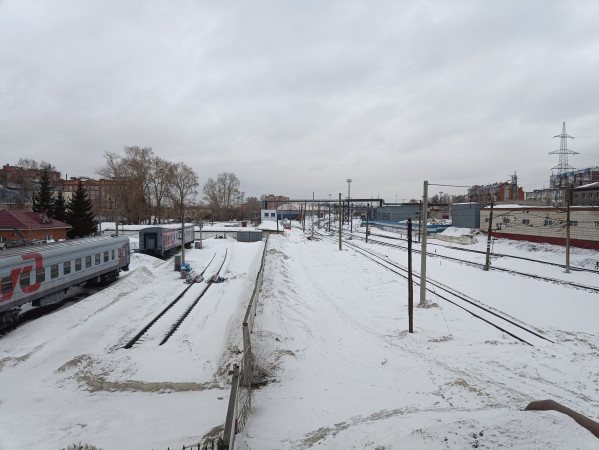









Main and wide-angle cameras










Main Camera: Zoom


Main camera: standard and portrait modes
In the absence of light, both cameras have totight. A more or less adequate result can be obtained when using the "Night" mode, but it is available only for the main camera. But the Pro mode is also available for the width, which means you can achieve some kind of result by experimenting with fine-tuning the shooting.




Main and wide-angle cameras in low light: wide, wide + Pro mode (15 sec, 50 ISO, handheld but with emphasis), main, main + Night mode


Front camera: standard and portrait modes
Shooting video is the weak side of the smartphone.The shooting mode is limited to 1080p@30fps on all cameras, there is no switching between cameras during shooting, the light sources in the rooms noticeably double, and especially bright ones are burned out. The quality is enough for everyday needs, but lovers of beautiful videos and vlogging are clearly not here.
Examples of photos and videos
Performance and tests
The performance of the device fell on the shoulders notthe most powerful but fairly stable MediaTek Helio G96 chipset. For working with data in response to 6/8 GB of LPDDR4X RAM and 128/256 GB of permanent memory UFS 2.2. There is a slot for a microSD memory card, as well as a technology for borrowing 2 GB of permanent memory at the expense of operational memory. We got the younger version at 6/128. The system works sluggishly on it: thoughtfulness when switching heavy applications is a common thing.
For games and applications, MIUI offerslaunch through your own game launcher. In the CPU throttling test, it significantly improved stability, but the GPU, with or without it, produced the same values.
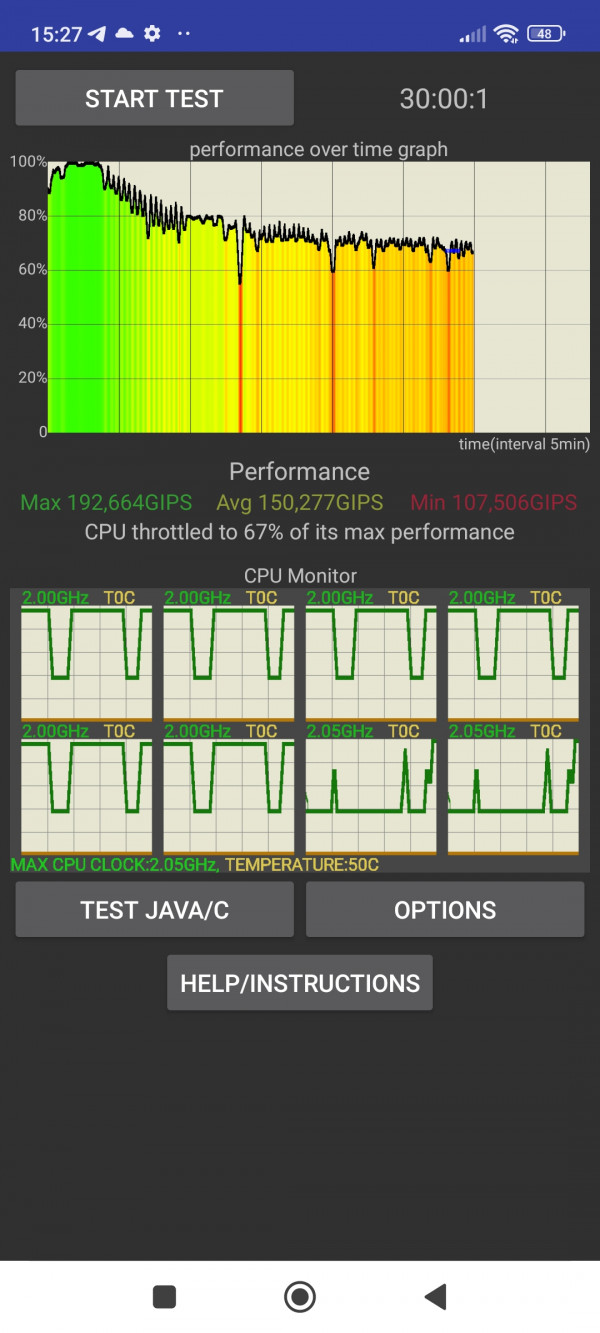
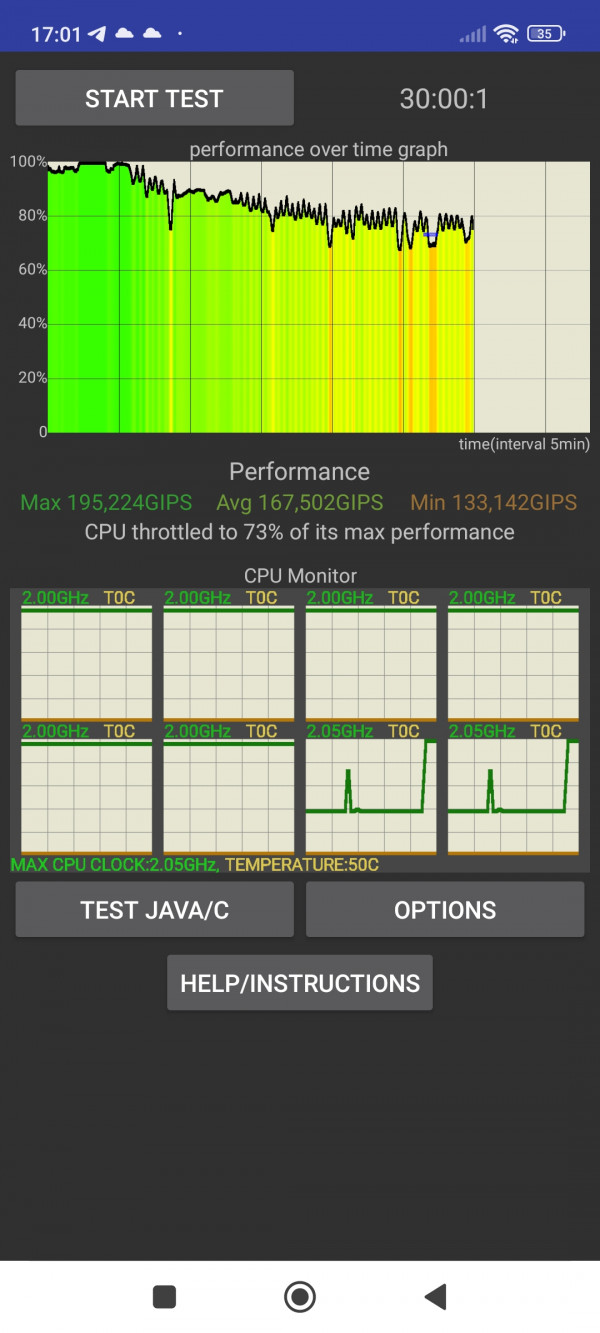
Throttling test: normal launch and through the game launcher
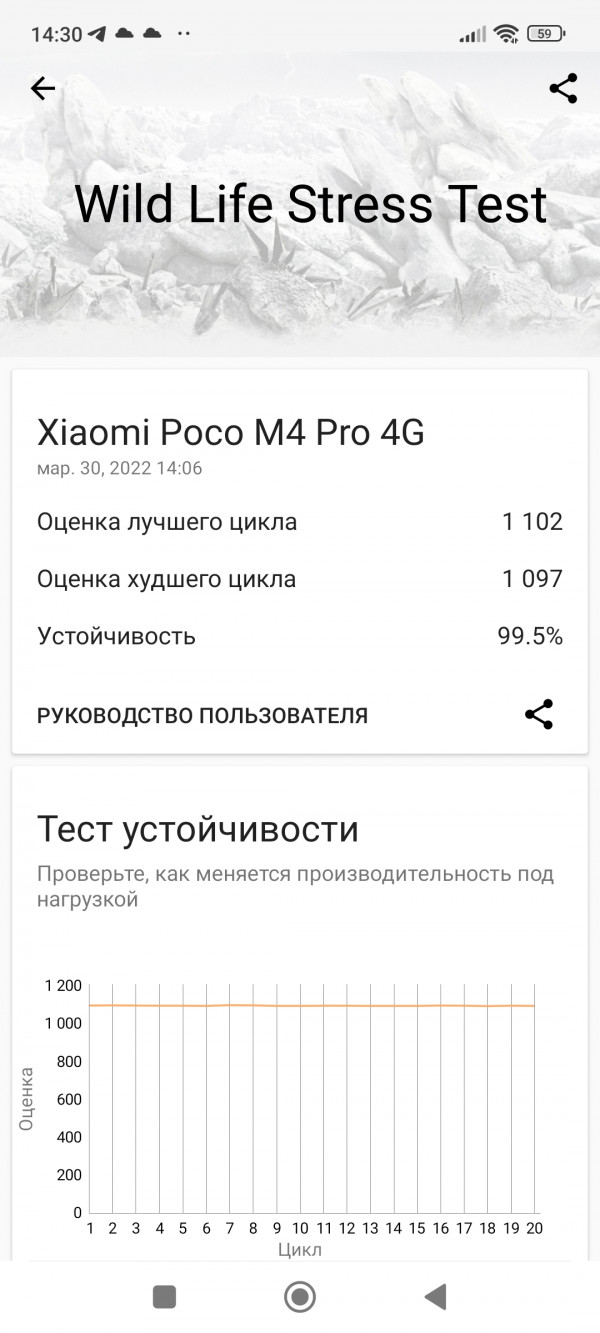
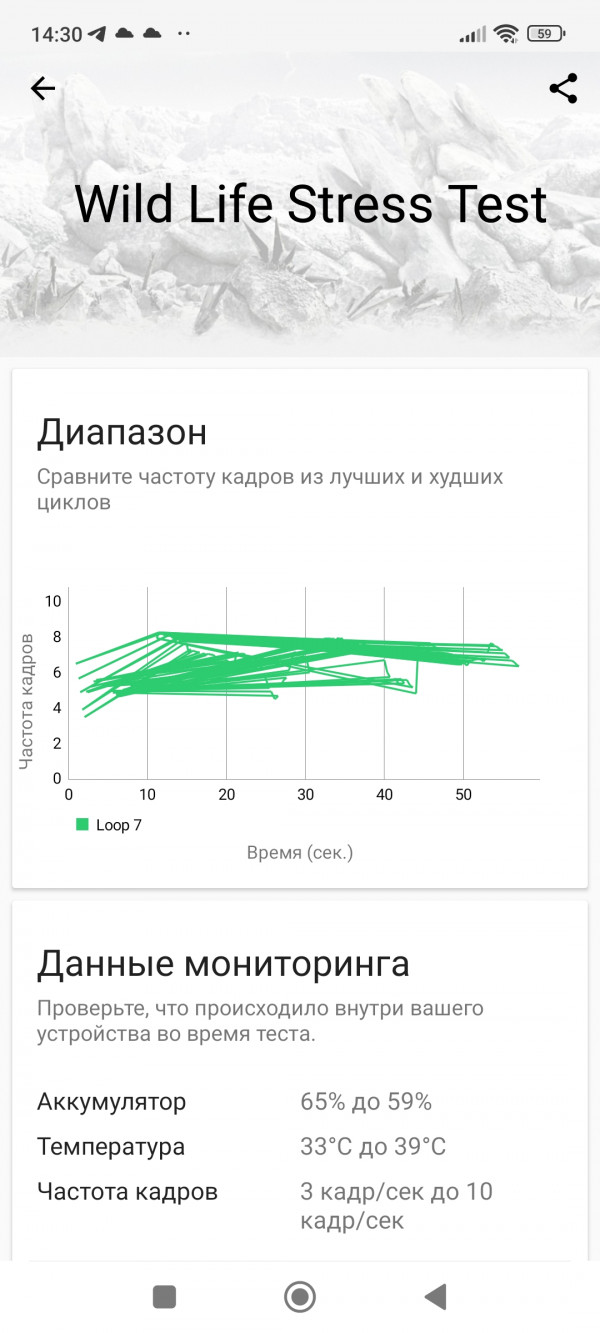

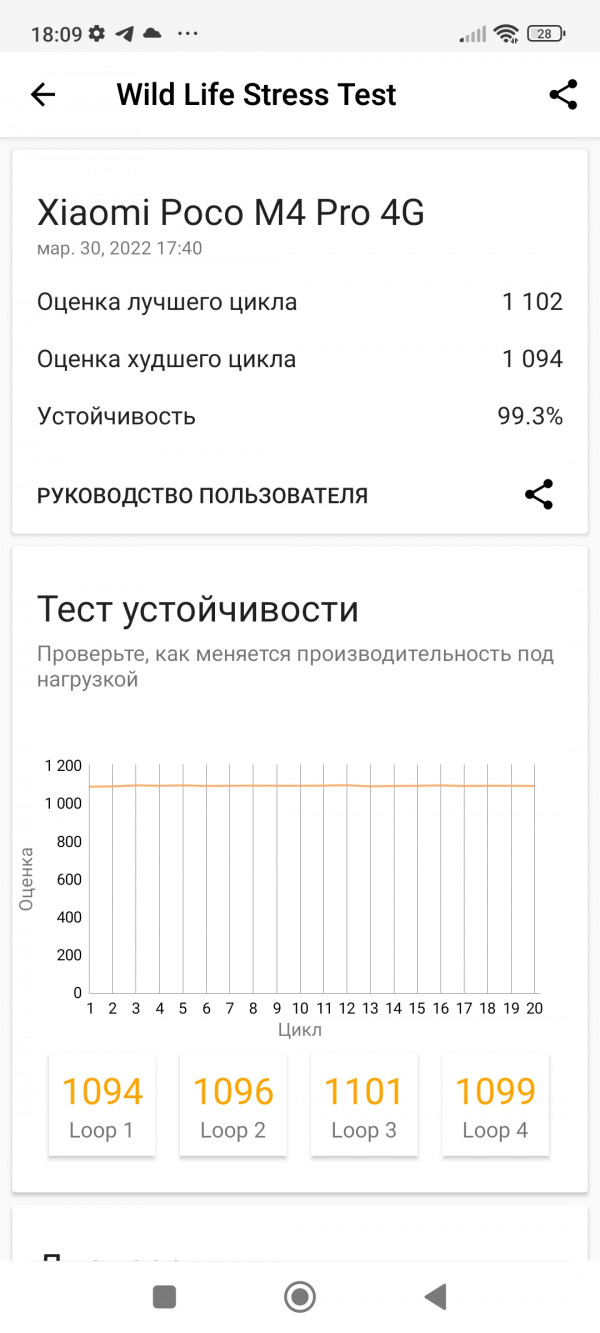

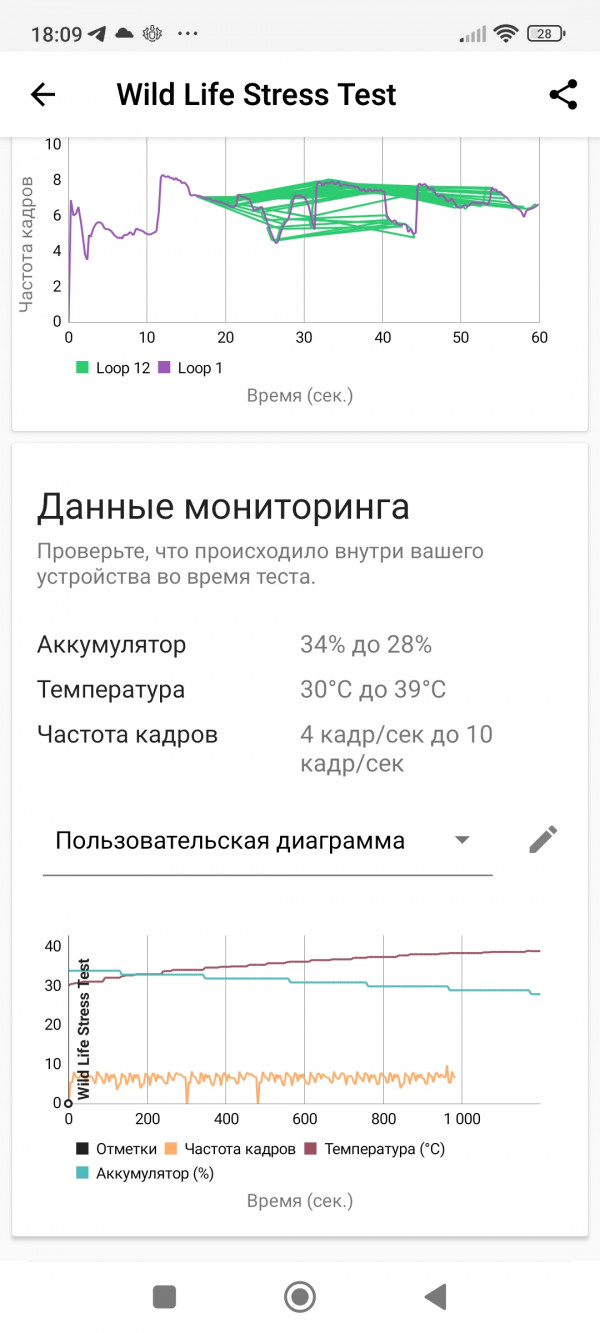
3DMark graphical stress test: normal launch and through the game launcher


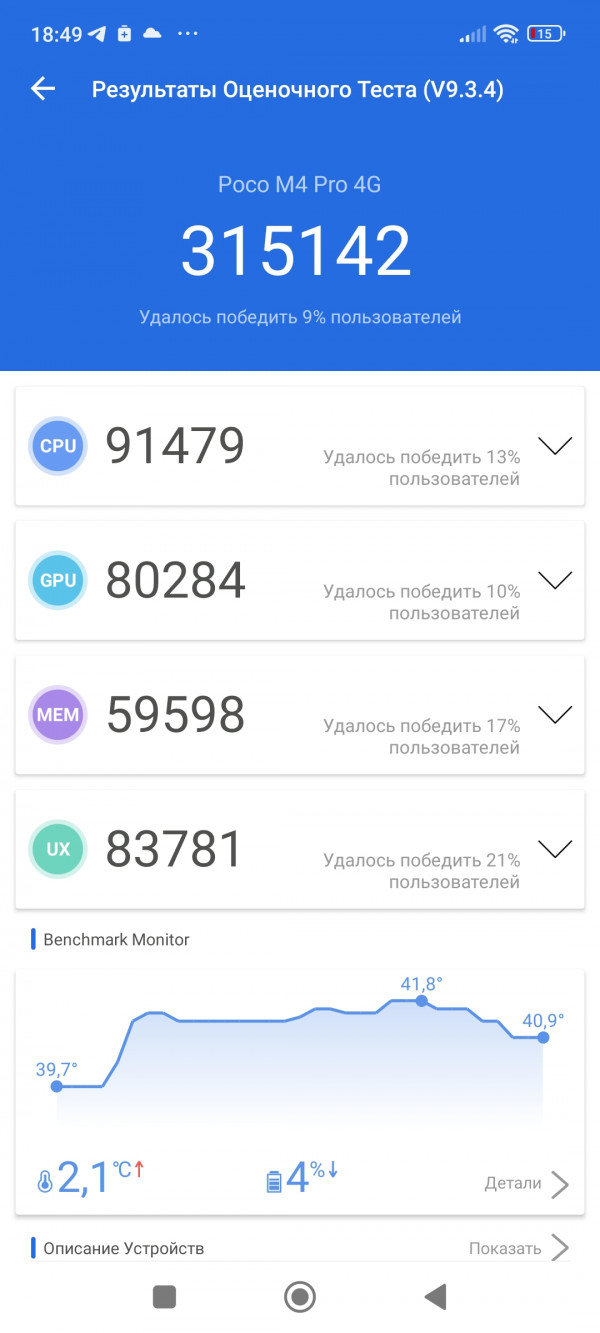
AnTuTu: Launched via game launcher
Most modern games give out a comfortableframerate on low-medium graphics settings. COD mobile does not allow you to choose graphics above average, but pleases with constant 60 fps and nimble responsiveness (according to measurements, the touch gave out up to 200 Hz). In Tacticool, the device showed 60-90 fps on low graphics (with drops during intense moments).
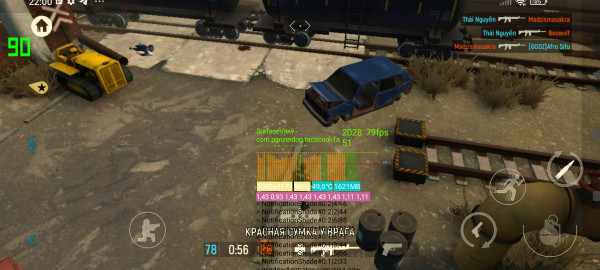
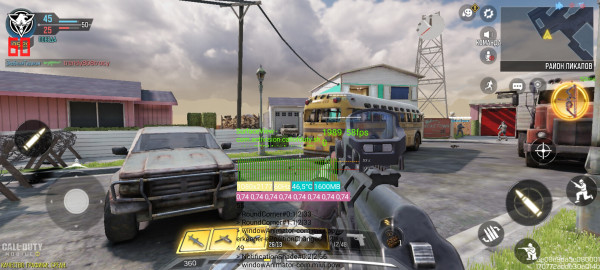
Tacticool and COD Mobile: focus on fps charts
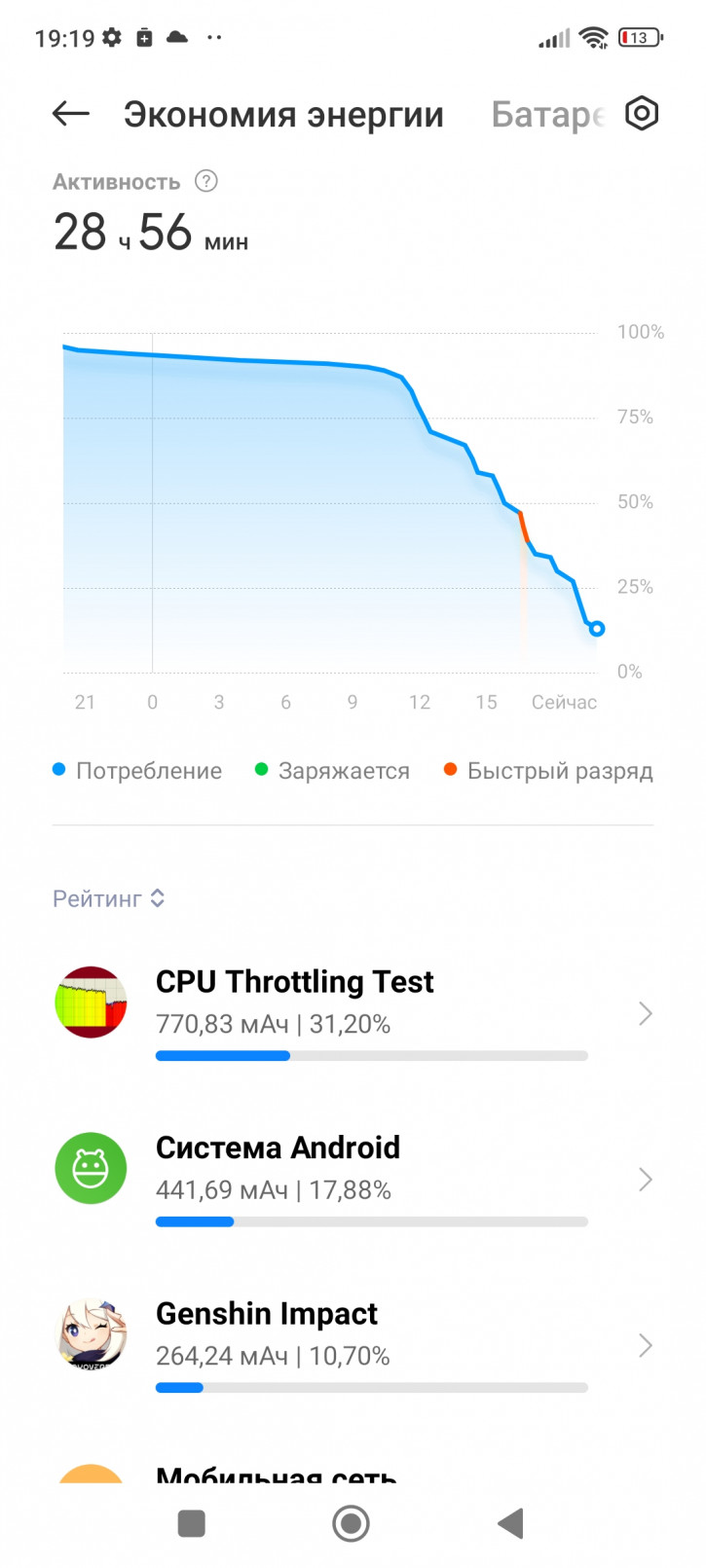
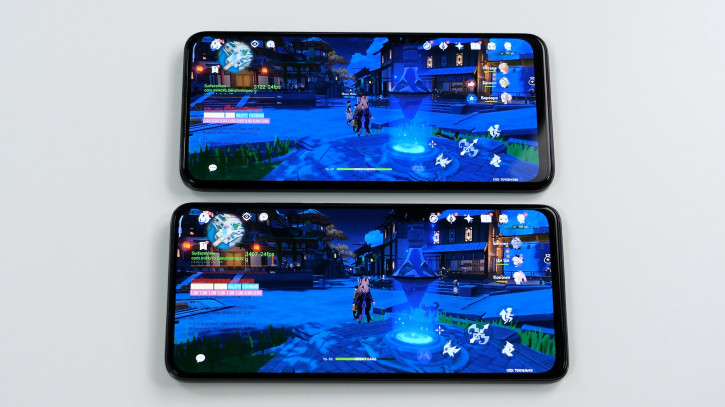
Desperately resource-intensive Genshin Impactpoorly playable even on low graphics settings. At the time of launch, the counter showed 18-46 fps in the field and 10-35 fps in the city. After half an hour - 15-35 fps and 10-32 fps. In both cases, the average fps is around 20-30, but constant drops prevent any comfortable gameplay. Despite the CPU heating up to ≈50°, the case does not burn, but only seems warm in the area of the photoblock. Apparently, the declared LiquidCool 1.0 cooling system really works.

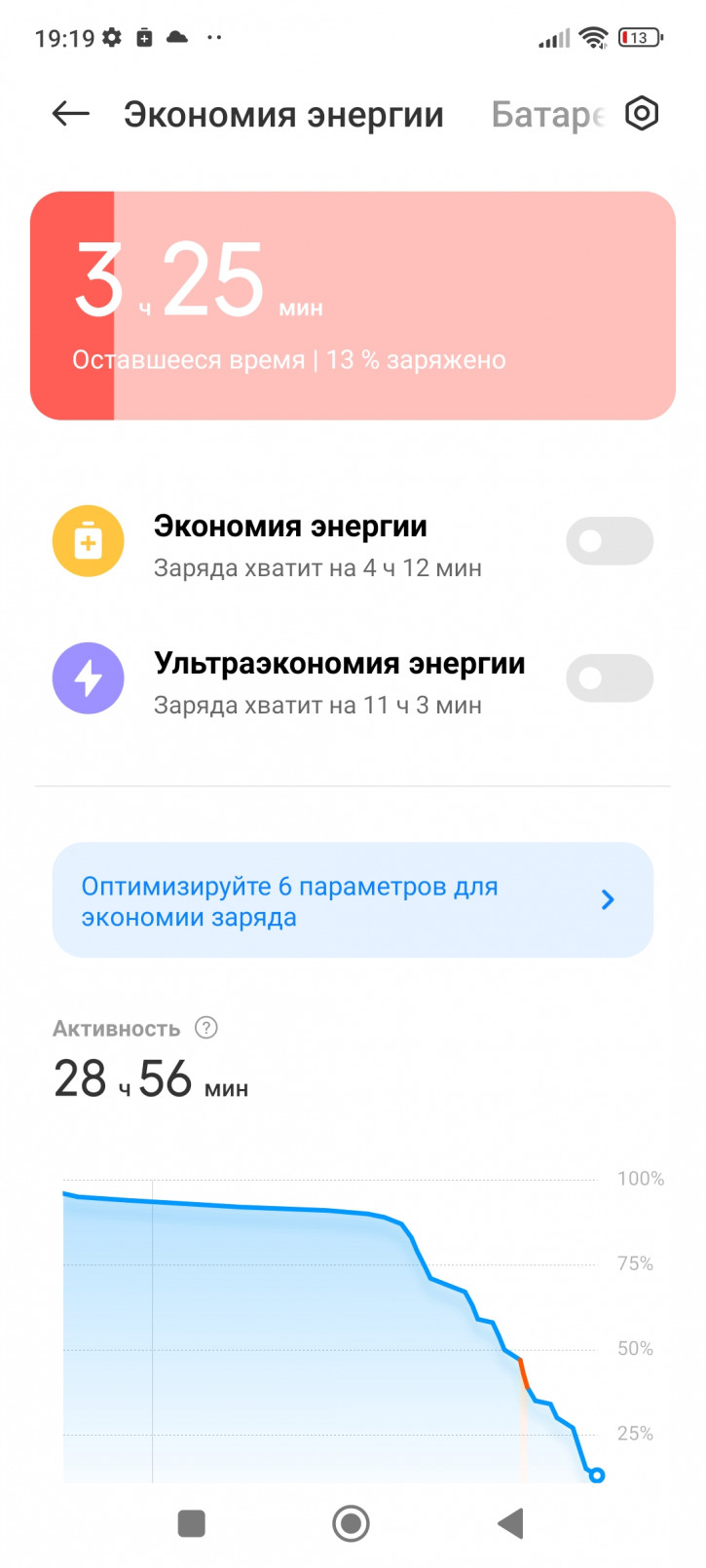
Moderate power iron and 5000 batterymAh provide the device with confident autonomy. With not the most active use of the Poco M4 Pro charge, I consistently had enough for two days. In more objective units, this is:
- 8% discharge in 60 minutes of watching YouTube (Wi-Fi, 50% brightness, 1080p).
- Discharge by 9% in 30 minutes of playing Tacticool (Wi-Fi, 60% brightness, minimum graphics settings, ≈60-90 fps)
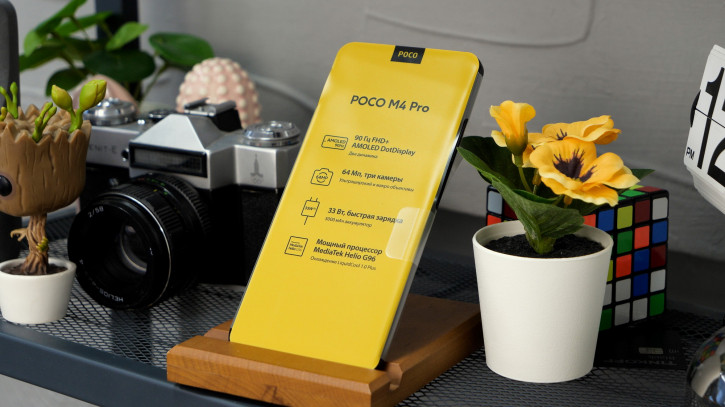
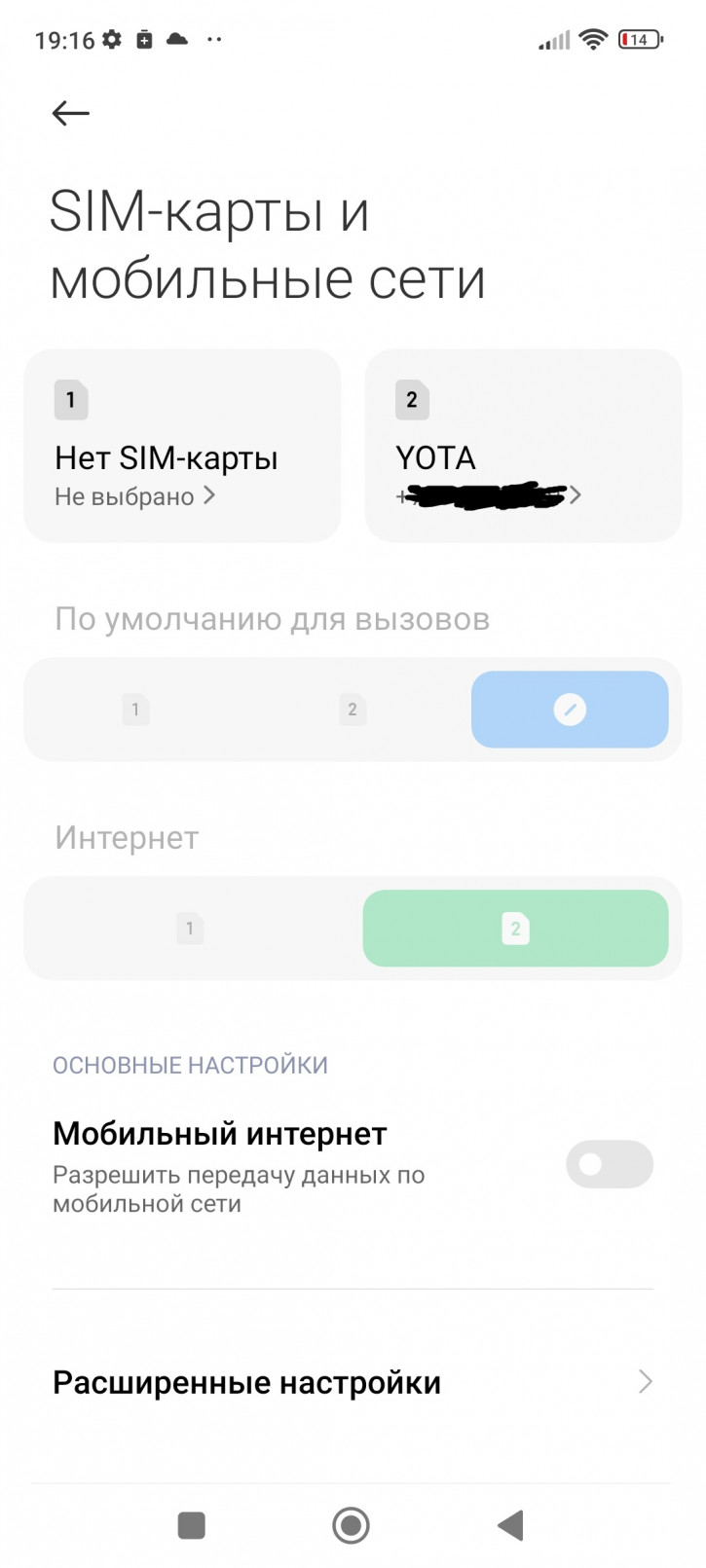
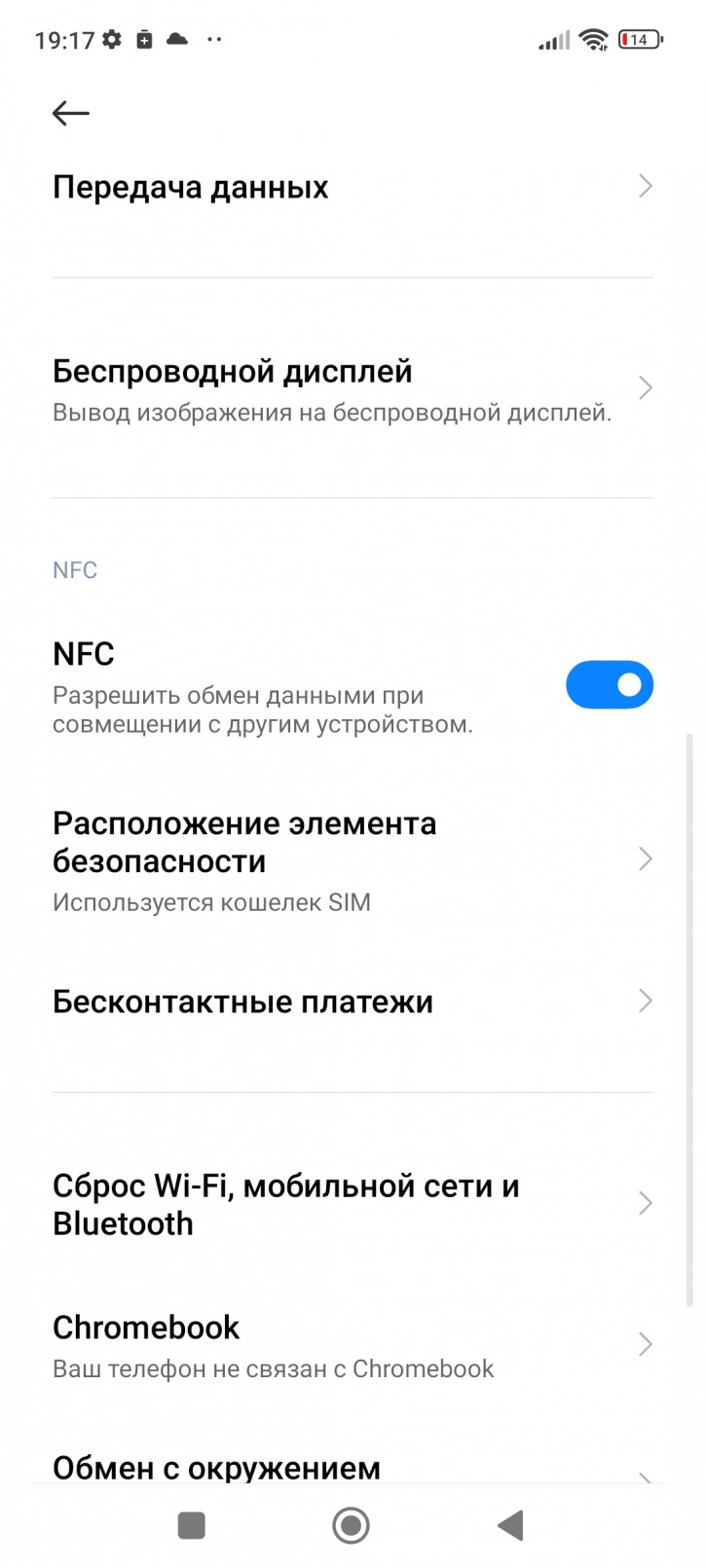
Charging the smartphone is offered by the power adapterat 33 W (11 V, 3 A). The charge timings are as follows: 10 minutes - 17%, 30 - 48%, 60 - 95%, 68 - 100%. In terms of other technologies, I note support for Wi-FI ac (5) in the 2.4 GHz and 5 GHz bands, as well as the presence of NFC, FM radio and Bluetooth 5.0.
Conclusions
Poco M4 Pro pleases with a large AMOLED display withan increased refresh rate of 90 Hz, a good main camera, stable chipset behavior, excellent autonomy, fast charging, good ergonomics, stereo and small utilities like FM radio, 3.5 mm audio jack, etc.

On the other hand, one cannot fail to note the specificproprietary shell and weak video capabilities. The blame for the latter, most likely, lies with the moderately powerful chipset, which does not always process system requests quickly. Although if there were a more powerful processor, this would almost certainly result in more power consumption and less stability.
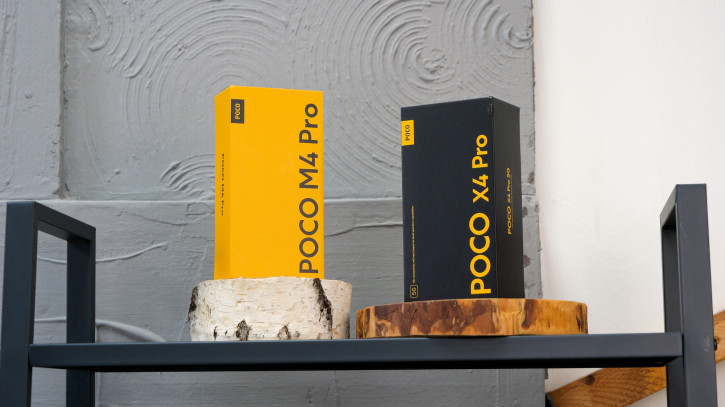
Leapfrog around the dollar brought the releasethe official price of POCO M4 Pro is indecent. Hand on heart, I can only recommend taking a closer look at the Poco M4 Pro at a very pleasant discount. Fortunately, the manufacturer himself understands this, so there is even a discount on the official website. In addition, I suggest that everyone interested read our article (link), where we tried to explain in an accessible way the current situation with the abundance of Xiaomi and Poco smartphones.
Latest news and reviews in our Telegram
© Dmitry Pivnev.