Scientists conducted research on the first known protein de novo (Latin for newly created), which catalyzes
Обычно квантовые точки производят in industrial conditions at high temperatures, using toxic expensive solvents. The authors of the new study repeated this process in the laboratory, making it safer and more economical. They used water as a solvent and obtained a stable final product at room temperature.
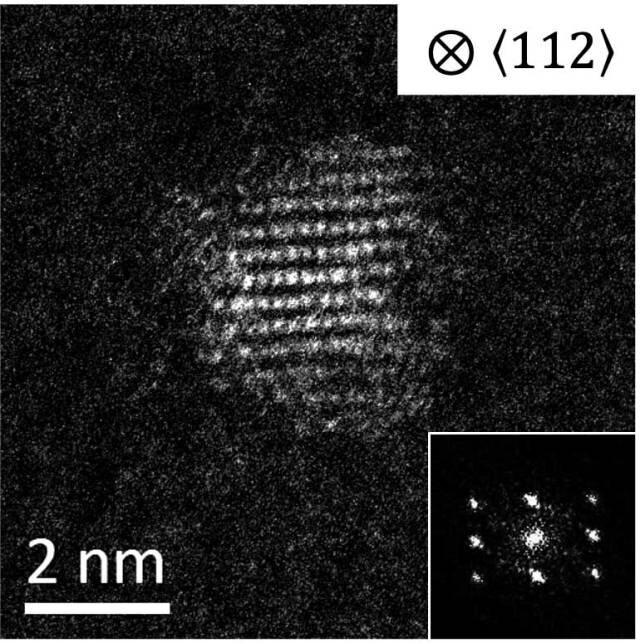 Quantum dots visible through electronmicroscope. They were created in the Hecht laboratory using de novo proteins. The diameter of each dot is 2 nanometers. Photo: Hecht Lab
“Quantum dots have very interestingoptical properties due to its size,” explains Yueyu Yao, a co-author of the article and a fifth-year graduate student in Hecht’s laboratory. “They are very good at absorbing light and converting it into chemical energy, which makes them useful for making solar cells or any other photo sensor.”
In addition, they emit light with a certain wavelength very well. Therefore, they are suitable for the manufacture of LED screens.
Because of their tiny size, quantum dotsConsisting of only about 100 atoms and about 2 nanometers across, they penetrate many biological barriers, making them especially promising for applications in medicine and biological imaging.
Read more:
Hydrogen energy, material against cold weather and bioadditives against COVID-19: what scientists are creating in the North
10 scientific facts that turned out to be fakes. Cards
Unusual decoration in an ancient grave surprised scientists
On the cover: solutions with quantum dots that emit yellow-orange and blue light due to UV radiation created at the California Polytechnic Institute in San Luis Obispo
Brandon CP BMED, CC BY-SA 3.0, via Wikimedia Commons