James Meador, an independent researcher at the California Institute of Technology, found
In 1969, NASA astronauts Neil Armstrong and BuzzAldrin made history by landing a ship on the moon. After more than 21 hours on the lunar surface, the astronauts traveled back to Earth on a portion of the Eagle spacecraft called the ascension stage. Shortly thereafter, they met up with Michael Collins at the command module, which took them back to Earth. Before leaving for Earth, the descent stage was thrown into space - NASA engineers assumed that after a while it would fall back to the surface of the Moon. Midor notes that the step did not fall on the moon, but is still in its orbit.
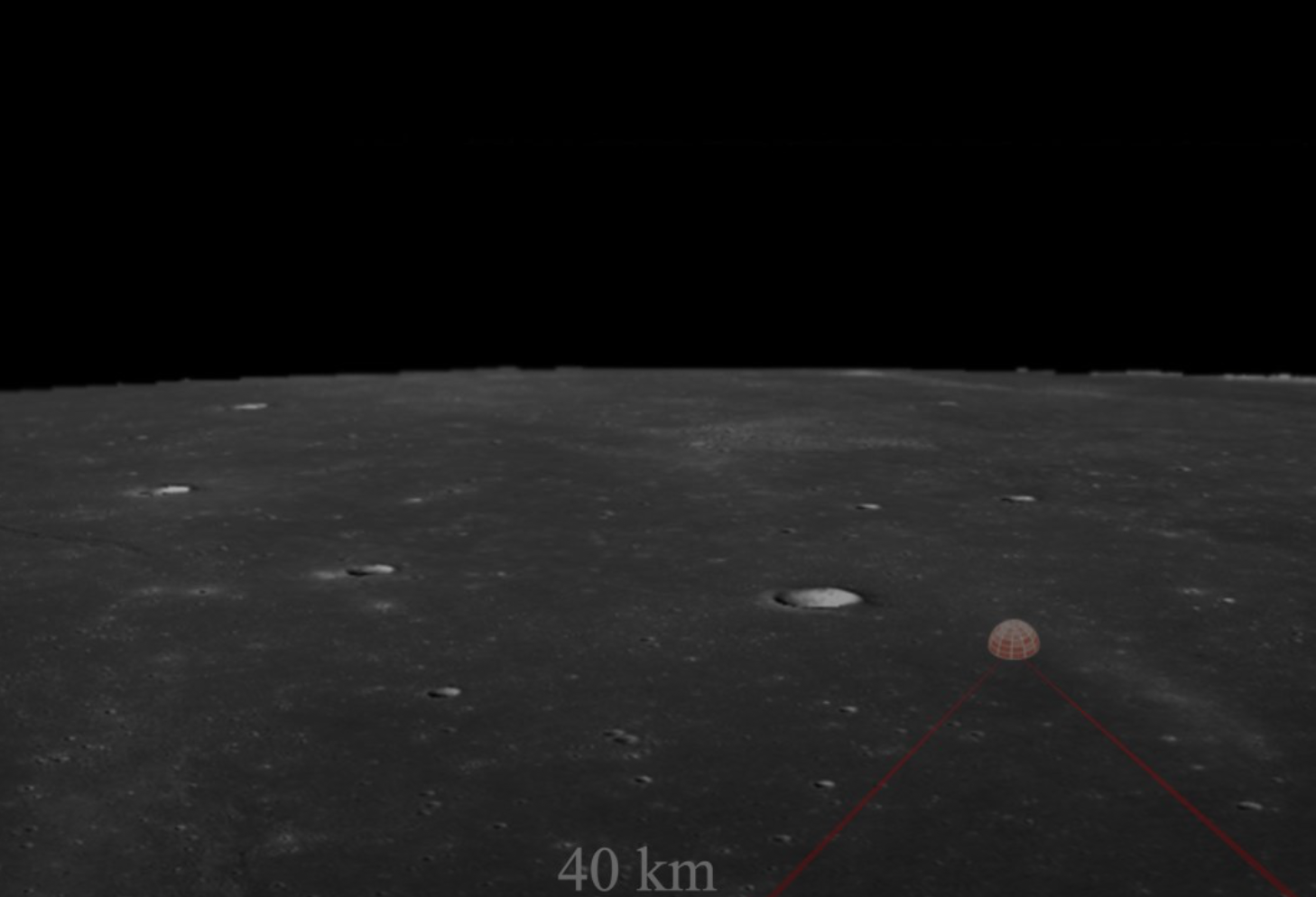
Gravitational-wave observatory on the Moon will allow you to “hear” 70% of the Universe
Midor began his investigation by asking whetheris it possible to find a descent stage, which, according to his assumption, should have been on the surface of the moon. He noted that in 2012 NASA sent spacecraft into orbit around the Moon as part of the GRAIL project to map the gravitational field of an Earth satellite. This allowed him to trace the spacecraft's descent to the moon using a NASA-created instrument called the General Mission Analysis Tool, which can be used to plot the trajectories of spacecraft around planets or moons, if their gravitational field is known.
After adding data from GRAIL, Midor launchedsimulation several times using various parameters to simulate conditions that likely existed from the time the lander was dropped until now. He also included data that took into account the gravity of the Sun and other planets (other than Mercury), and data describing the forces caused by solar radiation. He found that all of his simulations showed that the lander was maintaining a stable orbit.
Midor admits that the death of the apparatus couldother factors could also be cited - for example, the remaining fuel could explode during the degradation of the apparatus, which could change the orbit of the remains. But he also notes that if the agency decides to search for it, then NASA has the technology needed to detect the craft if it is still in orbit.
Read more
New mini-antibodies block coronavirus 1,000 times better than previous ones
Scientists have managed to convert the energy of thermonuclear fusion into electricity
Researchers first created metallic water in terrestrial conditions