In a new theoretical study, scientists have proposed a mechanism for the emergence of supermassive black holes from
Scientists added that the formation of supermassiveblack holes are one of the biggest challenges in studying the evolution of galaxies. Black holes could be observed as early as 800 million years after the Big Bang, but how they could grow so quickly remains a mystery.
Standard models of their education includethe usual baryonic matter - the atoms and elements that make up stars, planets and all visible objects - collapse under the influence of gravity, form black holes, which then grow over time. However, the new work explores the potential existence of stable galactic dark matter nuclei surrounded by a dilute dark matter halo. Scientists speculate that these structures could be so concentrated that they could turn into supermassive black holes.
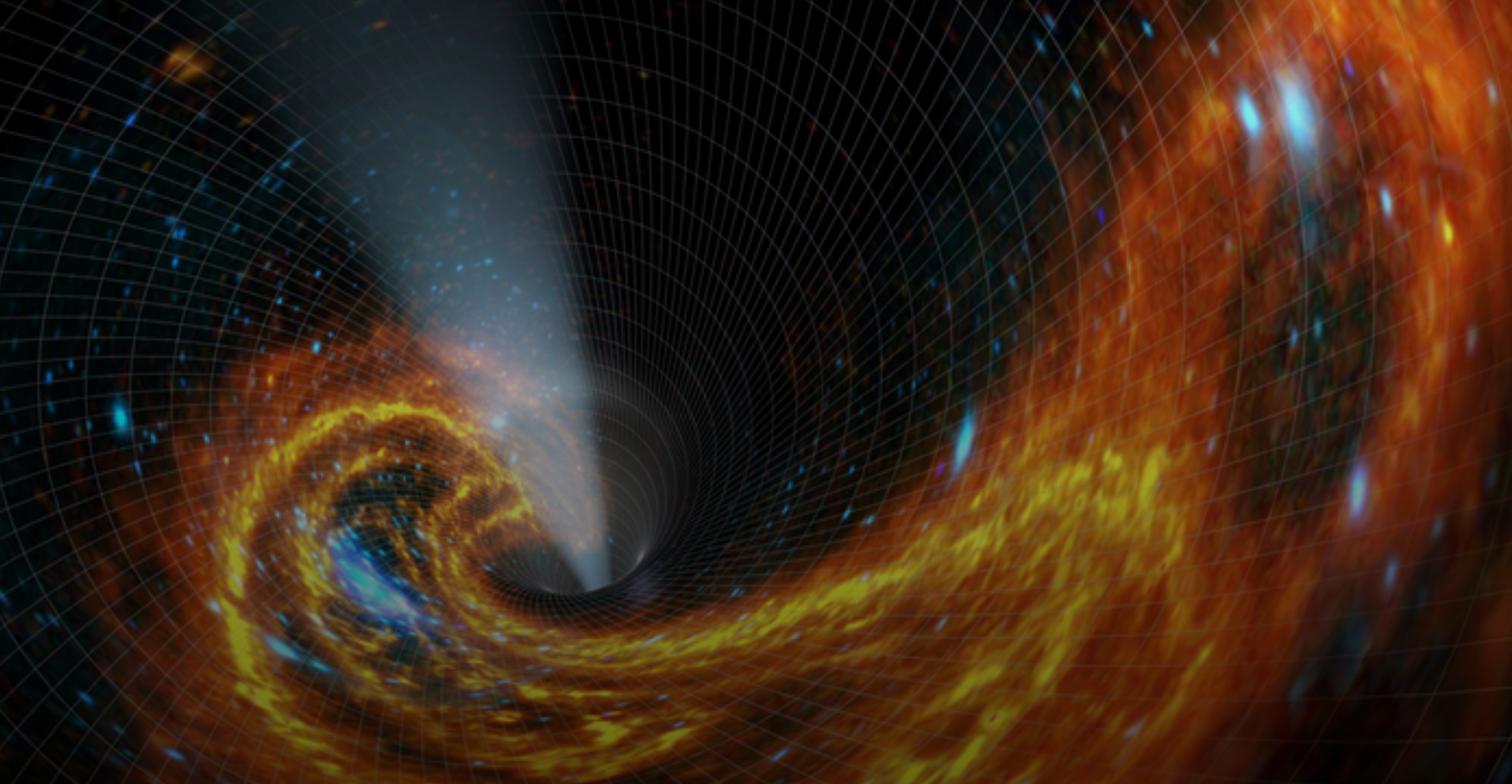
Map of 25,000 supermassive black holes published
According to the new model, this could have happenedmuch faster than other proposed education mechanisms. In this case, supermassive black holes in the early universe could have formed before galaxies.
"The new scenario for their formation may provide an explanation for how supermassive black holes formed in the early Universe, without the formation of stars," the scientists noted.
See also:
The first accurate map of the world was created. What's wrong with everyone else?
Look at Hubble photos of planetary nebulae.
Physicists have created an analogue of a black hole and confirmed Hawking's theory. Where it leads?