For the study, the team collected stem cells from the testicles of a patient with non-obstructive
After 12 days in a petri dishthe researchers found that the cells differentiated into specialized cells involved in the production of spermatozoa, with an improvement in the content of spermatogonial stem cells.
Ryan Flannigan, lead author of the study, said: "Seeing these cells survive and begin to differentiate is a huge milestone in science."
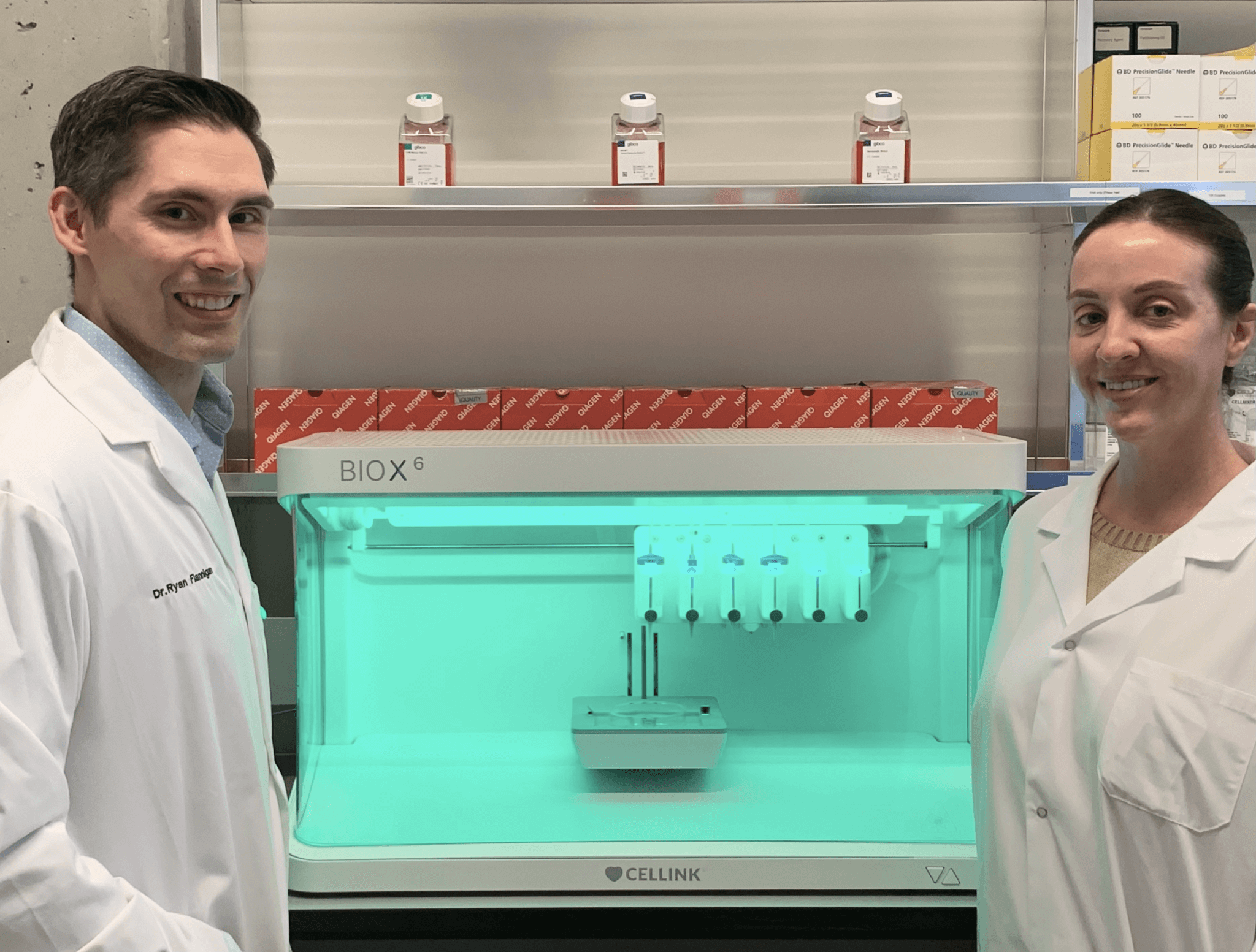 Dr. Ryan Flannigan and research scientist Megan Robinson next to the CELLINK bioprinter. Photo by Ryan Flannigan
After the success of the British University teamColumbia is now trying to get 3D printed bioprinted cells to produce real sperm. This will include feeding the cells with a variety of nutrients and growth factors to further improve their structural design and ensure intercellular interactions. If successful, the sperm from the petri dish could eventually be used to fertilize eggs in IVF procedures, providing a whole new form of fertility treatment. The research program has also helped the team better understand the genetic and molecular mechanisms that underlie NOA.
“We are increasingly learning that there probably ismany different causes of infertility and that each case is very specific to the patient,” concludes Flannigan. “We use a personalized precision approach to medicine — we take cells from a patient, we try to understand what anomalies are unique to them, and then we print and support the cells in a way that overcomes those initial flaws.”
According to Dr. Ryan Flannigan, infertility affects about 15% of couples, with male factors being the cause in more than half of the known cases.
He said:“We 3D print these cells into a very specific structure that mimics human anatomy, and we think this is our best way to stimulate sperm production. If successful, this could open the door to new fertility treatments for couples who currently have no other options.”
Read more:
Scientists have found the healthiest people on Earth: it's all about a unique lifestyle
The danger of free VPNs. Why can't they be downloaded and how to protect yourself?
Physicists have recreated the abilities of the T-1000 from the "Terminator-2" in the laboratory