Researchers from the University of Strathclyde have shown that using an iridium-based photocatalyst
"The photocatalyst can accesssolar energy through endergonic reactions to create a storable energy carrier in the form of hydrogen from water. The hydrogen can then be environmentally converted into electricity in a fuel cell, with the only by-product being water,” says Sebastian Sprick, lead researcher.
Chemists note that this is the first studywhich does not use sacrificial agents to produce hydrogen. Sacrificial agents are electron donors that reduce the tendency of electrons to recombine and accelerate the rate of hydrogen formation. The use of such elements helps to control the synthesis of hydrogen, however, according to the authors of the new work, they make the process energy inefficient.
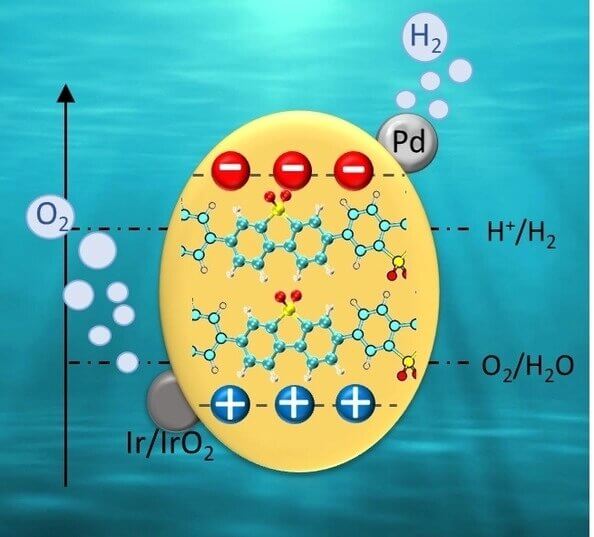 Image: Yang Bai et al., Angewandte Chemie,
Researchers believe their work opensa new direction for the development of hydrogen energy. As the authors note, so far, most hydrogen is still produced from natural gas, which leads to greenhouse gas emissions. An alternative mechanism for "converting" solar energy into hydrogen fuel will contribute to the development of independent and environmentally friendly energy.
Read more
Look at the "silent" drone with a new generation of ion propulsion
Upper stage engine of GLONASS rocket exploded in Earth orbit
Scientists propose to revise the foundations of quantum physics and show where they do not work