Realme's first attempt at an affordable camera phone was a success.Without 108-megapixel
pros
108 MP camera, 3x lossless zoom, display, battery, charging, Realme UI 2.0
Minuses
60Hz display, ytn water resistant, old SoC, no stereo speakers
Realme moves forward by continuingfight to take away market share from the mid-range segment from Redmi and they seem to be doing a great job. The OPPO subsidiary has proven to be one of the world's leading companies in terms of growth and one of the few not affected by the COVID-19 pandemic. Their secret? VFM devices. We've all seen this strategy before, but Realme has a hidden trick up its sleeve.
The company is doing an amazing job of offering smartphones with unique designs and trying to localize the software to the market.Design is now the company's main selling point and runs through all of their products.The Realme 8 Pro is a continuation of a very successful lineup this year.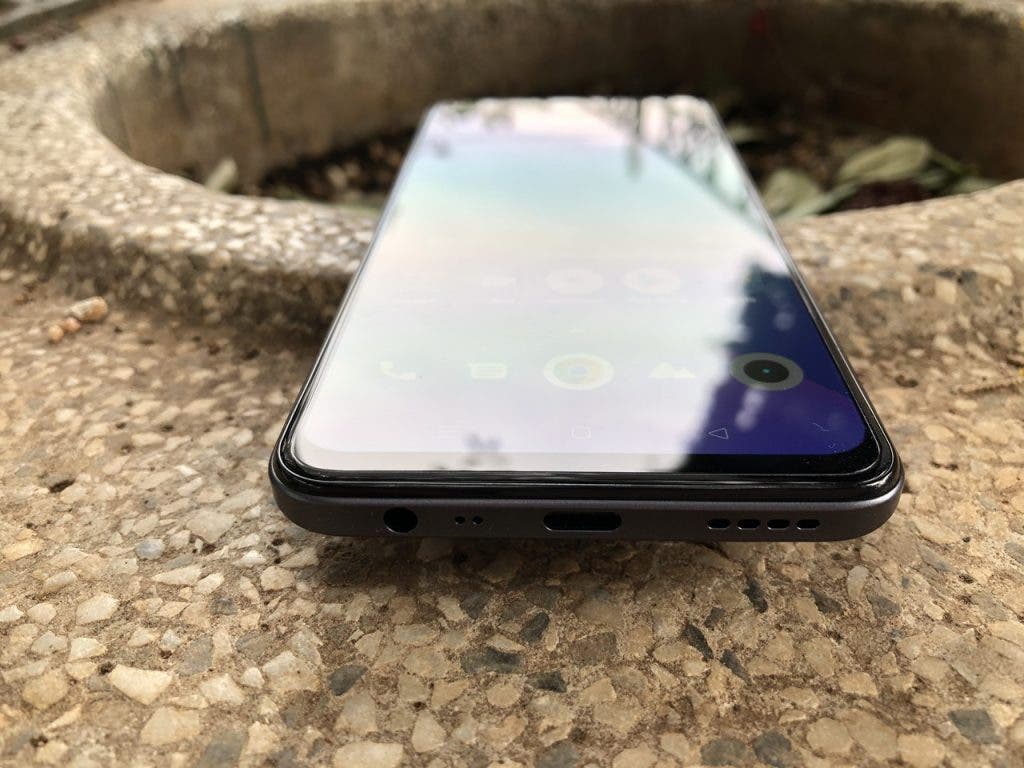
Realme 8 Pro
As usual, in the mid-range weexpected a slight increase in performance plus the design we mentioned above. The smartphone does so much more as it features an impressive 108MP camera sensor in a quad-camera configuration! Unfortunately, in order to keep the price at the same level as in the Realme 7 Pro of previous years, the 8 Pro has downgraded several other aspects. The company is touting a myriad of in-phone camera capabilities, and we're curious to see if the camera boost is worth it.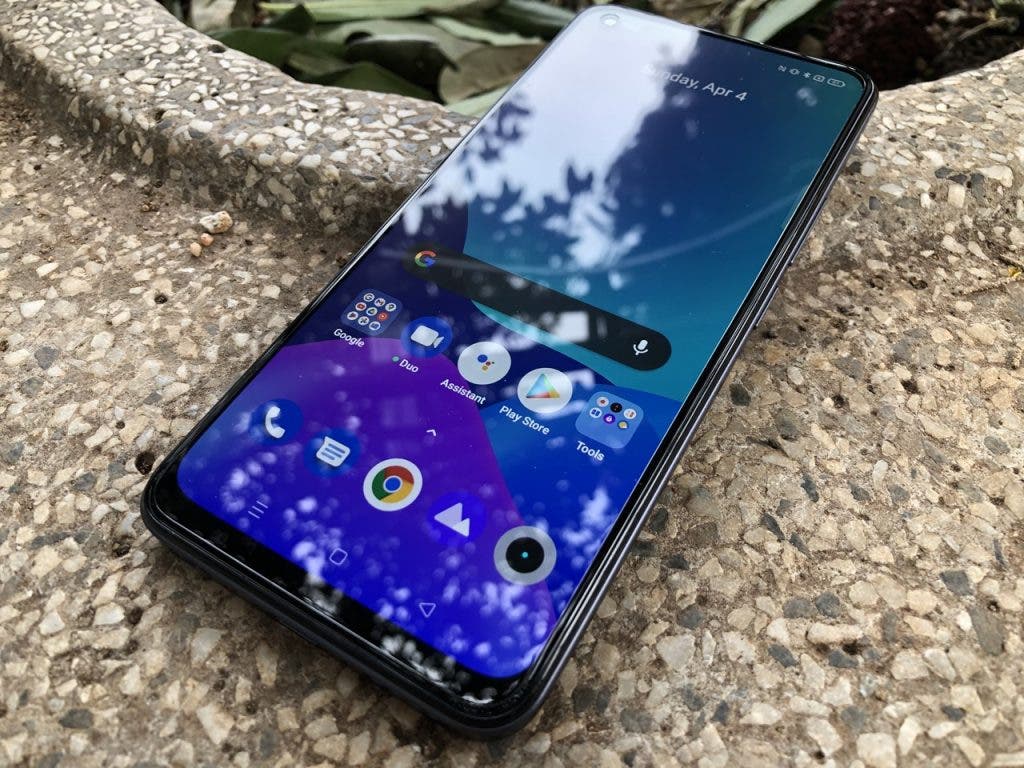
Specifications
- Dimensions: 160.6 x 73.9 x 8.1mm
- Weight: 176g
- Material: the front side is a glass panel, the frame is hard plastic, the back panel is plastic.
- Display: Super AMOLED 6.4 inches FHD+ (1080 x 2400), 411 ppi density, 20:9 ratio, DCI-P3, 1000 nits maximum brightness,
- Processor: Qualcomm SM7125 Snapdragon 720G (8nm), Octa-core (2 × 2.3 GHz Kryo 465 Gold and 6 × 1.8 GHz Kryo 465 Silver)
- GPU: Adreno 618
- RAM + ROM: 128 GB 6 GB, 128 GB 8 GB, UFS 2.1, microSDXC (dedicated slot)
- Battery: Li-Po 4500 mAh, fast charging 50 W
- Connectivity: Wi-Fi 802.11 a / b / g / n / ac, dual band, Wi-Fi Direct, hotspot, HSPA 42.2 / 5.76 Mbps, LTE-A
- 2G: GSM 850/900/1800/1900 — SIM 1 and SIM 2
- WCDMA: bands 1/5/8
- LTE FDD: Bands 1/3/5/7/8/20/28
- LTE TDD: Bands 38/40/41
- Biometrics: under display fingerprint sensor, face unlock
- Main camera: four cameras, LED flash, HDR, panorama
— Samsung GW1 sensor, 108 MP, f/1.9, 26mm (wide), 1/1.52″, 0.7µm, PDAF
— 8 MP, f/2.3, 119˚, 16mm (ultrawide), 1/4.0″, 1.12µm
— 2 MP, f/2.4, (macro), 2 MP, f/2.4, (depth) - Selfie camera: 16 MP, f / 2.5, (wide), 1 / 3.0 ″, 1.0 μm, HDR, panorama
- Video: 1080p @ 30 / 120fps, Gyroscope-EIS
- Selfie video: 1080p @ 30fps, gyroscope-EIS
- Ports: USB Type-C, 3.5mm jack
- Sound: audio 24 bit / 192 kHz
- Sensors: NFC, accelerometer, gyroscope, proximity, compass
- Colors: blue, black, black, yellow
- Software: Android 11, Realme UI 2.0
First glance
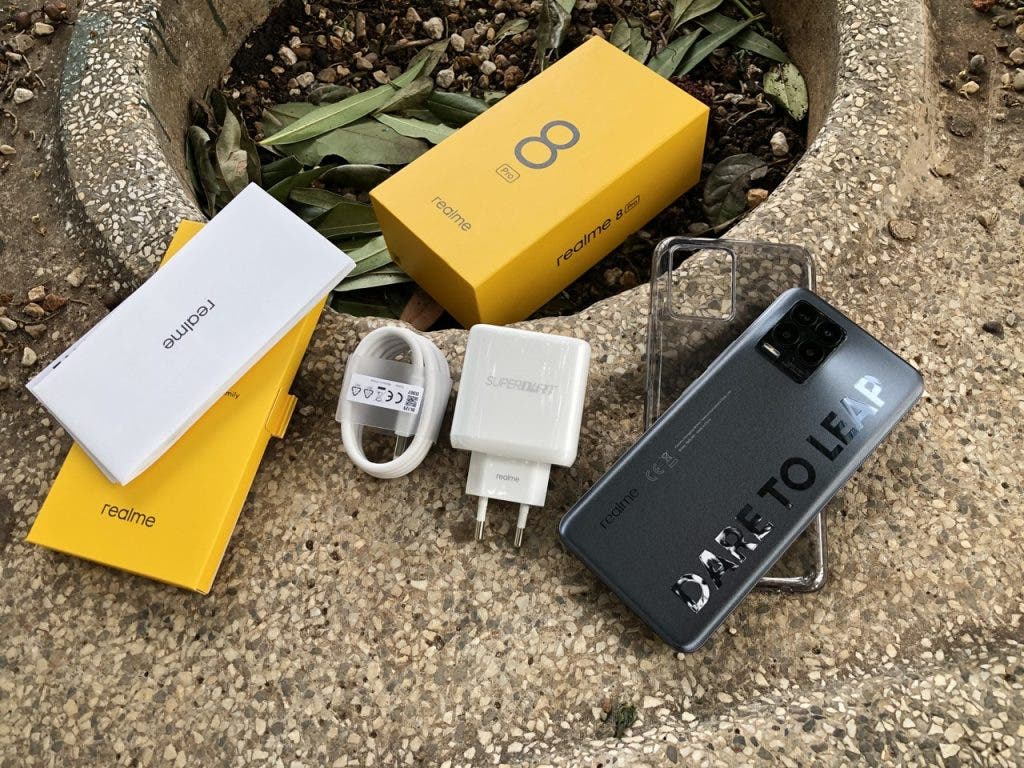
The device is placed in the usual bright yellow boxwith a huge font designating the model. The bottom part lists the specs of the smartphone, a huge sticker advertises Google compatibility (a hint of Huawei's inability?), And another sticker lists the specific details of the smartphone and manufacturing.
What is in the box?
- Smartphone Realme 8 Pro
- USB-C to USB-A data / charging cable
- 65W SuperVOOC Wall Charger
- SIM eject pin
- User Manual, Quick Start Guide
- Soft silicone case
The phone comes preinstalled with a plastic protectivefilm for the screen. The huge white wall charger delivers up to 65W of power, slightly more than the 50W the phone can use. The charging cable is quite thick and works in conjunction with the charger to provide a charge for the flash. The silicone soft case is very nice with extensions to protect the camera and corners. The corners of the phone are not easy to fit inside the case, but the added protection is well worth the effort.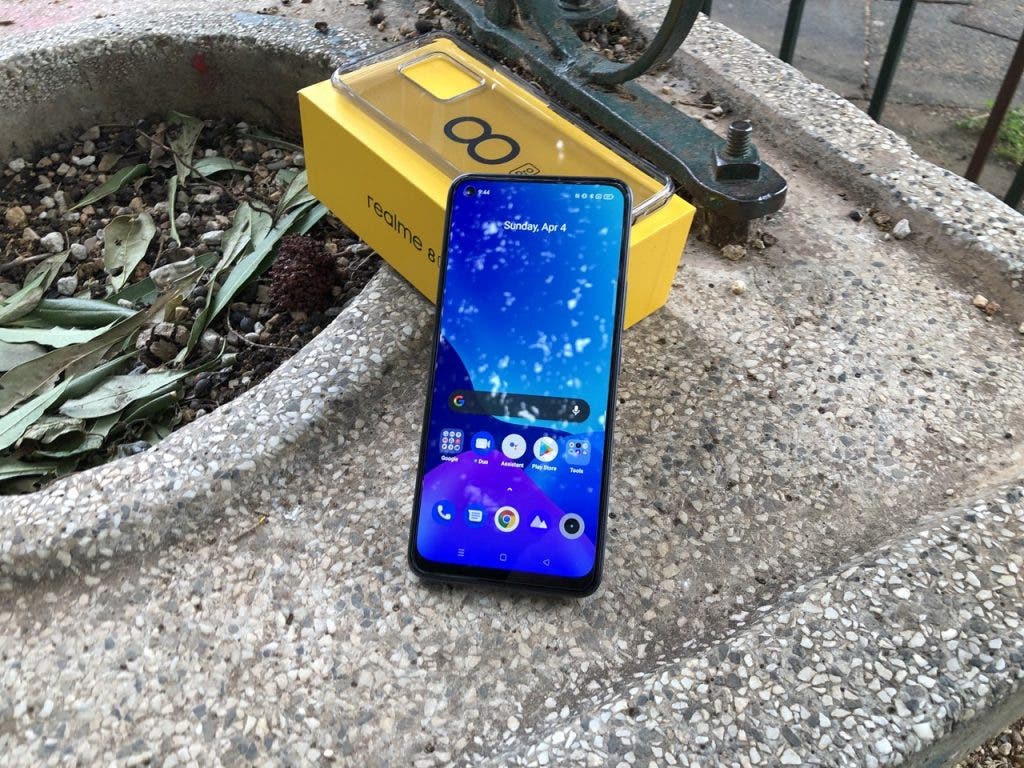
Design
Since the days of Reame X, Realme has invested a lot of money and attention on looks and has been able to develop some of the most beautiful phones on the market.
The front panel is simple, with minimal bezels andthree sides and a wider chin. At the top of the display there is a hole for the selfie camera — one of the smallest on the market. The display itself is flat and large. There's a wide, hidden horizontal headphone line above the display, perfect for listening to whoever you're talking to without having to center a smaller earbud to your ear. The phone doesn't have a second speaker or a notification light like we saw on the Realme 7 Pro. There's nothing else in front.
On the left side we see a tray into whichFits 2 SIM cards and an SD card. On the top right is the volume button, and below that is a smaller power/lock button. There are no visible stripes because the sides of the smartphone are made of plastic. There is a noise-cancelling microphone on top. At the bottom there is a 3.5mm audio jack, a second noise-canceling microphone, a USB-C port, and a speaker grille.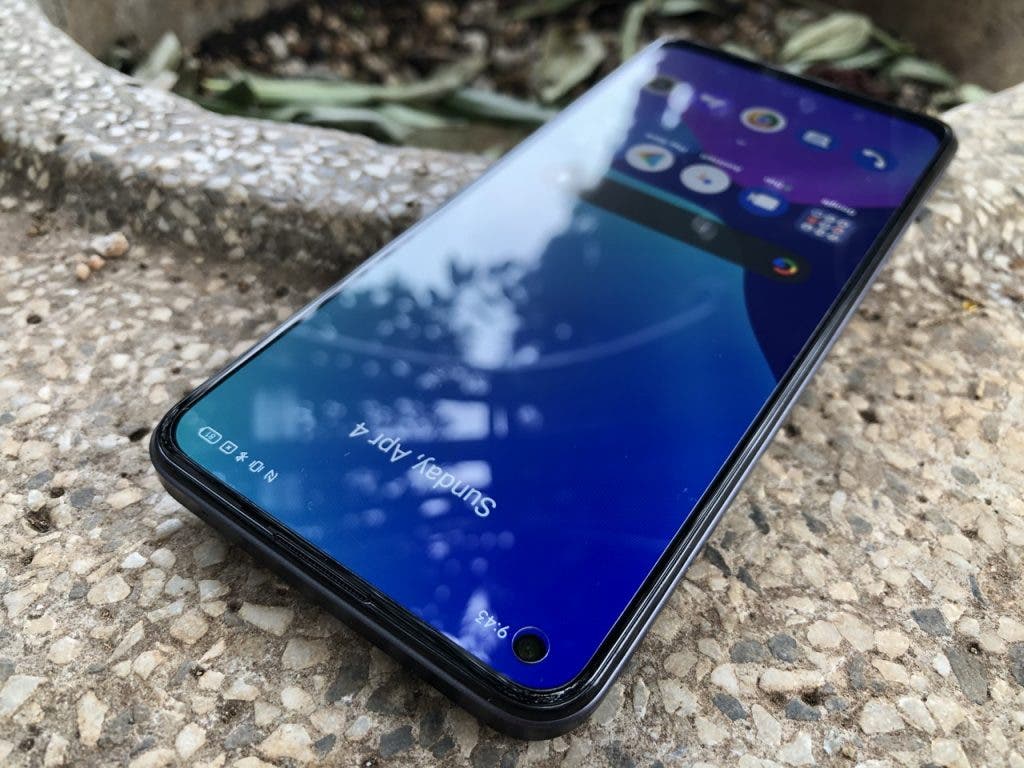
Build quality
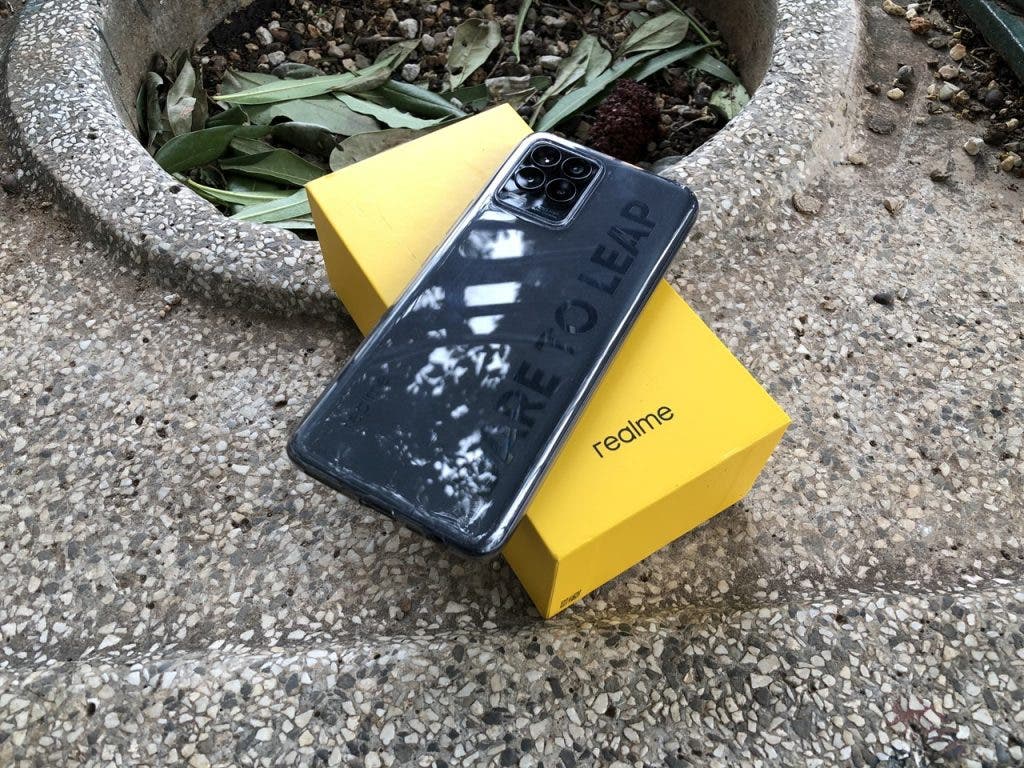
The back panel is amazing!The smartphone has a stunning sandblasted grayish black texture. On the right side there is a huge Don't Be Afraid to Jump logo in large print and capital letters. While the glossy area is a magnet for dirt, there is no dirt on the rest of the panel. The camera is in the upper left corner with 4 lenses visible in a square pattern.
The main sensor is at the top left, it is invisiblefor others, except at close range. The sandblasted texture and logo make the device look very beautiful and it is obvious that Realme is focusing on the decoration / presentation of the devices.
The phone is thinner than previous generations, it seemslight and compact. Remember, we mentioned that the phone has improved materials to keep the price low. Main part — This is a water-repellent coating. So you won’t find any protection inside — This can be understood by the SIM card tray, because there is no rubber seal there. So guys, be careful with water and heavy rain.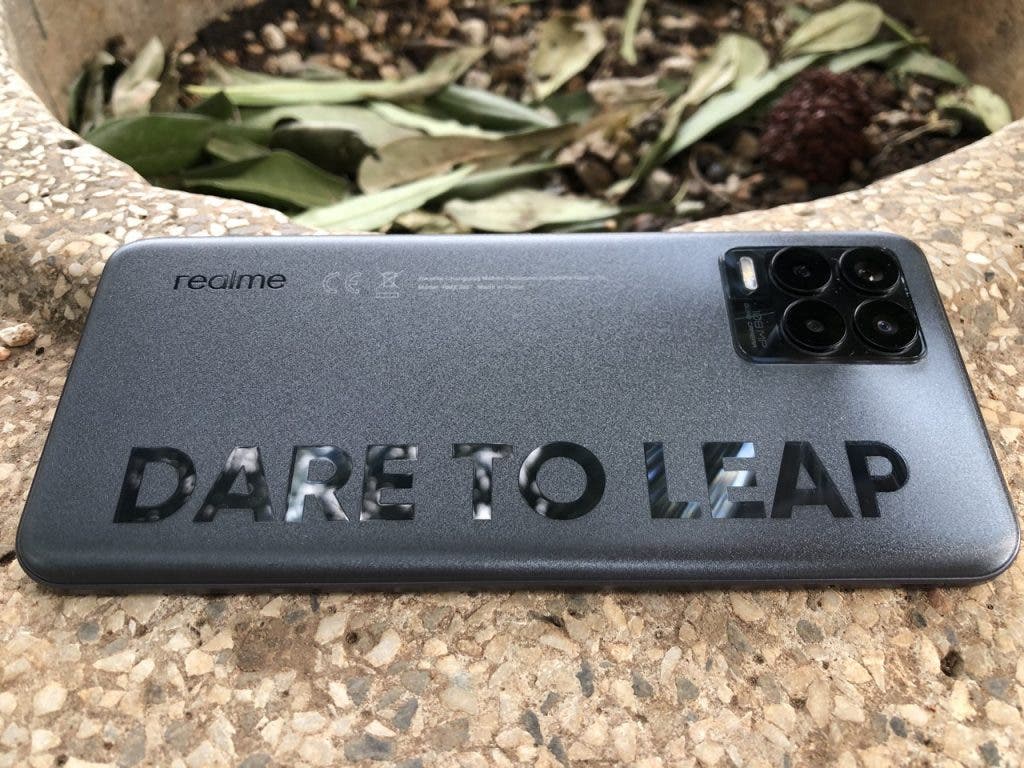
Hardware
The display is taken from Realme 7 Pro.Excellent Super AMOLED panel, there was simply no point in changing it. Resolution — FHD+, refresh rate is only 60 Hz and protection against it is unknown. Please buy tempered glass for it as soon as possible. We can find the regular ones from Realme in the mid-range category, but the lack of 90Hz support looks strange. Perhaps the company was afraid that the energy costs would not pay off. The panel is bright, but not one of the brightest in the world. Colors and viewing angles are very good. Generally, this is a good panel for any use.
Snapdragon 720G SoC is also unchanged in terms ofcompared to the Realme 7 Pro. A three-year-old processor? This is not bad, but I would like something better in the area. We can also find Adreno 618 for graphics and UFS2.1 for storage. The smartphone is available in 6/128 GB and 8/128 GB variants.
There are no delays or heating problems, butfor the same price we can find more powerful phones. Obviously, you have to choose between photography and games. In the case of the latter, it is better to take a closer look at another model from the company.
The 8 Pro, unlike the 7 Pro, has one speaker —another drawback. The sound in calls and video calls is normal, but nothing to brag about. The connection is excellent. Full signal in conversational conditions. Everything is fine with Bluetooth too — I used my smartphone with wireless headphones every day without interruption. GPS works instantly.
There are two ways to unlock the 8 Pro.Face unlocking is very fast. There is no IR illumination for unlocking at night, so this method will not work in complete darkness. A minimal light source, even a laptop display, is enough to unlock a device with your face shape. Keep in mind that this is not the most secure way to unlock your phone, so it is not recommended for use outside your normal premises. Another way — fingerprint scanner on display.
Be careful, you must set it up well, otherwise the scanner will not work properly.
Software
It's been a long time since I sawthe first version of Realme UI on Realme X2 Pro, and in these months the work done on the skin is amazing. Realme UI 2.0 is not only enhanced but also surpasses the latest Android 11, providing a great experience for both old and novice users.
Setting — much like OxygenOSfrom the “sister” company OnePlus — it is rich with many features, always-on display themes, skin themes, icons, dark mode tones that ensure you never get bored of your phone. Android 11 tricks like floating windows are there along with the extra security added in this version. The launcher is good— reminds us of other good launchers like POCO launcher and the notification bar is full of options and versatility. The settings menu has a lot of options, but it is minimal so as not to overwhelm the user. Like Samsung phones, there is a sidebar with customizable options and shortcuts. Home apps are fine, and I personally liked the kids mode for obvious reasons.
The speed and animation are fast, and at no point does the phone stall or slow down. Great job from Realme— The promised product seems to be rising to the world of Android skins!
Camera
The 108MP sensor is the main advantagethis smartphone and follows the steps of Xiaomi, which did the same — it was the first to add immersive image sensors for the mid-range with Mi Note 10 Pro. Recalling our review of this pioneer and experience with a mid-range SoC attempting to handle ultra-large sensors, we were curious to see if there were any stuttering or heating issues. ISOCELL HM2 from Samsung — star of the quad camera and object of our curiosity. HM2 uses 9 to 3 pixel binning and can perform up to 3x zoom without loss. The latter works by cropping 12MP photos produced by the 108MP sensor.
Camera software
Additional software such as:sharpening, astrophotography, time shift and tilt shift, and portrait filter pack. 12MP photos in daylight are amazing. The detailed eye will see some noise on bright colored objects, hopefully this will be corrected in a future software update.
Selfies are good — 16MP sensor and softwareThe software work together to deliver vibrant images with very good color reproduction. The 108MP main sensor can record video up to 4K, and together with the ultra-wide-angle camera, video supports EIS (electronic stabilization). The 4K video is really really good! Scaling is possible, but not without losses. EIS is added only in 1080p, there is stability, but the quality suffers a little.
Realme managed to bring the phone to the market withcamera, but keep in mind that this is mostly a single camera, not a quad camera. The 108MP sensor is great in video and photography and we hope Realme finds small issues that fix and learn from them.
Battery
Under normal use, the phone will need to be recharged every two days. With games and heavy use, you will have to charge it at the end of the day.
Huge 65W charger won't chargesmartphone as it only provides 50W charging. This is another downgrade from the 7 Pro. The Realme 8 Pro still has ultra-fast charging from 0% to 100% in 45 minutes. Ten minutes of charging is enough for a 30% increase in capacity, which is great when you're in a rush. Typically using 30 minutes in daytime mode (10% to 90%) will charge the phone, saving you time and effort.
Total
Realme's first attempt at creating an affordable camera phone has been a success. Without 108 megapixelcameras we have a normal balancedmid-range smartphone. With its huge lens, Realme 8 Pro becomes a great tool for recording your daily life, family and travel. In all, this device is solid if you love photos and videos.
Looking outside the company, Xiaomiis the main opponent as the POCO X3 Pro and F3 are better in every way for the same price except for the quality of the 108MP camera. The final decision is yours, depending on whether you love photography.