Israeli scientists have integrated locust antennae into the electronic system of a wheeled robot. Biological
Despite the rapid development of technology,On the issue of creating sensitive sensors, people are still behind evolution. In their study, scientists used antennae - the main element of the olfactory system of the Desert Locust. The biological sensor, combined with an electroantennagraphy system and trained AI, can identify eight types of odors.
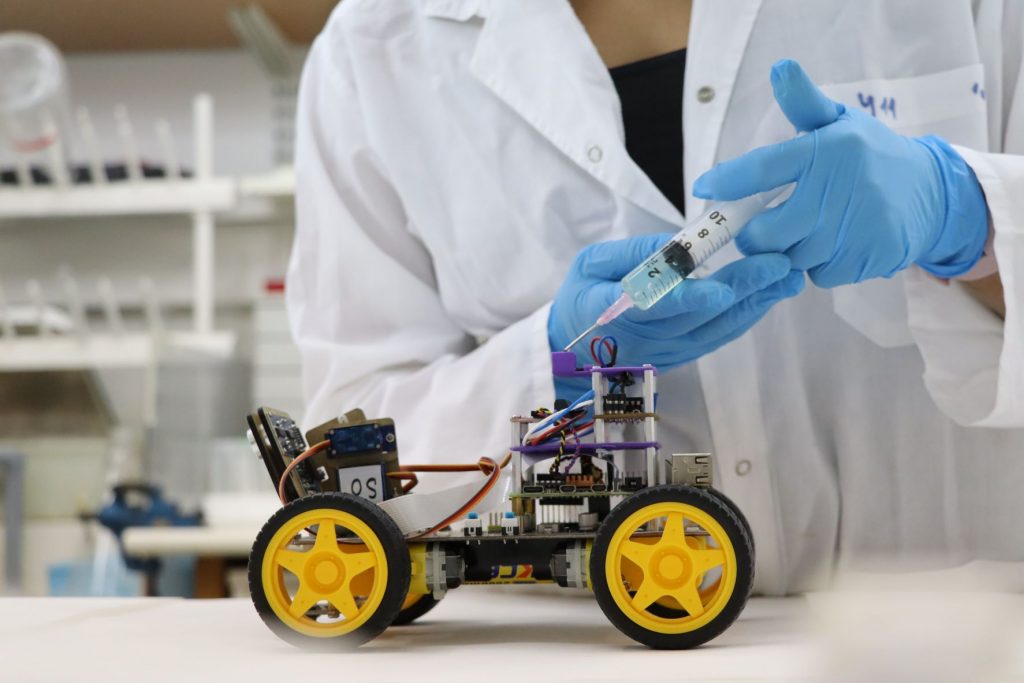 Robot with aroma biosensor. Image: Tel Aviv University
When exposed to certain molecules, the tendrilsinsects generate a weak electrical signal, the authors explain. It can be captured and recorded using electroantennagraphy technology. During testing, the researchers exposed the system to eight different odors. Among them, for example, lemon, geranium and marzipan. As a result, the algorithm matched each type of signal with the corresponding smell.
Researchers note that sensitivityThe sensor can detect less than 1 ng of volatile compounds in the air. This is 10,000 times better than gas chromatography-mass spectrometry, the most accurate of today's odor research methods.
Researchers believe that the new devices could be used, for example, at airports to search for explosives.
Nature is much more developed than we are, so weshould use it. For example, some animals have amazing abilities to detect explosives or drugs; building a robot with a biological nose will help us save human life and identify criminals in a way that is not possible today.
Ben Maoz, researcher at Tel Aviv University and co-author of the paper
Read more:
Blazar, which was found 20 years ago, turned out to be an extreme object
TESS discovered a "new Earth": a stone planet with water is in the habitable zone
Look at the consequences of the collision in 1181 of two stars