Four-legged robots LEAP, trained with the help of artificial intelligence, will move along the surface
LEAP's target is the Aristarchus Plateau, an area of the Moon,which is particularly rich in geological features but is very difficult to access. By the way, the name of the robot LEAP stands for Legged Exploration of the Aristarchus Plateau or “research on the legs of the Aristarchus Plateau.”
With the help of a robot, scientists can exploregeological history and evolution of the Moon, studying ejecta around craters, fresh asteroid impact sites, and collapsed lava tubes where the rocks were unchanged by «space weathering» and other processes.
The LEAP team is working to ensure that the robot isintegrated into ESA's European Large Logistics Lander (EL3), which is due to land on the Moon several times from the late 2020s to the early 2030s. LEAP is based on the legged robot ANYmal, developed at ETH Zürich and its subsidiary ANYbotics. It was specially adapted to the lunar environment.
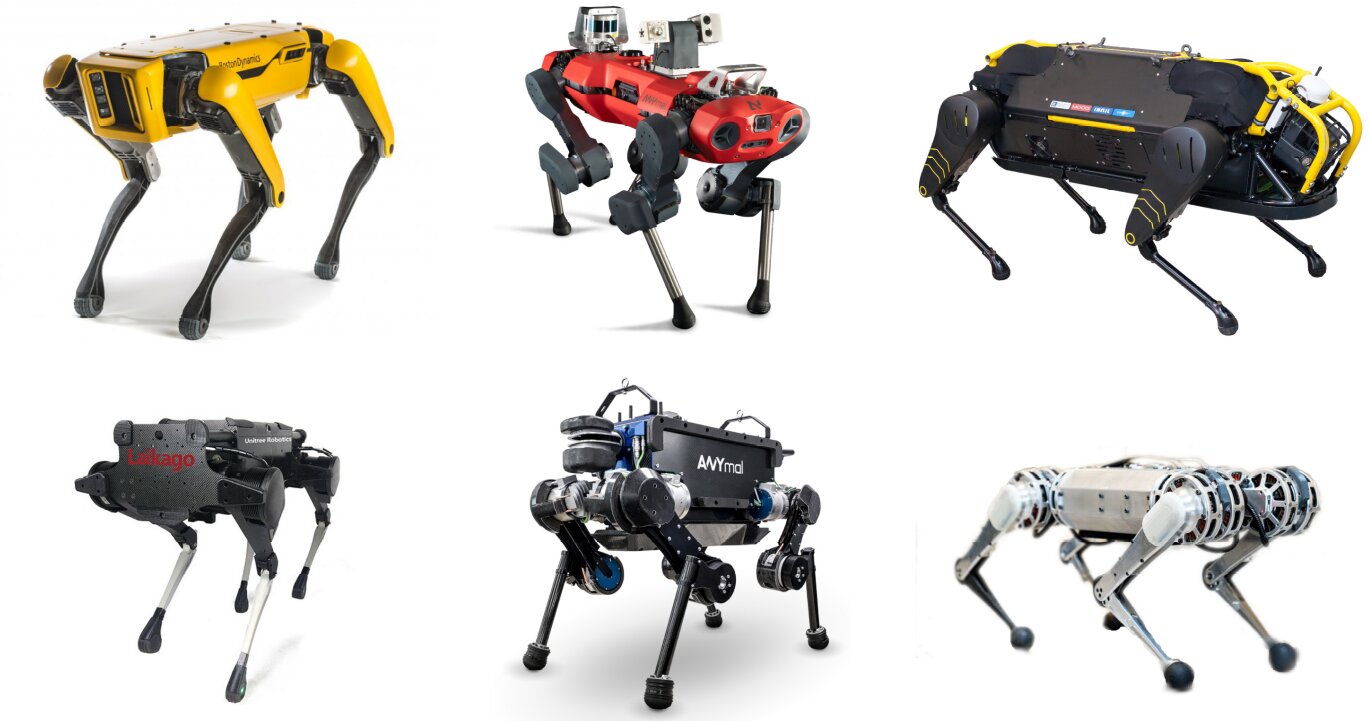 Various versions of the legged robot ANYmal, developed at ETH Zürich and its subsidiary ANYbotics. Credit: ETH Zurich/RSL Robotics Labs
“Traditional all-terrain vehicles have made it possible togreat discoveries on the Moon and Mars, but they have limitations,” Bambach explained. “Exploring terrain with loose soil, large boulders or slopes greater than 15 degrees is especially challenging for rovers with wheels. For example, the Spirit rover's mission was aborted when it got stuck in sand."
ANYmal can move in different “styles”, whichallows him to travel long distances in a short period of time, climb steep slopes, use scientific instruments, and even recover in the unlikely event of a fall. The robot can also use its legs to dig channels in the soil, turn over boulders or smaller rocks for further inspection, and take samples.
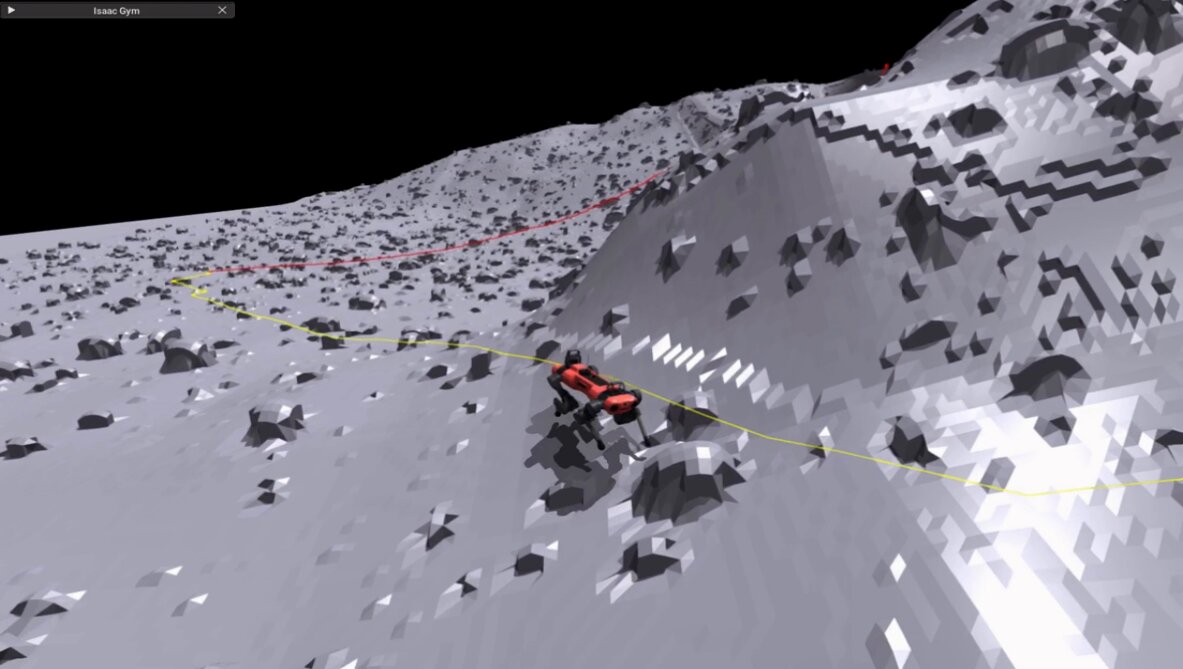 The LEAP rover is trained using a reinforcement learning approach in a virtual environment to simulate lunar terrain, gravity, and dust properties.
Credit: ETH Zürich/RSL Robotics Labs
The robot was initially trained usingreinforcement learning approach (like real dogs) in a virtual environment to simulate lunar terrain, gravity and dust properties. It was also used in the field for outdoor hikes.
Read more:
Mysterious 'blue goo' at the bottom of the sea baffles scientists
Developed generator for wind farms without expensive magnets
Look at a phenomenon that is simply impossible on Mars