During excavations in the city of Reims in northeastern France, archaeologists found the remains of
An excavation study showed that the building hadat least 20 rooms. They range in size from large walkways to living rooms with compacted chalk floors and central fireplaces. The nine extremely richly decorated rooms are thought to correspond to the thermal area of the ancient bath. In five of them, the researchers found underfloor heating (hypocaust).
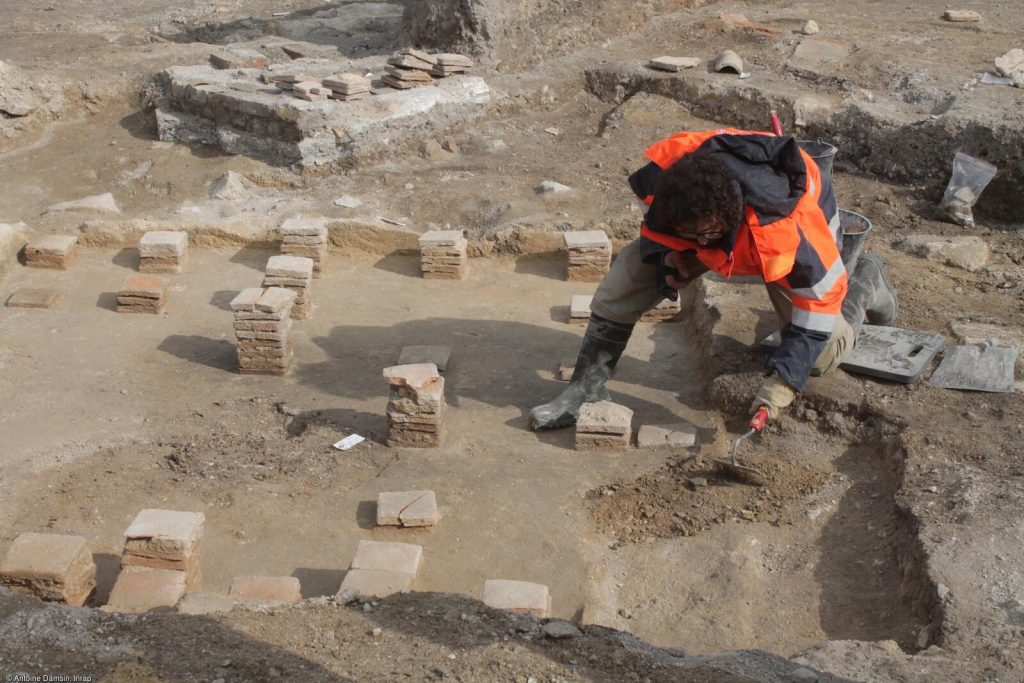
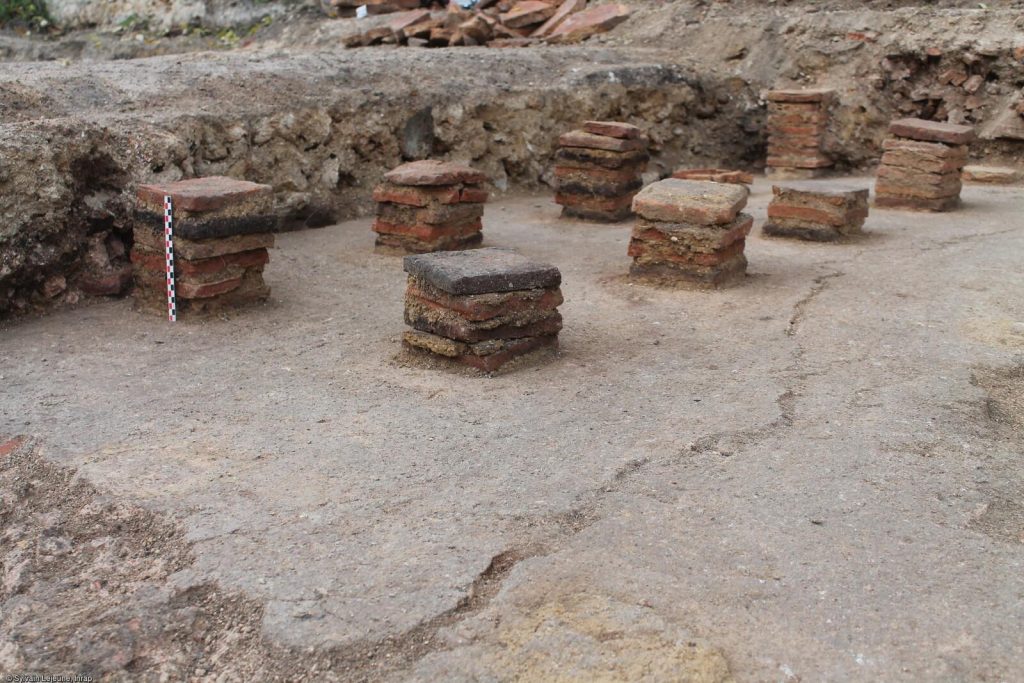
Columns forming an ancient heating system - a hypocaust. Photo: Antoine Damsin, Inrap (left photo), Sylvain Lejeune, Inrap (right photo)
On the sides of the building, archaeologists found the remains of twogalleries, decorated with porticos, each about 20 m long. In the courtyard formed by these galleries, there are two brick blocks. One of them is a bowl of either a pool or a fountain. Pipes were connected to this block, through which water entered the bowl under pressure.
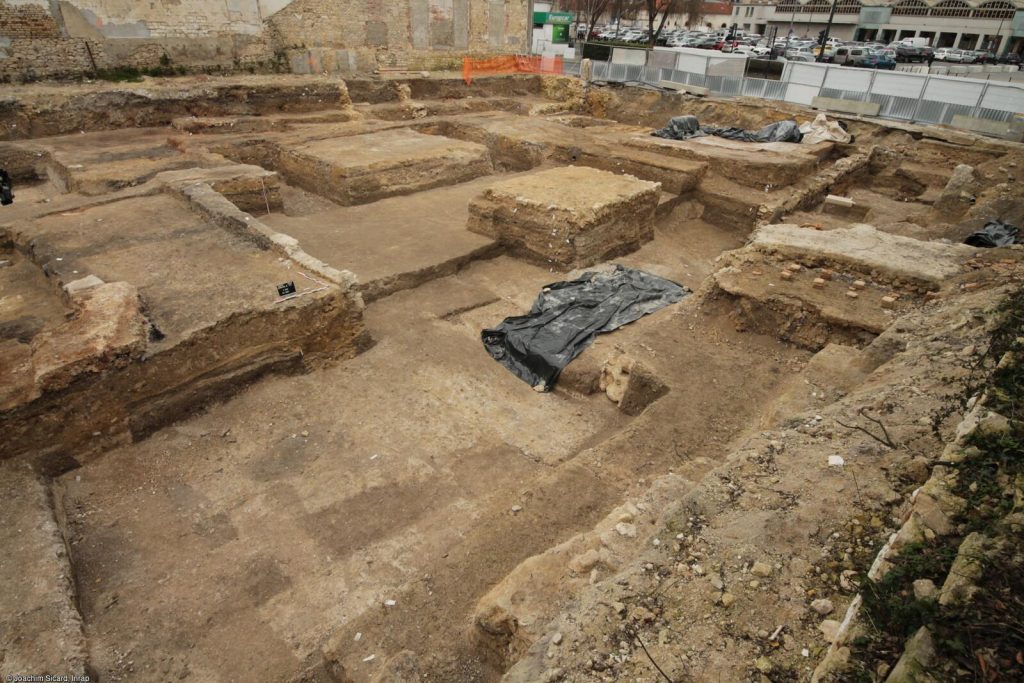 Bowl of an ancient pool surrounded by galleries. Image: Joachim Sicard, Inrap
The discovered architectural complex is locatedinside the fence that surrounded the urban settlement in the 3rd century. 100 m from the building there was a triumphal arch dedicated to Mars - the Mars Gate (Porte de Mars). In addition, several other wealthy houses were previously found in the same area.
Archaeologists note that a large numberrooms, their organization, the richness of decoration, two large galleries, the hydraulic network and the discovered archaeological elements (ceramics, architectural blocks, utensils made of copper alloys) allow for two possible interpretations. These ruins could correspond to either the home of a very wealthy individual or a public recreational building.
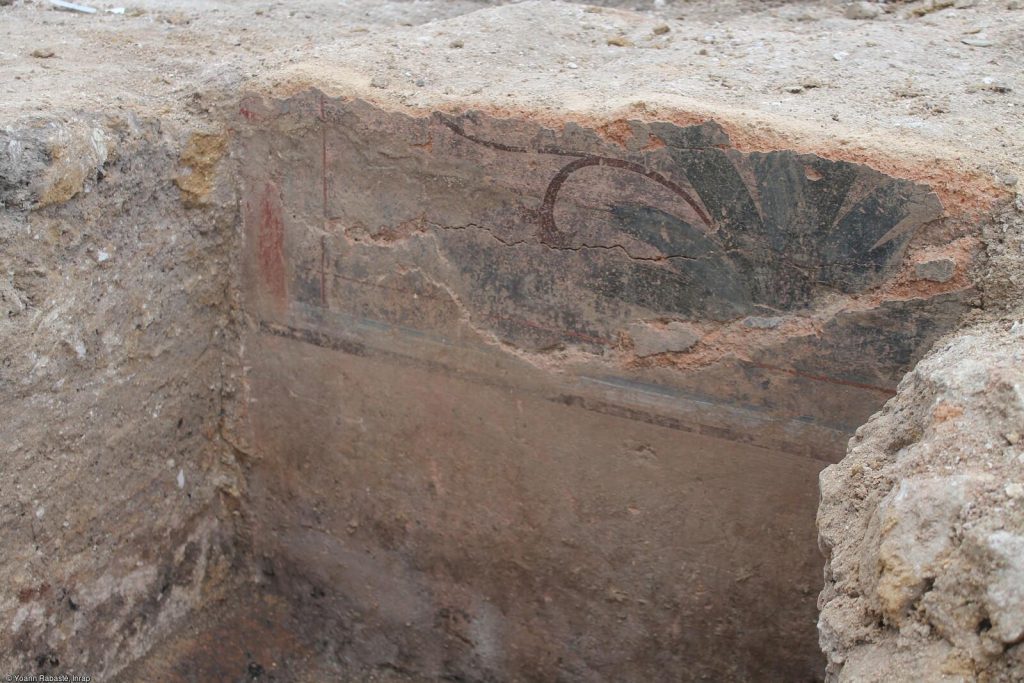
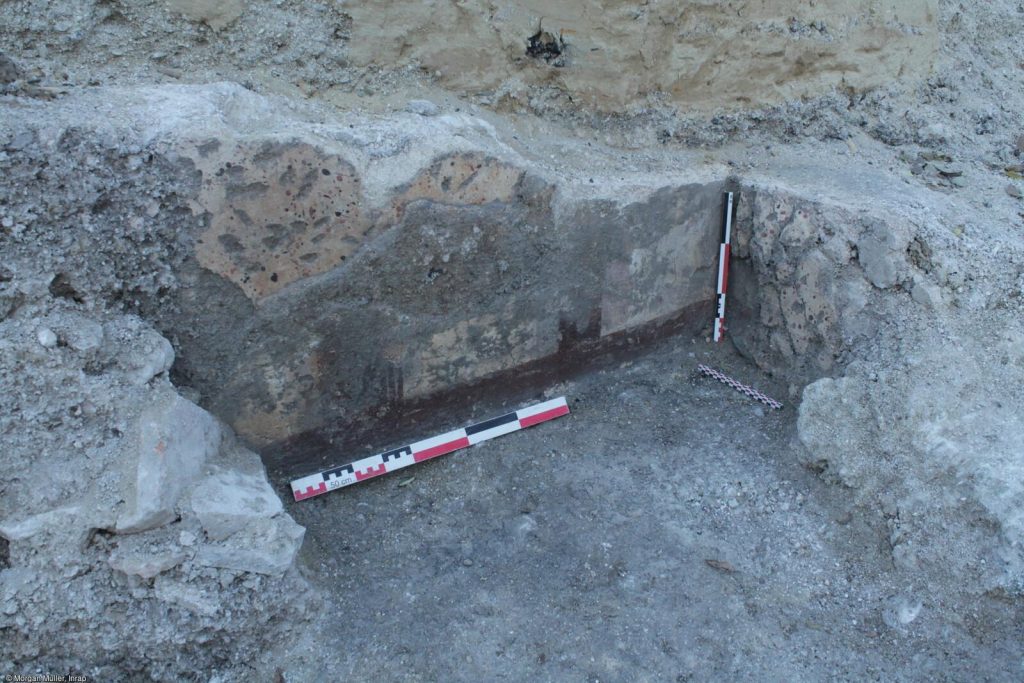
Traces of decorative finishing of premises. Photo: Yoann Rabasté, Inrap (left) and Morgan Muller, Inrap (right)
The building was abandoned at the end of the 3rd or the beginning of the 4th century; later, parts of the buildings were dismantled for building materials. Perhaps they went to the construction of the Reims wall at the beginning of the 4th century.
Read more:
One planet can put an end to life on Earth: how scientists have proven the fragility of the solar system
The secret of longevity is revealed: scientists have figured out how to start the necessary mechanism in the human body
Named one of the causes of aging and the way to “reverse the process”
On the cover: the site of the excavation. Image: Yoann Rabaste, Inrap