Apple iPhone 7 has finally found a worthy opponent in the released Galaxy S8 from Samsung. Waiting for the official release
Galaxy S8 was released six months later than the iPhone 7, which should mean a technological breakdown. We will try to find out if it is really better.
See also the article: Samsung Galaxy S8 and S8+ versus Apple iPhone 7 and 7 Plus: Comparison of characteristics.
Advertising
Advertising
Design
In terms of design, clear winnerfavors Samsung Galaxy S8. The frameless design of the device with the Infinity display on the front panel looks very futuristic. iPhone 7 with its traditional design, developed three years ago, is clearly losing the competition. Thanks to its bezel-less design, the Galaxy S8 looks compact even with a large 5.8-inch display. The glass case on a metal frame gives the Galaxy S8 the look of a premium device. This design appeared in 2015 on the Samsung Galaxy S6, but has since become more ergonomic. The new color solutions launched by the company also helped to freshen the atmosphere.
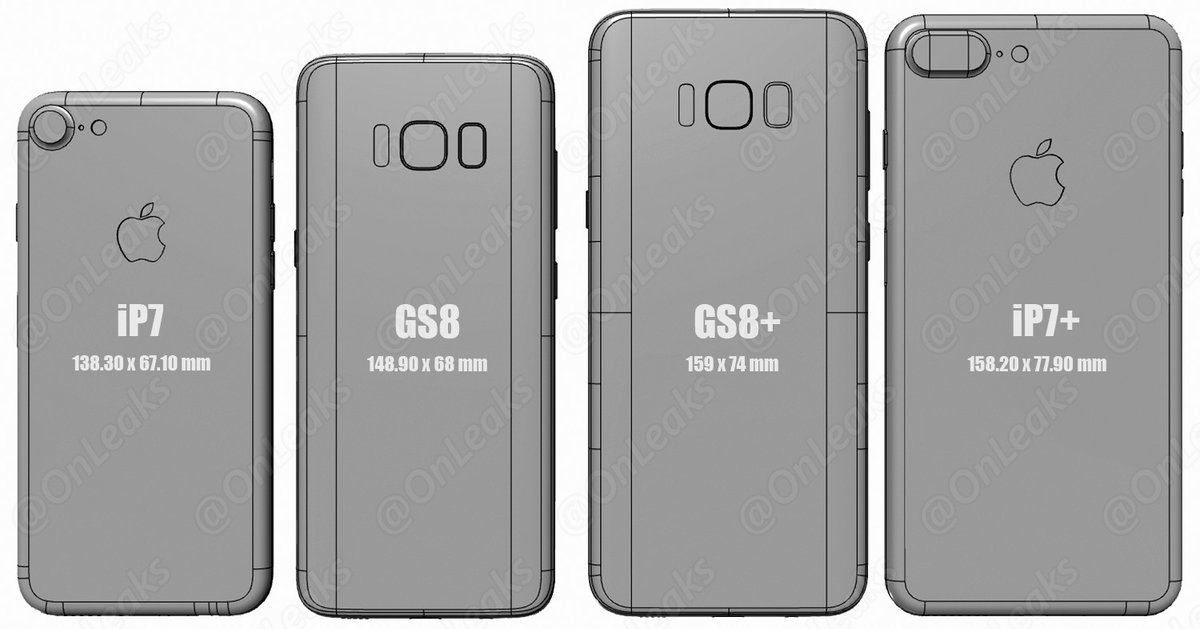

Both phones are dustproof and waterproof, althoughThe Galaxy S8 has a better IP certification result. IP68 rating for S8 means that it can withstand being in cool water for up to 30 minutes at a depth of 1.5 meters. iPhone 7 is IP67 certified, confirming that it can be in cool water for no more than 15 minutes, and the maximum depth is 1 meter.
Advertising
Advertising
Display
Frameless design combined with displayInfinity makes the Galaxy S8's screen bigger and better than the iPhone 7. The smartphone has a 5.8-inch curved Super AMOLED display with QHD+ resolution (2960 x 1440) and an 18.5:9 aspect ratio. This new format is better suited for multitasking and at the same time convenient for operating a smartphone with one hand. In terms of image quality, DisplayMate rates the Infinity display as A+ – the highest ever awarded. In addition to high resolution, brightness and contrast settings, Infinity DIsplay on the Galaxy S8 is the first display with Dolby Vision technology. It is also HDR-10 certified.
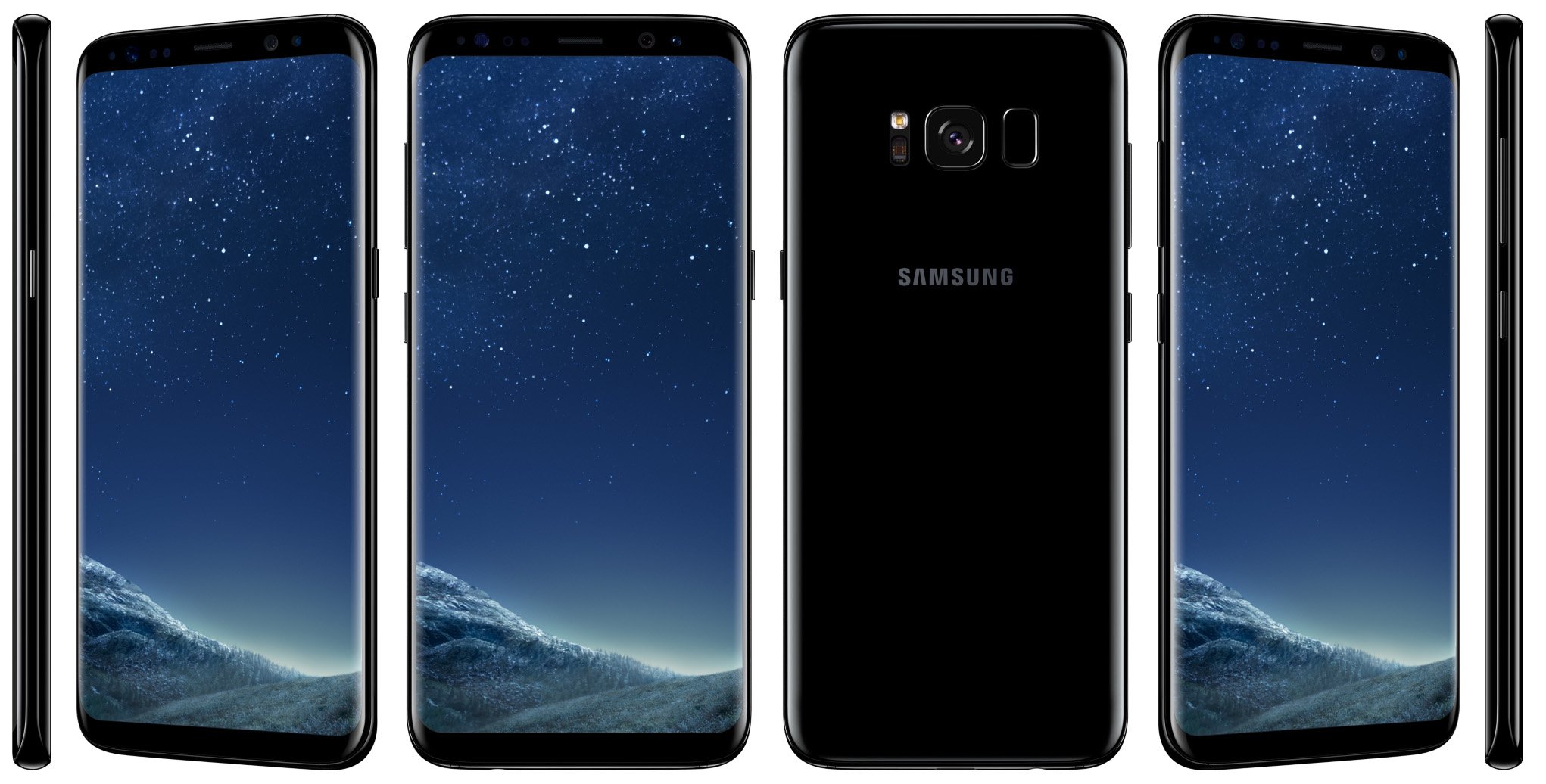

iPhone 7 still has a 4.7-inch displayRetina HD IPS LCD with a resolution of 1334 x 750. The advantages of this display are its excellent viewing angles, brightness, saturation and contrast settings. Also implemented is the color space support for a wide range of DCI P3 for better effects. Resource DisplayMate also called the display the best among LCDs on smartphones, "located on the edge that LCD technology can only afford." However, the front panel of the iPhone with a diagonal of 4.7 inches simply can not be compared with the excellent QHD + Super AMOLED screen of the Galaxy S8 in terms of clarity, brightness, color reproduction and other aspects.
Times when LCD screens were superior to AMOLED,irrevocably gone. Samsung has made a significant breakthrough in this area, and now AMOLED displays are very promising. Not surprisingly, if Apple plans to introduce an AMOLED display in the iPhone 8.
Advertising
Advertising
The iPhone 7's LCD display, however, has a hugeadvantage in the form of 3D Touch. This technology, which measures the level of pressure, allows users to interact with the operating system at a whole new level. What is displayed on the screen is directly determined by the level of pressure applied by the user. Although major iOS apps benefit from the advent of 3D Touch, the technology has not been as big a breakthrough in digital entertainment as Apple originally saw it.
CPU, RAM and disk space
Samsung Galaxy S8 became the first flagshipAndroid smartphone based on the Qualcomm Snapdragon 835 chipset. The 8-nm CPU of the 10 nm process technology runs at 2.35 GHz and is complemented by the excellent Adreno 540 graphics processor. The international version of the smartphone is based on Samsung's own chipset, Exynos 8895, which is also equipped with an 8-nm 10 nm process technology . Both chipsets use big.LITTLE technology to strike a balance between performance and battery life.
The iPhone 7, on the other hand, is based on an Apple chipThe A10 Fusion features four cores—two running at high frequencies and two running at low frequencies—to maximize performance while reducing power consumption.
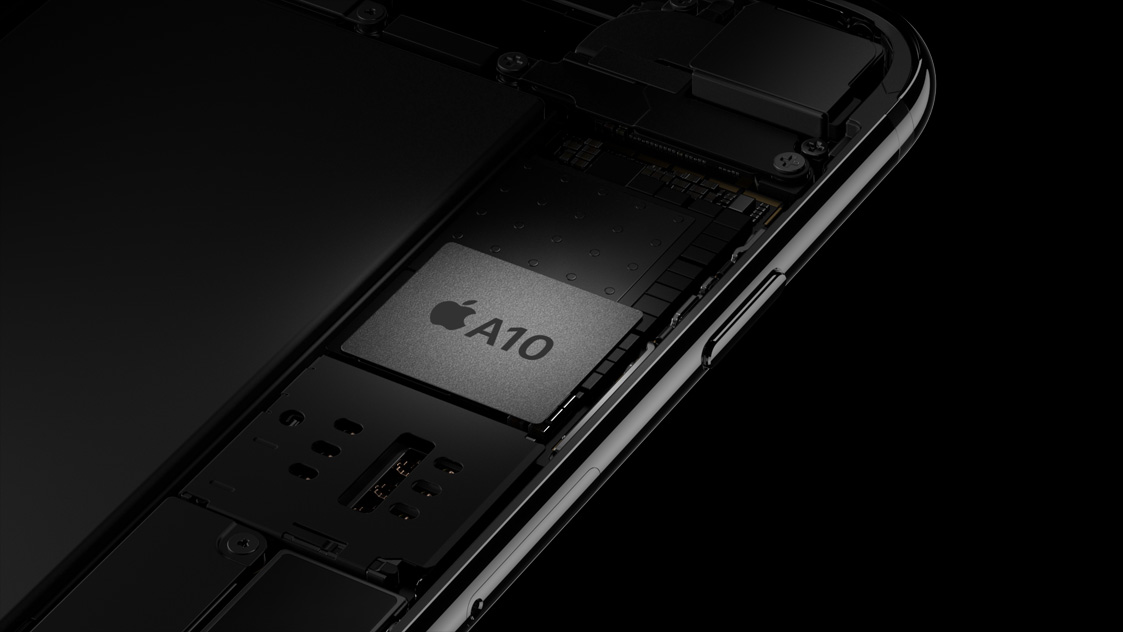

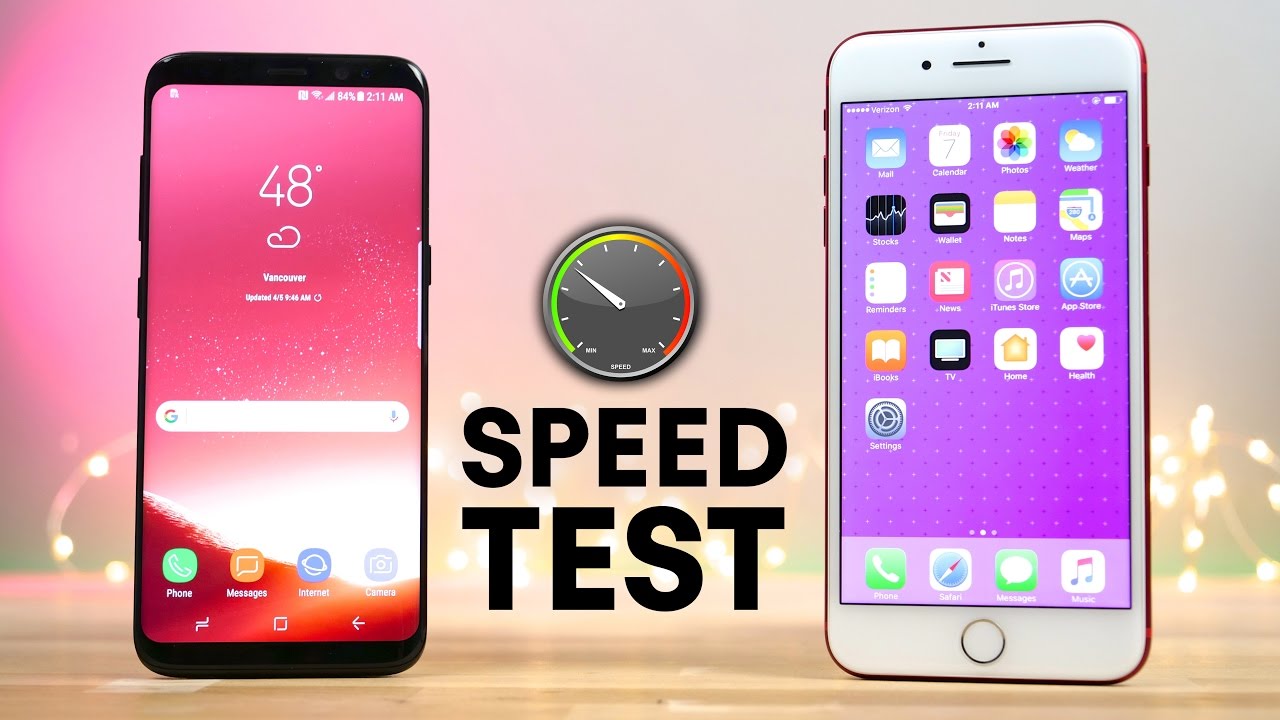
Despite the 14-16 nm process technology, the A10 Fusion isoutperforms the Qualcomm and Exynos chipsets used in the Galaxy S8. In terms of performance, the A10 is a cut above, leaving no other chance for other chipsets to win in single-threaded applications. Only with the active use of multithreading can Qualcomm and Exynos chips somehow compete with it.
There is another important factor that needs to bePlease note - Samsung devices are known to degrade their performance after a few months. Although this happens with the iPhone, the loss only becomes noticeable a year or two after purchase. The Galaxy S8, if we draw conclusions from previous models, will start to slow down much faster.
iPhone 7 is equipped with two gigabytes of operationalLPDDR4 memory, while the Galaxy S8 has four gigabytes available. However, additional RAM does not necessarily mean winning the Galaxy S8. The fact is that iOS manages resources more efficiently, and the lower screen resolution of the iPhone 7 means that applications will need less memory than on the S8. This is exacerbated by the design features of Samsung, which consumes a large amount of resources.
As for multitasking, the Galaxy S8copes with it a little better, keeping in memory a larger number of applications. But many other Android phones with 4 gigabytes of RAM are significantly superior to him.
Smartphone approaches to storage space are veryare different. The Galaxy S8 is only available with 64 gigabytes of internal storage, while the iPhone 7 offers options of 32, 128 or 256 gigabytes. iPhone 7 uses a high-speed PCIE-based solution—one of the most advanced on the market. The NAND-based permanent memory that characterizes the Galaxy S8 is also considered one of the fastest, but still falls somewhat short of Apple’s narrowly focused platform.

Advertising
Advertising
Although the Galaxy S8 is only available with 64 gigabytes perdrive, it offers a microSD card slot. This means that users can increase storage size with cards up to 1 terabyte. This is not possible with the iPhone 7: models with a large amount of disk space are expensive.
Camera
Both phones have a twelve megapixelthe camera on the back, but still they are very different. The iPhone 7 camera has a relative f / 1.8 aperture, an optical image stabilizer and a pixel size of 1.22 microns. The Galaxy S8 camera, on the other hand, has not changed since the Galaxy S7: a twelve-megapixel camera with 1.4 microns pixels, OIS and Dual Pixel technology.
Slightly wider relative aperture andDual Pixels allow the Galaxy S8 to outperform the iPhone 7 in low-light conditions. To improve camera performance, Samsung is using computational tricks - similar to Google with its Pixel smartphones. This means that, like the Pixel, the Galaxy S8 quickly takes three photos in a row and combines them into one with lower noise, greater dynamic range and better detail. If Samsung's implementation is even half as good as the Google Pixel, that smartphone's camera should do great in low light.
Both phones are also capable of shooting video in 4K resolution, take live photos, apply slow motion, and much more.
As for front-facing cameras, iPhone 7 maygrab a seven-megapixel device with a relative aperture of f / 2.2 and Retina Flesh, while the Galaxy S8 is equipped with an eight-megapixel f / 1.7 camera with autofocus. Autofocus should allow the S8 front camera to take more good selfies, while iPhone Retina Flash support gives it a gain in low light conditions.
Iris scanner, face recognition and other sensors
Although both phones have the same basic dialingsensors, including an accelerometer, a proximity sensor, a gyroscope, a fingerprint scanner and more, the Samsung Galaxy S8 has an additional kit that is not available on the iPhone 7. On the front side of the Galaxy S8 there is an iris scanner. Samsung first applied this technology to the Galaxy Note 7 and has now improved it even further. The smartphone also supports face recognition, which is not on the iPhone 7. However, the recognition system is quite imperfect: it was shown that it is easy to deceive with the help of a photograph.
Finally, the Galaxy S8 has a heart rate scanner, although it’s not particularly useful.
Battery
Samsung Galaxy S8 comes with a 3000 batterymAh, while the iPhone 7 is 1960 mAh. The batteries of both smartphones are non-removable. Although the Galaxy S8 has a larger battery capacity, it consumes more power due to the larger screen and resource-intensive sensors. Therefore, it becomes difficult to say which phone provides the best battery life—among other things, it highly depends on how you use the device.
Advertising
Advertising
However, the Galaxy S8 has two advantages:fast and wireless charging. The S8's battery charges from zero to one hundred percent in just one hour. The iPhone 7, by comparison, doesn't support any fast charging technology—in fact, it takes a particularly long time to charge with its factory 5V charger. Additionally, the Galaxy S8 can charge quickly wirelessly, whereas the iPhone 7 cannot at all. Of all the devices available in the market, only the Galaxy S8 supports both Qi and PMA, the various wireless charging technologies.
Price
Samsung Galaxy S8 and iPhone 7 smartphones are available fromall major suppliers worldwide. Although at the moment the Galaxy S8 is mainly available only for pre-order, by the end of the month it will be available at almost any decent store.
The cost of both devices is approximately the same.iPhone 7 with 32GB of memory costs $649, with 128 and 256GB - $749 and $849, respectively. The unlocked Galaxy S8 will go on sale on May 9 for $724.99. You can also purchase an unlocked version from the carrier, but in this case it will cost a little more.
Both smartphones have several advantages and disadvantages. The design, Infinity display, expandable disk space, fast charging and the rear camera of the Galaxy S8 significantly outperform the iPhone 7. On the other hand, the latter beats the Galaxy S8 in its device for working with applications, performance, security settings and privacy.
Which smartphone would you prefer - Galaxy S8 or iPhone 7? Why? Share your opinion in the comments!