In 2006, the Cassini spacecraft spotted geysers erupting from the cracks of Saturn's moon
Enceladus has a diameter of about 504 km and is covered byice is 20–30 km thick and the surface temperature is about -201 °C.Data from NASA's Cassini-Huygens mission provided evidence of the existence of a liquid ocean beneath the moon's icy shell. Water from there is carried into space due toHow can such a small cold worldMaintaining such vigorous geological activity remains a mystery to scientists.
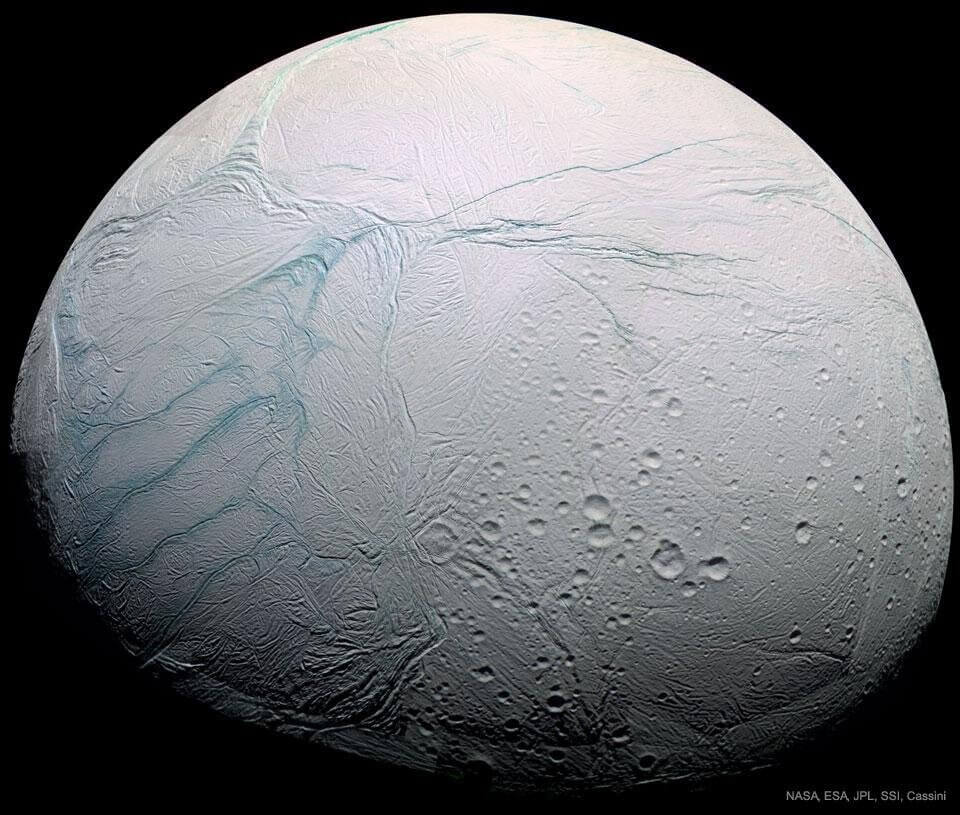 Cracks on Enceladus (blue). Photo: NASA/ESA/JPL/SSI/Cassini Imaging Team
The scientists used a physics-based model,to find out how Enceladus developed cracks so deep that they reached the ocean and caused eruptions. The model takes into account warming and cooling cycles that last on a scale of hundreds of millions of years and are associated with changes in the Moon's orbit around Saturn. During each cycle, the ice shell becomes thinner or thicker. According to scientists, the thickening occurs due to the freezing of the base of the ice shell, which grows downwards, like ice on a lake.
It is the pressure exerted by this expandingdown the ice onto the ocean below, and explains the geysers of Enceladus. It is enough to cause cracks in the form of strips to form on the surface of the Moon, through which water breaks through.
Read more:
"James Webb" took the clearest photo of a star in history
Developments of Moscow radiologists on AI became the basis of federal standards
Quantum charging will allow record-breaking fast charging of electric vehicles