Planetologists from Switzerland and Germany presented the results of computer modeling of planetary development
Researchers have studied how evolution and cyclescontinents and water can influence the development of terrestrial exoplanets. The results of their models show that the planets have about an 80 percent chance of being mostly land-based, and a 19 percent chance of being mostly water worlds. Only about 1% of the planets can have an equal ratio of land and ocean, as on Earth.
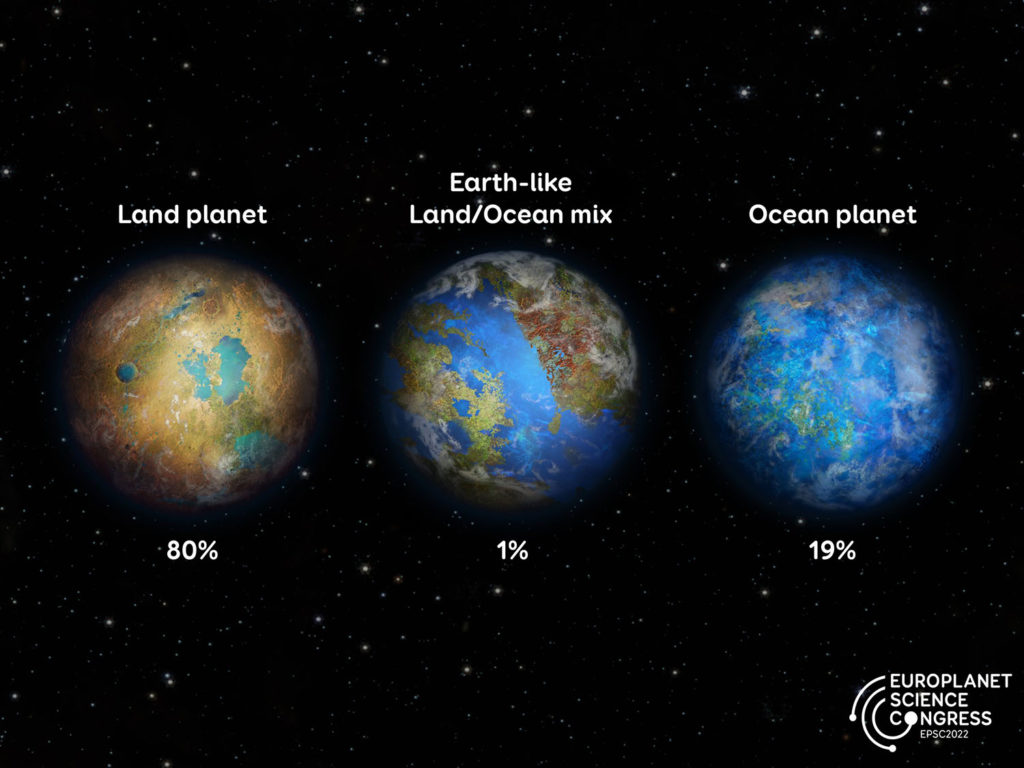 Computer simulation of different types of terrestrial planets. Image: T. Roger, Europlanet 2024 RI
Numerical models suggest that the averagessurface temperatures will not differ too much in different types of worlds. The maximum difference should be about 5 ° C, but the climate will be significantly different. The ocean world, which is less than 10% land, must be humid and warm. The climate on such a planet should be reminiscent of the era of the universal tropics, which came to Earth after an asteroid collision that led to the death of dinosaurs.
Continental worlds where the oceans are less30%, on the contrary, will have a colder, drier and harsher climate. Most of the land in such worlds should be occupied by cool deserts. It looks like Earth during the last ice age, the scientists add.
Unique conditions have developed on Earth due tobalance between the erosion of the continents due to weathering and the growth of the continents as a result of volcanic activity. The probability of coincidence of favorable factors is very low, the authors of the work believe.
Read more:
Mysterious 'blue goo' at the bottom of the sea baffles scientists
Developed generator for wind farms without expensive magnets
Look at a phenomenon that is simply impossible on Mars
Cover image: Trent Schindler, National Science Foundation, Public domain, via Wikimedia Commons