Due to the small size of accretion disks and the enormous distance to them, there are no suitable images in
Using statistical methods, the scientists measured how much light emitted by 5,000 accretion disks flickered over time. All of them were different.
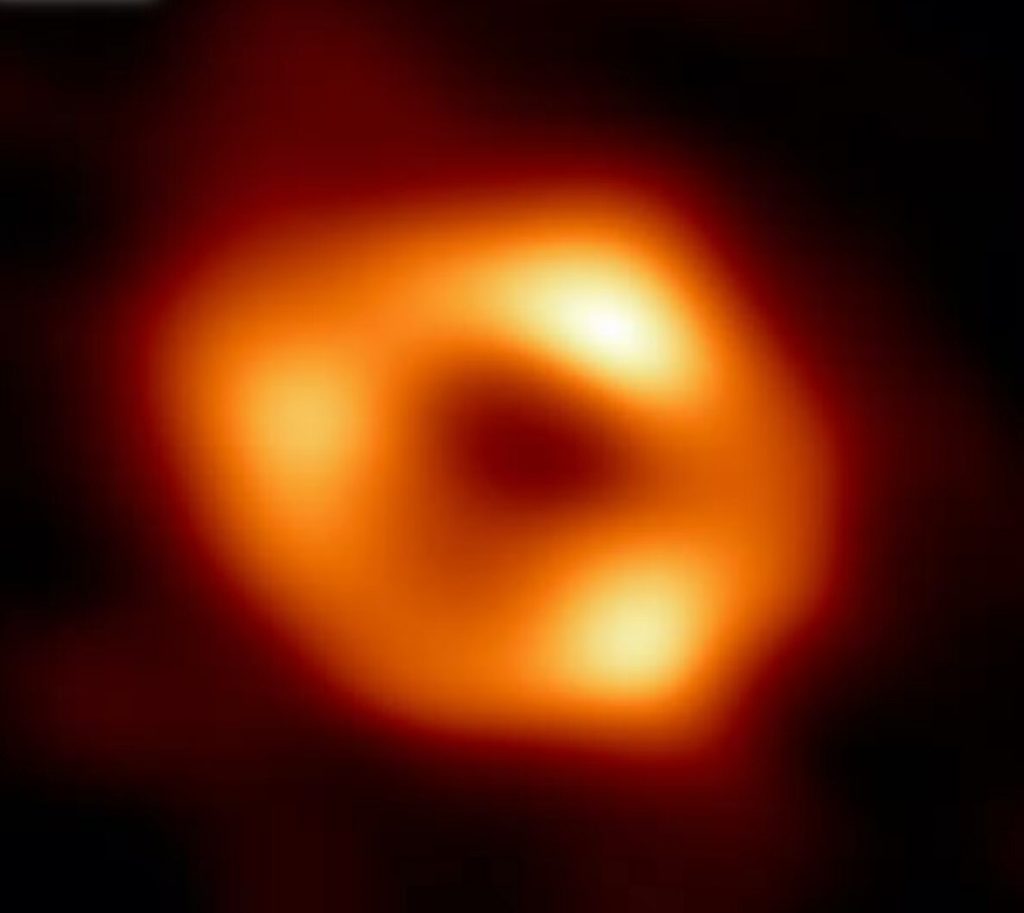 An image of the glowing accretion disk around the black hole Sagittarius A* at the center of the Milky Way. Credit: EHT Collaboration
When the scientists sorted the objects by their size,brightness and color, we noticed a pattern. The disk glow pattern depends on its orbital velocity. It changes due to a kind of turbulence caused by friction and intense gravitational and magnetic fields, the scientists conclude.
Read more:
Scientists have named the top 6 ways to "save" the memory of older people
A mysterious imprint underground surprised scientists. He is over 1000 years old
Sword thought to be fake turns out to be a 3,000-year-old Bronze Age artifact
On the cover: ESO/L. Calçada, SS BY 4.0, via Wikimedia Commons