The Black Death, the largest pandemic in our history, was caused by the bacterium Y. pestis and continued in Europe from
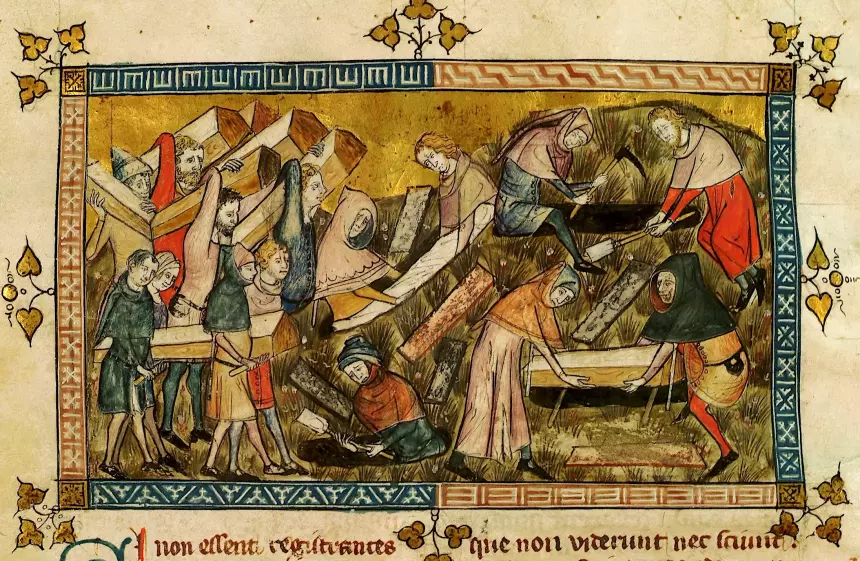
In 1347, the plague first arrived in the Mediterraneanthrough merchant ships transporting goods from the territories of the Golden Horde. The disease then spread across Europe, the Middle East and northern Africa, killing up to 60 percent of the population in a large-scale outbreak known as the Black Death. This first wave later developed into a 500-year pandemic, the so-called Second Plague Pandemic, which lasted until the beginning of the 19th century.
An international team of scientists analyzed ancient DNA from human remains, as well as historical and archaeological data from two sites where early signs of the plague were found.
"We have found the original strain of the Black Death and even know its exact date (meaning 1338)", – says Maria Spiru, lead author and researcher from the University of Tübingen.
They also found that modern strains,most closely related to the ancient strain, are today found in plague reservoirs in the Tien Shan Mountains, that is, very close to the place where the ancient strain was discovered. This indicates that the progenitor of the "Black Death" originated in Central Asia.