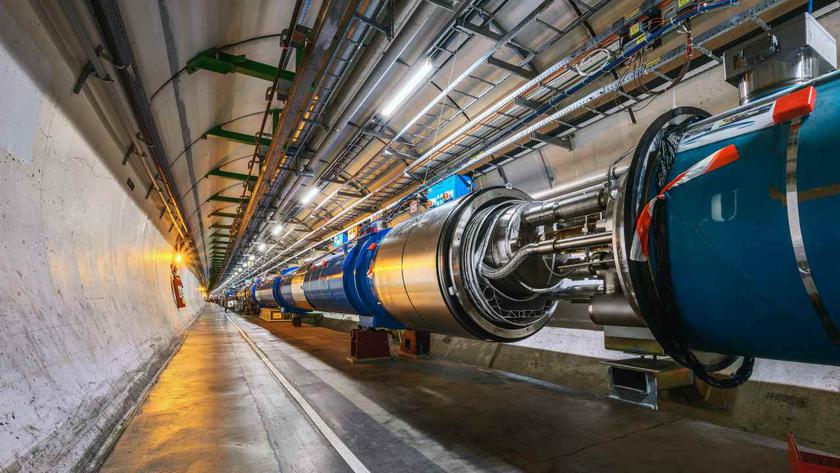
Scientists have been able to capture neutrinos since the middle of the last century, but they recently managed to do this at the Bolshoi
What is known
For some time, scientists believed that neutrinoswere dark matter. This was due to the fact that subatomic particles practically do not interact with matter, although in terms of quantity they are second only to photons.
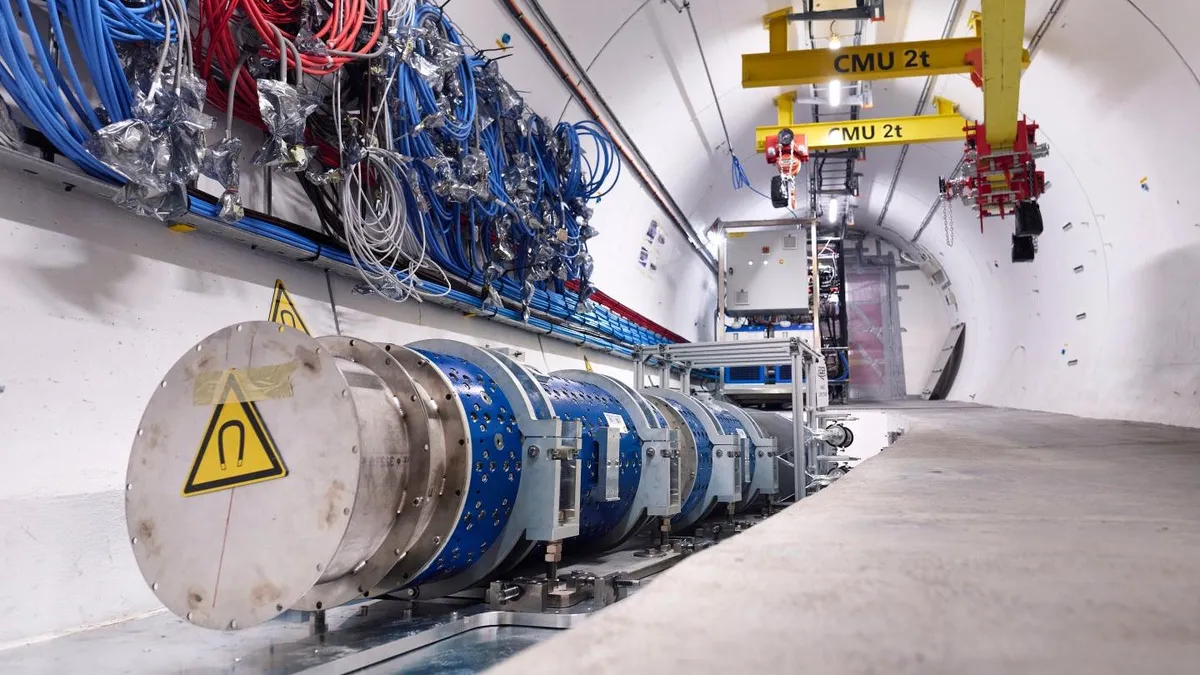
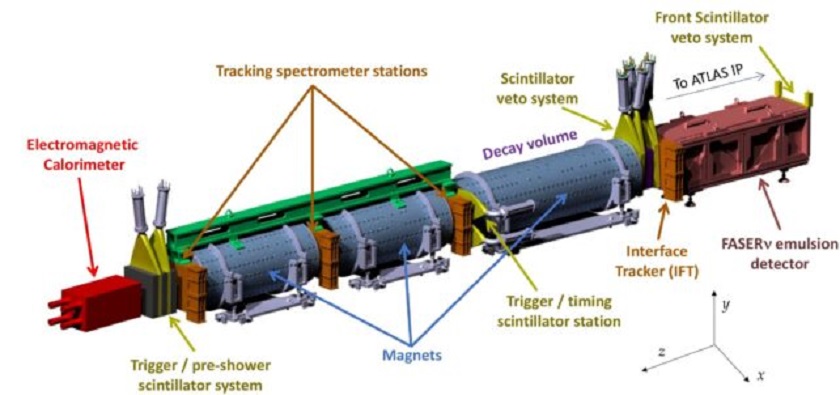
In 2022, researchers conducted severalexperiments in which they managed to capture a ghost particle for the first time at the Large Hadron Collider. For this, the FASERnu detector was used (pictured below). It is noteworthy that the tool was assembled from the remnants of components that were not useful in previous experiments.
</ img>
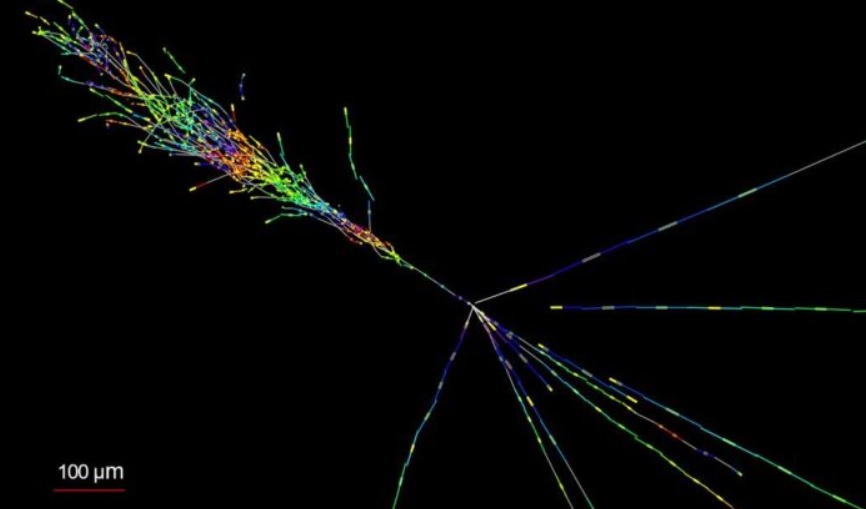
Scientists have been able to detect neutrinosextremely low energies. At the same time, high-energy particles fall to Earth from outer space. And now, at a collider in Switzerland, they managed to catch high-energy neutrinos. It is expected that this will allow researchers to learn more about the nature of astrophysical processes.
</ img>
The statistical significance of the discovery reaches 16sigma, while the required level is 5 sigma. In simple terms, the probability of error that high-energy neutrinos were detected at the Large Hadron Collider tends to zero.
Before that, scientists could capture ghostlyparticles using special detectors under the Earth's surface. They capture the faint flashes of light that occur when neutrinos come into contact with other particles.
</ img>
The Large Hadron Collider, which was recentlyupgraded, can now reproduce each of the elementary particles. Among them is the Higgs boson, for which the particle accelerator was built.