Measuring the maximum lifespan of wild animals is a complex process because
Researchers have developed a method for determiningvertebrate life expectancy based on DNA methylation. This is a process in which methyl groups are added to a DNA molecule and change the activity of this segment without affecting the nucleic acid sequence in it.
“Using the known lifespans of 252 different vertebrate species, we were able to accurately predict lifespan from DNA methylation density in 42 different genes.”
Ben Main, lead author of the study
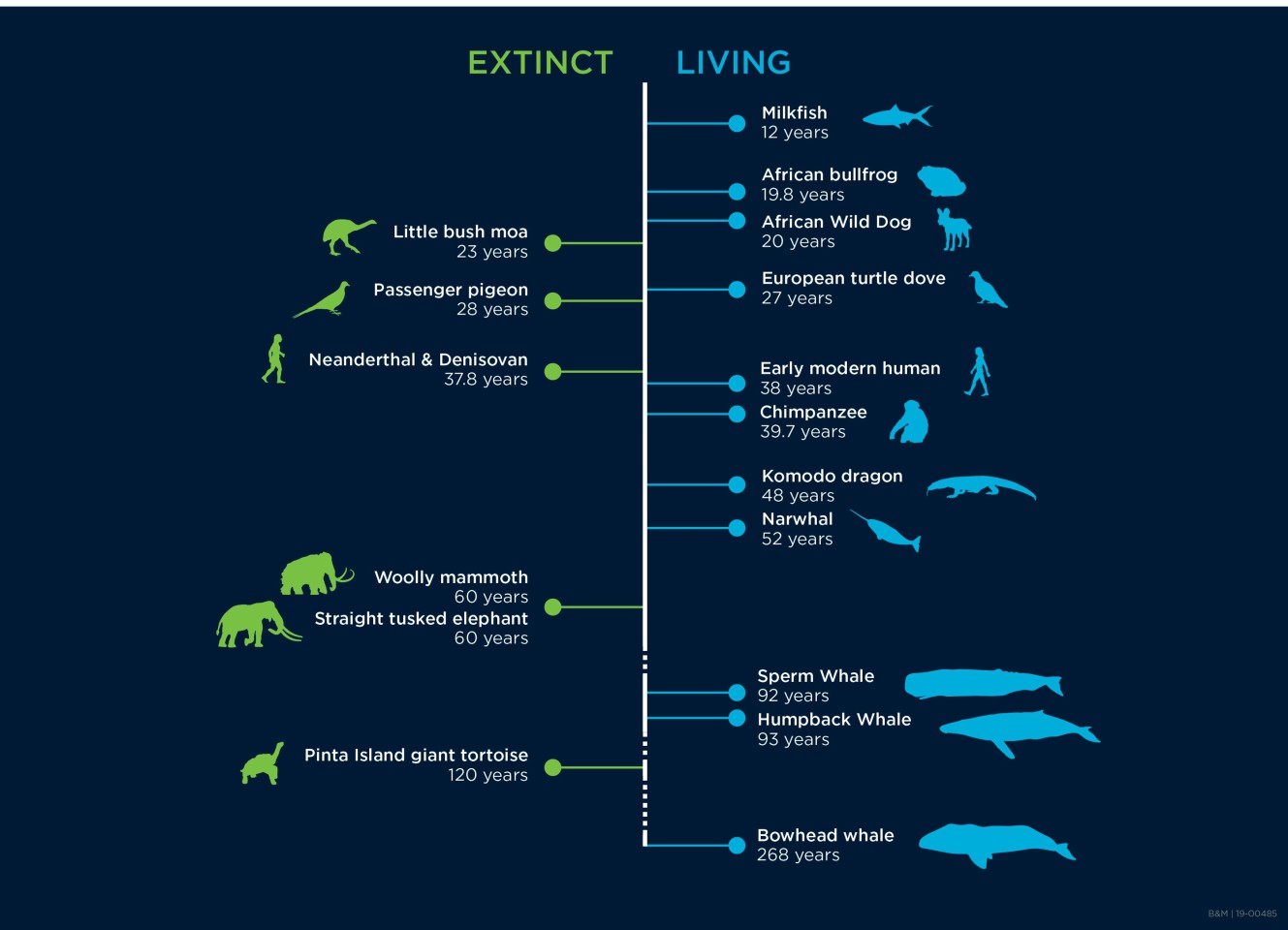
Study found that durationthe life of woolly mammoths was a maximum of 60 years, while the maximum life span of a bowhead whale was a whopping 268 years. This is 57 years more than previously thought.
Earlier biologists from Stanford UniversityFor the first time in history, the heart rate of a blue whale was recorded in the wild. The results allowed us to determine how the cardiovascular system of a mammal works, which for a long time is under water without access to oxygen.