A new study published in the journal Nature Physics shows that three simple ingredients can
Oil droplets exploit temperature fluctuationsenvironment for energy storage and swimming. When cooled, the droplets release thin "tail" filaments into the environment. Friction between the tails and the surrounding fluid pushes the droplets into motion. When heated, the droplets retract their tails, returning to their original state, and use the heat of the environment to recharge.
Researchers have shown that the droplets are rechargeable multiple times and can float for up to 12 minutes at a time.
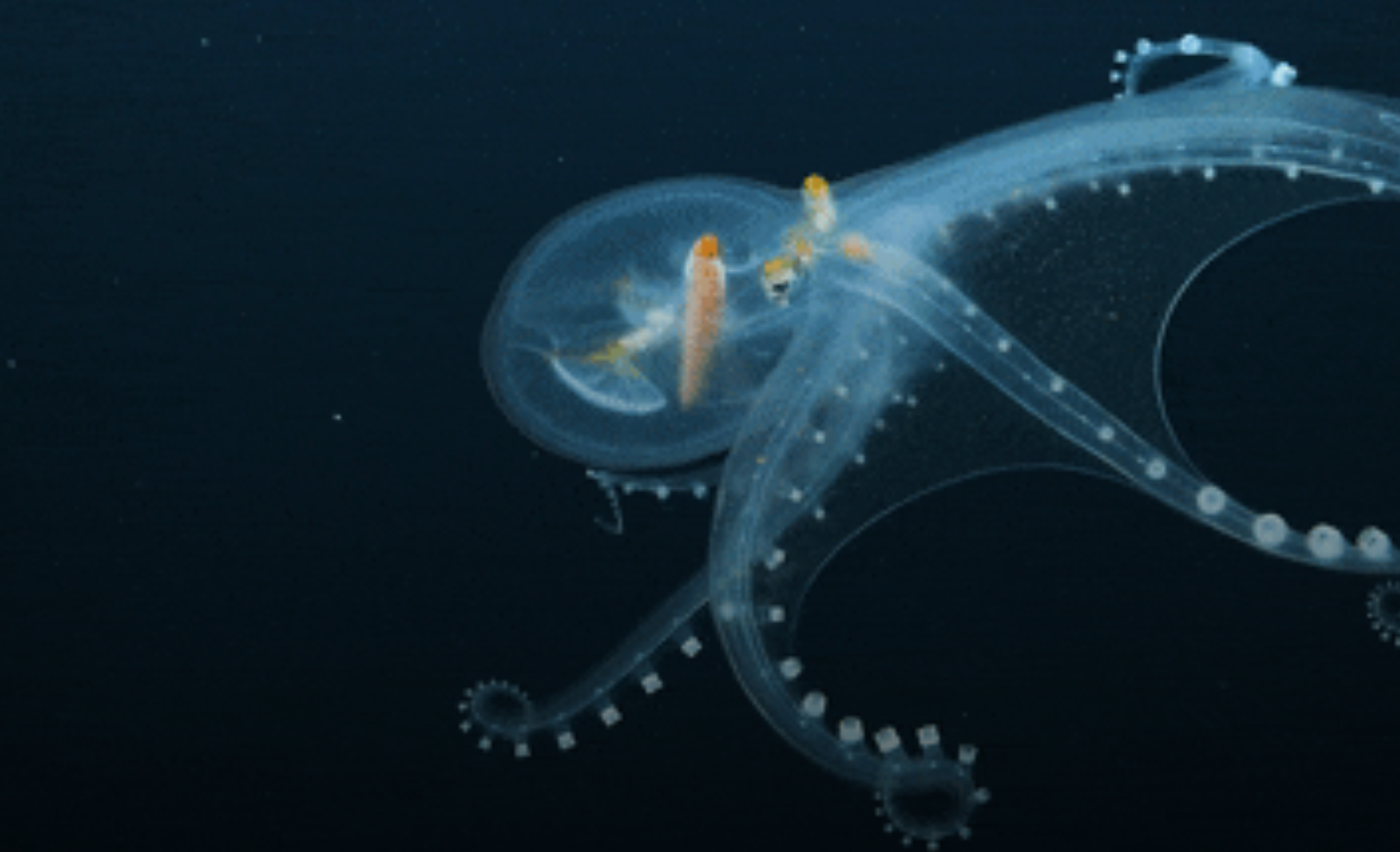
An underwater robot captured a transparent octopus in the waters of the Pacific Ocean
Scientists noted that there are other typesartificial swimmers, however, their movements are driven either by chemical reactions that form bubbles that push the device through fluids, or by physical forces such as magnetic or electric fields. Instead, a new class of microscopic robots, roughly the size of a red blood cell, are able to spontaneously assemble and move without the use of external forces.
Since they do not harm other living things, scientists hope they can be used to study basic interactions between living organisms such as bacteria and algae.
“In nature, we often see a large number oforganisms such as bacteria group together, but our understanding of how these organisms interact with each other is incomplete. By mixing simple artificial swimmers with groups of living organisms, we can get a clearer picture of how biological micro-swimmers communicate with each other, ”the scientists noted.
Read more:
Nebulae, comets and stellar nurseries: showing the best astrophotography of the year
Changes in the Earth's orbit contributed to the emergence of complex life on the planet
Data from spy satellites helped to find out the cause of melting glaciers in Asia