The Black Death is the second plague pandemic in history, peaking between 1346 and 1353, and repeated outbreaks
A hunter-gatherer who spread a plague of 5 thous.years ago, there was a man from 20 to 30 years old, whose remains bear the code name RV 2039. His remains, together with another skeleton, were found in the late 1800s in the Rinnukalns region in the territory of modern Latvia. The remains of both soon disappeared until 2011, when they reappeared in the collection of the German anthropologist Rudolf Virchow. Since this rediscovery, archaeologists have found two more graves in Latvia, a total of four sets of remains, probably from the same group of hunter-fisher-gatherers.
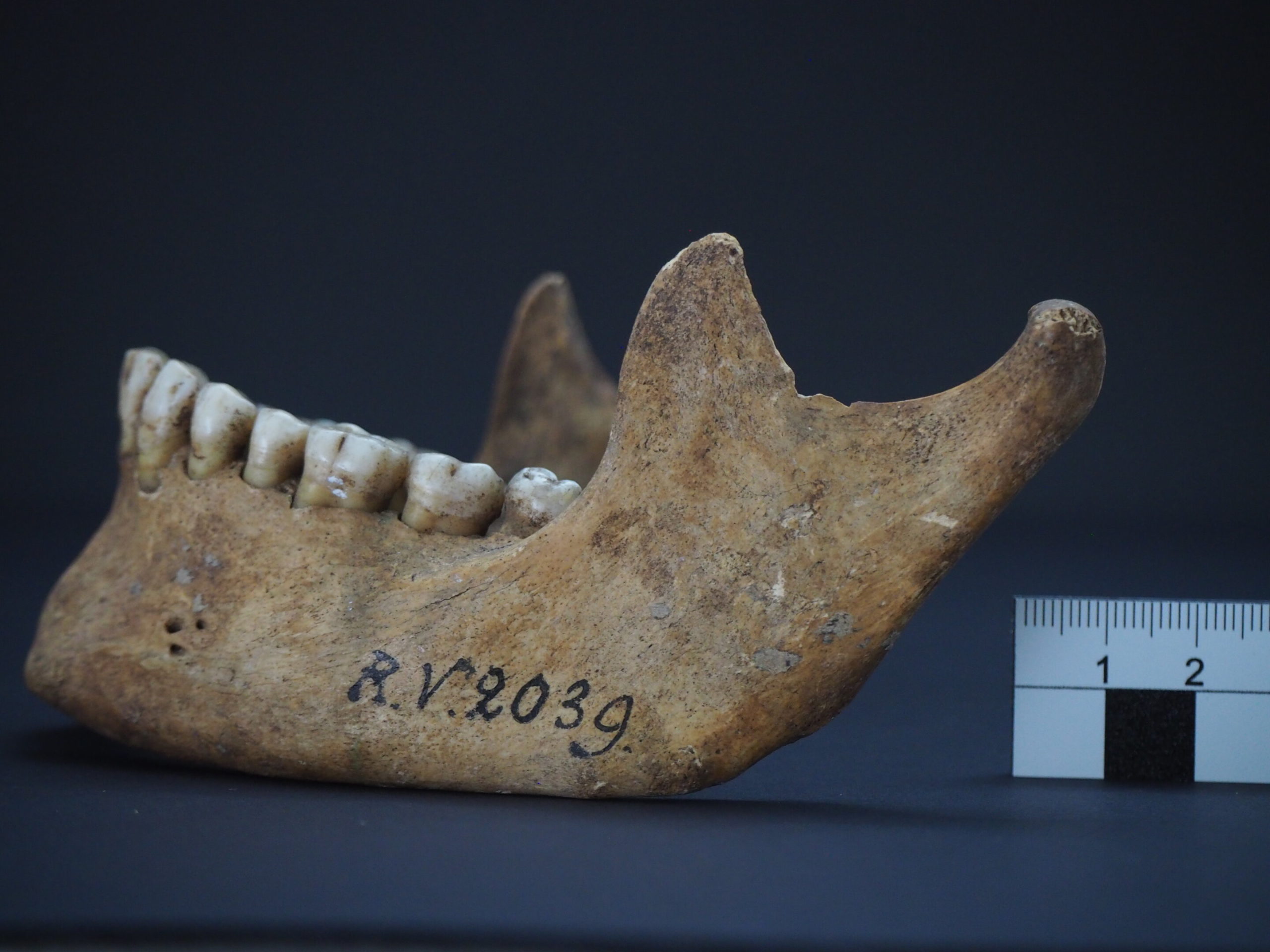 The jawbone of a man buried in Rishukalns, Latvia, about 5000 years ago. Credit: Dominik Göldner, BGAEU, Berlin.
In the new study, the researchers used tooth and bone samples from all four hunter-gatherers to sequence their genomes and then tested them for bacterial and viral pathogens.As the authors of the study note, they were extremely surprised to find evidence of the presence ofY. pestisAfter reconstructing the genome of the bacteria and comparing it to other ancient strains, the researchers determined thatY. pestisRV 2039 was indeed the oldest strain ever discovered.
Read more
An unknown type of signal is recorded in the human brain
Unusual sand found in the Kuril Islands, from which Japanese samurai made swords
The largest comet in history is seen in the solar system: it is almost a planet