When a glass glass falls to the floor and breaks, the pieces will range in size from large
By Stéphane Coy, Gerard van Dalen, Jean-FrançoisMolinari and Daniel Bonn investigated the fragmentation process and found that there are two very different ways of destruction. Glass at bus stops breaks down differently, because it was processed in a special way, because of this there is an internal tension in it: it ultimately leads to the similarity of the fragments.
To study the process occurring with glassbus stop, the researchers studied a similar type of glass called Prince Rupert's teardrop or Dutch tear. They are made by dripping molten glass into cold water. Because the glass first hardens on the outside and only then on the inside, large stresses arise inside the drop, comparable to those that arise in the glass of a bus stop.
On the Internet you can find a large number of videos that show the special properties of such drops: they can withstand a blow with a hammer, but break into pieces if the tail is pinched.
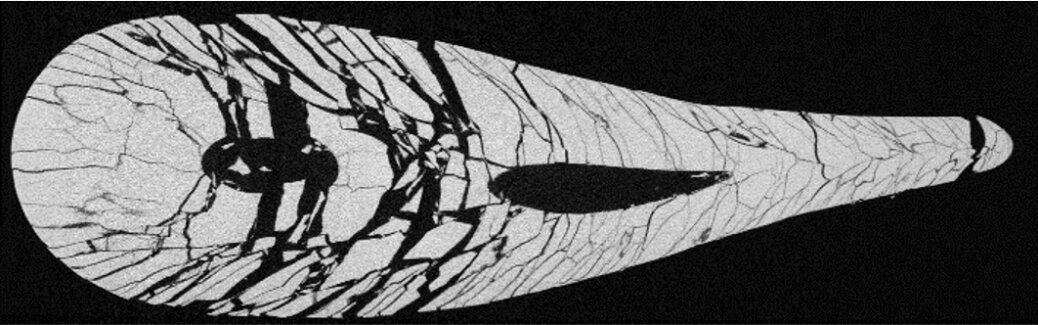
Researchers using an example of 22 thousand.types of droplets, various fragmentation processes were studied. They compared the fragmentation process of Prince Rupert's drops with other objects and found that there were two types of fragmentation processes, which they called hierarchical and random.
When you drop an ordinary glass on the floor,a hierarchical process occurs. The energy that exists when glass moves is much greater than what is needed for a one-time destruction. To get rid of all the kinetic energy, more and more cracks appear inside the glass. The process is hierarchical - it goes from large cracks to increasingly smaller ones.
Most situations in which objects breakare of a hierarchical type. An exception occurs when the energy to destroy an object does not come from the outside, but is the result of internal stresses, as in the case of bus stop glass and Prince Rupert's drops. In this case, the formation of cracks does not occur from large to small, but in a completely random way. As a result, the fragments have a certain size, determined by the magnitude of the internal stress in the material.
Read more
The first accurate map of the world was created. What's wrong with everyone else?
Elon Musk: the first tourists to Mars will die
Large debris of the Chinese space station "Skylab" fly to Earth