The researchers studied air hydrate crystals in an ice core excavated from Greenland.As noted
Over centuries or millennia, ice builds up, increasing the pressure and lowering the temperature in the bubbles of "frozen" air.The trapped atmospheric molecules then turn into cell crystals, preserving samples of ancient air for hundreds of thousands of years.These crystals, known as air hydrates, can reveal how the atmosphere and climate have changedLand.
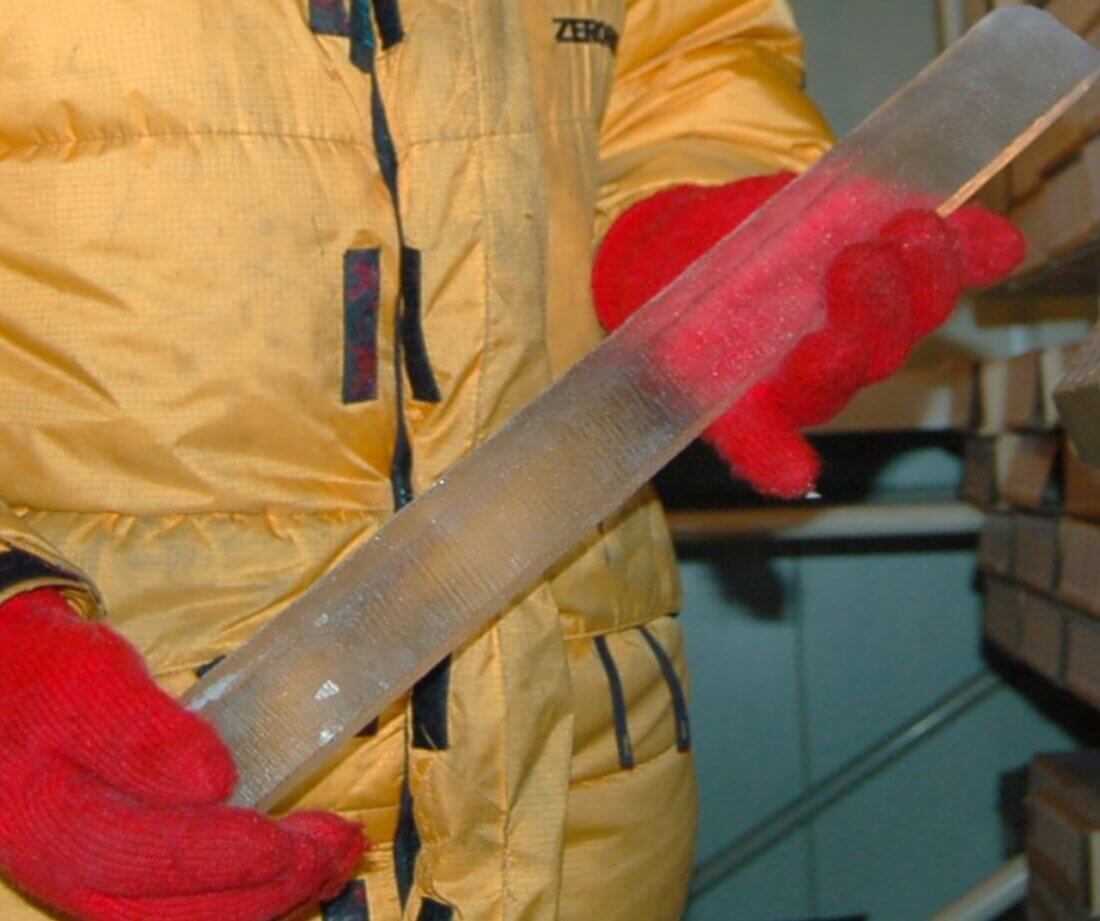 Ice core from the Greenland ice sheet. Photo: Tsutomu Uchida
Previously, scientists studied only traces of oxygenand nitrogen. Now an international research team has developed a new approach to identify more elusive, previously unconfirmed components such as argon.
“Air bubbles in an ice core are the onlya well-known paleoecological archive of a real ancient atmosphere with a time axis in the direction of depth,” said the first author of the study, Tsutomu Uchida, an assistant professor of engineering at Hokkaido University.
Read more
Scientists have named the first sign by which to look for extraterrestrial life
Potentially dangerous asteroid will approach Earth on April Fools' Day
Genetics Beat Cat Allergies With CRISPR