Archaeologists have conducted a new study and found that 11,000 yearsBack Little Kids Who Traveled
The children - most likely four - rushed andsplashed in the mud of the sloth's footprints, leaving their own footprints on the playa, the dry bottom of the lake. New research by Matthew Bennett, professor of environmental and geographical sciences at Bournemouth University in the UK, shows that these footprints have persisted for millennia, leaving evidence of this Ice Age or Pleistocene quirk.
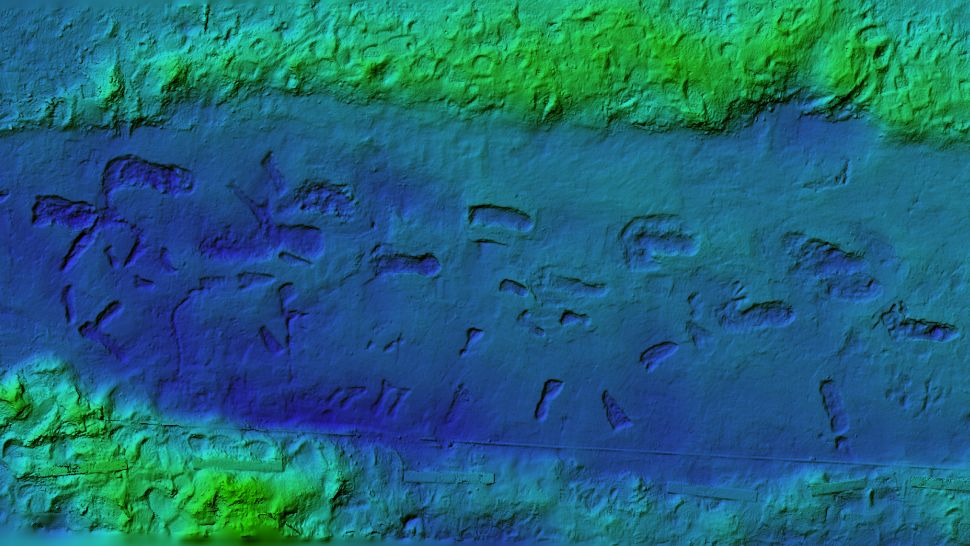 Photos: David Bustos, Matthew Bennett
In total, scientists have discovered more than 30traces that were probably left by children aged 5 to 8 years. They trampled on other footprints that belonged to a now-extinct giant ground sloth, possibly from the genus Nothrotheriops.
According to Bennett, each of the tracks of the giant ground sloth is almost 40 cm long, the size of The tracks are superficial, about 3 cm deep, but it seems to have been enough to fill them with water and intrigue the children, the scientists noted.
"We see baby footprints very often in White Sands," Bennett said, most likely because, like today's children, these children were running around, leaving hundreds of footprints a day.
Previously, scientists have found human footprints that appeared 21,000-23,000 years ago. They are considered the earliest evidence of human presence in the Americas.
Read more:
A compelling new theory emerges as to why the Mayan civilization collapsed
The supersonic plane will fly at a speed of 2,000 km/h and cross the ocean in 3.5 hours
Archaeologist robot dives 1,000 meters underwater to inspect sunken ship