The results of the work showed a direct connection between regions with a high aerosol index
Using flow pattern analysis and trackingaerosol trajectories in reverse time, the researchers identified two potential transmission routes that are not often considered today.
First, the transmission of the virus occurs due to the air flow from the bottom to the top and, second, due to cross-flows that occur due to limited filtration of air conditioners.
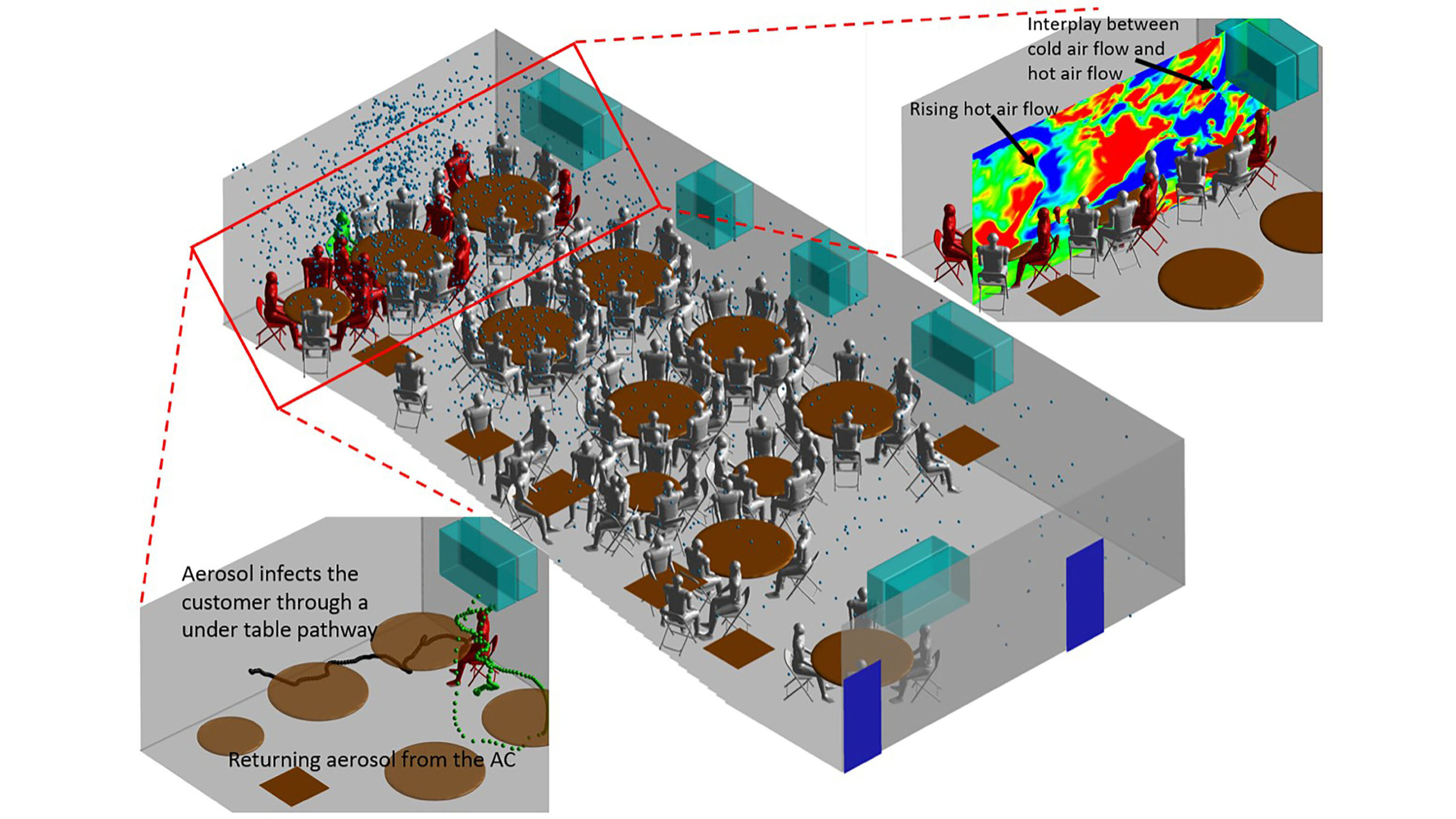
The scientists believe their work highlightsthe need to take additional preventive measures, such as properly shielding surfaces and increasing the filtration efficiency of air conditioners.
The study also showed the effectiveness of computer modeling for assessing the risk of airborne infection.
Read more:
Look at an 8 trillion pixel image of Mars
A nuclear rocket engine is being built for flights to Mars. How is it dangerous?
Abortion and science: what will happen to the children who will give birth