Mollusks build shells to protect their soft tissues from predators. Mother of pearl, which is sea
Researchers from Zlotnikov’s groupIn collaboration with the European Synchrotron Radiation Laboratory (ESRF) in Grenoble, we looked in great detail at the internal structure of early and mature nacre. Using synchrotron-based holographic X-ray nanotomography, they were able to record the growth of nacre over time. “Nacre is an extremely fine structure with organic elements less than 50 nm in size. The ID16A beamline at the ESRF provided us with an unprecedented opportunity to visualize nacre in three dimensions, explains Igor Zlotnikov, PhD, head of the B CUBE research group. “The combination of electron-dense and high-period inorganic platelets with thin and thin organic surfaces makes nacre a challenging structure to image. Cryogenic imaging helped us get the resolution we needed.”
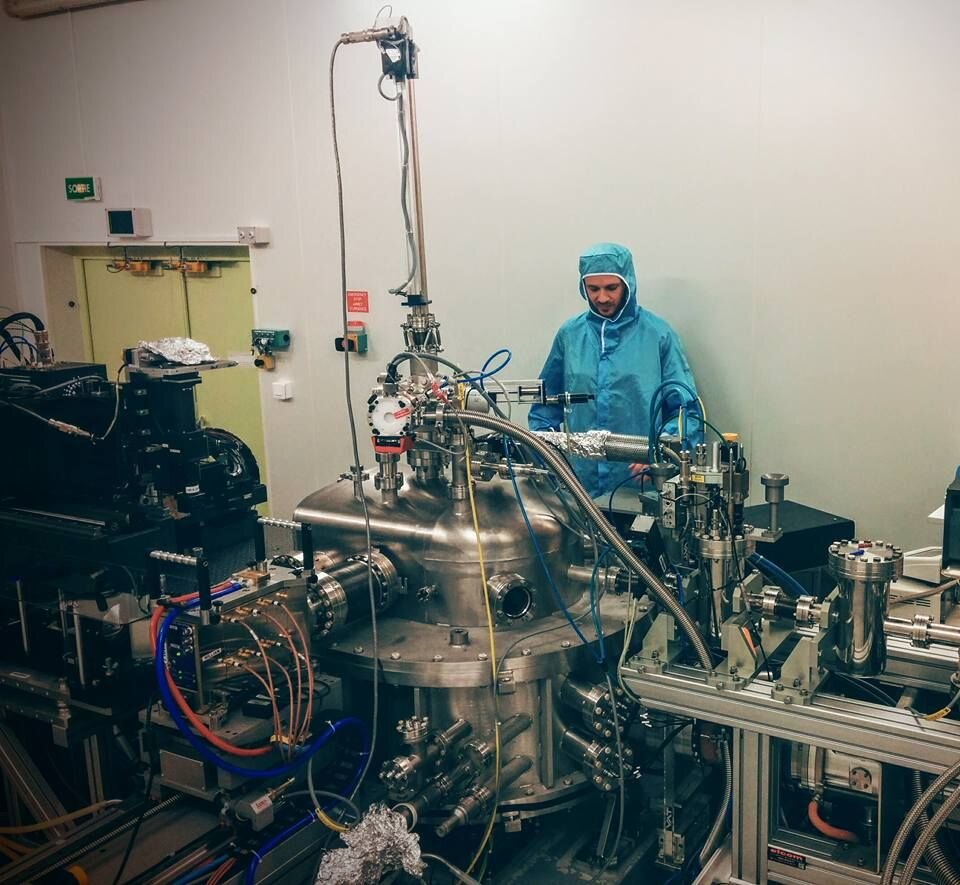 End station on the holographic X-ray nanotomography (ID16A) channel at ESRF. Credit: © Igor Zlotnikov
Analyzing the data was quite challenging. Исследователи разработали алгоритм сегментации с использованием нейронных сетей и обучили его разделять разные слои перламутра. Таким образом, они смогли проследить, что происходит со структурными дефектами по мере роста перламутра.
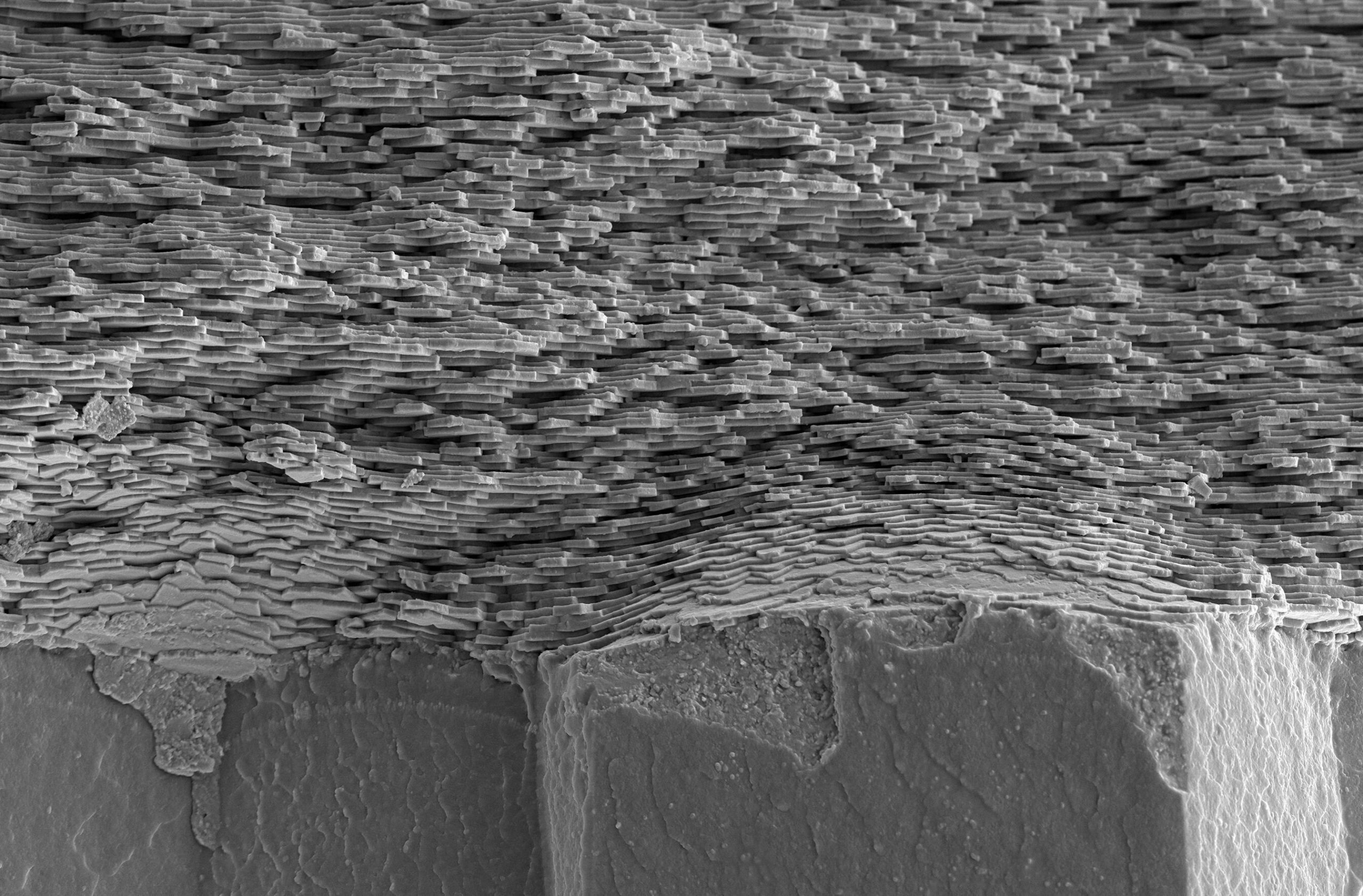 Cross-section of the shell showing the periodically layered mother-of-pearl over the prismatic structure of the shell. Credit: © Igor Zlotnikov
Behavior of structural defects in growingmother of pearl was unexpected. Defects in the opposite direction of the screw were attracted to each other from great distances. Right-sided and left-sided defects moved through the structure until they met and neutralized each other. These events resulted in synchronization throughout the tissue. Over time, this allowed the structure to develop into a completely correct and defect-free one.
Periodic structures like mother-of-pearlare created by many different kinds of animals. The researchers believe that the recently discovered mechanism could control not only the formation of mother-of-pearl, but also other biogenic structures.
Read more
See how the moon appeared. Ancient planet crashed into Earth
Archaeologists have found an ancient burial in the Crimea. There was a "ticket" to the afterlife
Abortion and science: what will happen to the children who will give birth