Researchers took dozens of photographs from different angles of the skull, which is on display at the Nature Museum in
According to study co-author Cicero Moraes,Brazilian graphic arts expert, experts used data on the facial structure of modern Brazilians, computed tomography (CT) scans and tissue thickness markers to reconstruct the appearance of the ancient man. Apparently, he had a wide nose and large lips.
In total, the researchers created two portraits of Zuzu. In one photo he has hair, but in the other he does not.
In 1997, scientists discovered a skeleton buriedin a fetal position at an archaeological site in Toca dos Coqueiros, Brazil. For several years, experts have been studying remains from the Serra da Capivara National Park. Based on the size and shape of the skull, they identified them as female and named the skeleton Zuzu.
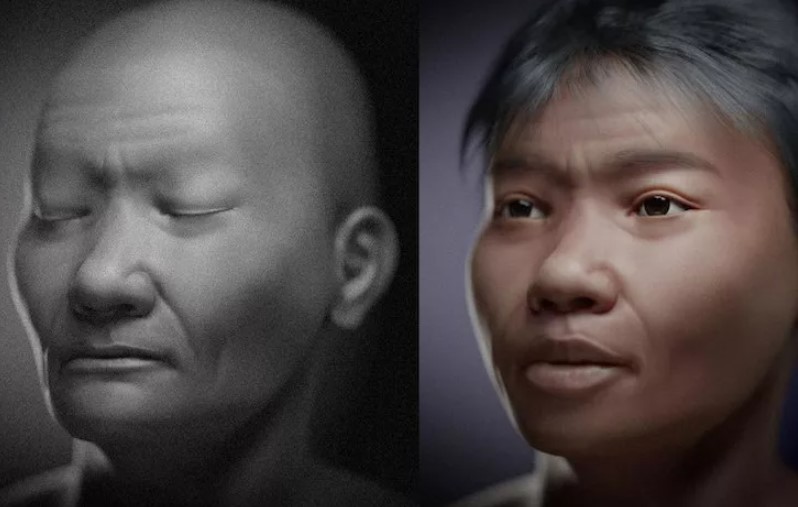 The researchers created two approximations of Zuzu's face using photogrammetry of the skull.
Image credit: Moasir Elias Santos and Cicero Moraes
However, this classification is still controversial, with many researchers claiming that the skeleton belonged to a man. A new approximation of the face of a 9600-year-old skull will put an end to these disputes.
Read more:
A powerful flare erupted on the Sun: it has already affected the Earth
Medieval fortress accidentally discovered in the forest: the find surprised scientists
Scientists have found a new genetic disease in children: how it manifests itself