After several years of research, scientists from the archaeological project Bajo Laberinto used lidar to
Lidar (transliteration LIDAR or LiDAR - English.Light Detection and Ranging is a technology for measuring distances by emitting light and measuring the time it takes for that reflected light to return to a receiver. Lidar as a device is, at a minimum, an active optical range finder.
Using lidar images, scientists notedsignificant changes to the landscape. They indicate that the Mayans actively used agriculture to feed the city's population and develop it. “All available land was covered with water channels, terraces, walls and dams,” the scientists explain.
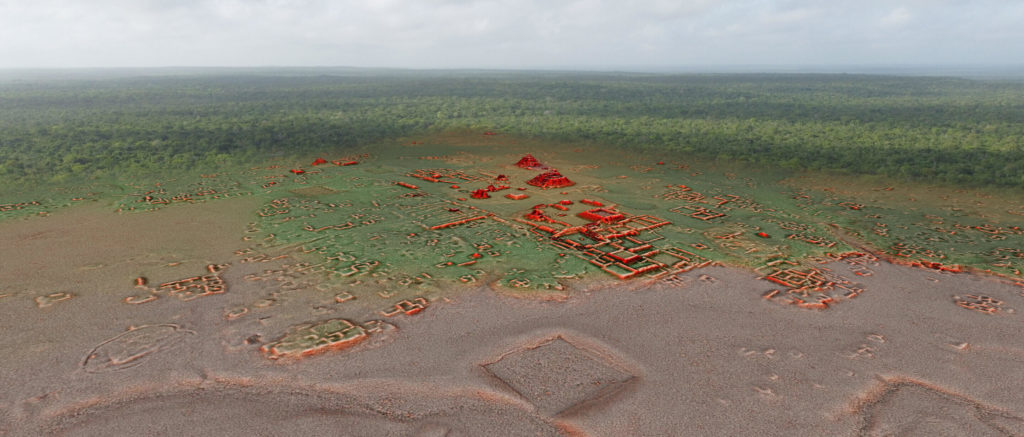 Lidar survey in Calakmul. Credit: Bajo Laberinto Archaeological Project and National Institute of Anthropology and History
Located in the Calakmul Biological Reserve,the city of the same name was the new capital of the powerful Kanul (Serpent) dynasty from 635–850. AD The Canul regime dominated Maya geopolitics, controlling a vast network of vassal kingdoms.
Until the new study, scientists were unsure of the scale of urban settlements and landscape changes in the capital itself. Thanks to lidar, everything has changed.
Number of people who lived in Calakmulat the height of the reign of the "Snake King", was not a complete surprise due to previous cartographic and archaeological research. However, archaeologists were “amazed by the scale and level of urban construction,” according to a University of Calgary press release.
In the surveyed area, experts foundHuge apartment complexes, some with up to 60 individual buildings, are home to large households consisting of extended families and their affiliated members.
Read more:
Starlink signal hacked to be used as an alternative to GPS
"Hubble" looked into the "keyhole" of the universe
NASA revealed the origin of Haumea - the most mysterious planet in the solar system
On the cover: LIDAR survey in Calakmul
Copyright, Bajo Archaeological ProjectLaberinto and National Institute of Anthropology and History Courtesy: Bajo Archaeological Project Laberinto and National Institute of Anthropology and History