Paleontologist Matt Friedman accidentally discovered a remarkably detailed fish brain fossil
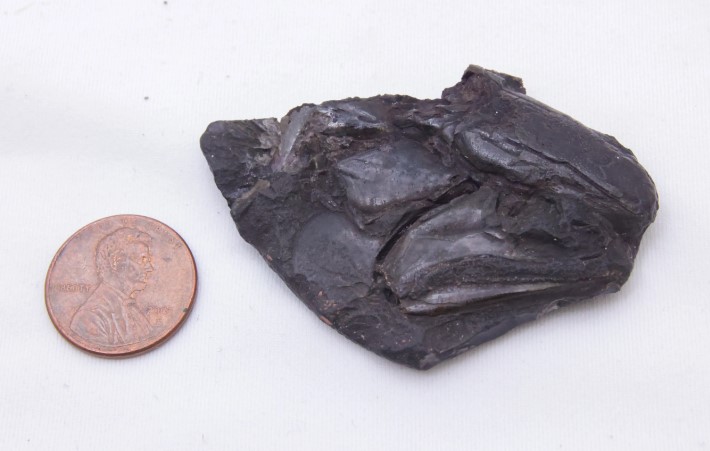 Fossilized skull of Coccocephalus wildi outside. Photo: Jeremy Marble/University of Michigan News
Scientists are used to finding fossilized remainsancient animals. These are usually bones because soft tissue decomposes quickly. However, in the case of the fish Coccocephalus wildi, a dense mineral, possibly pyrite, seeped into the skull and replaced brain tissue. So, after hundreds of millions of years, scientists have obtained details of the cranial nerve and soft tissues of an ancient individual.
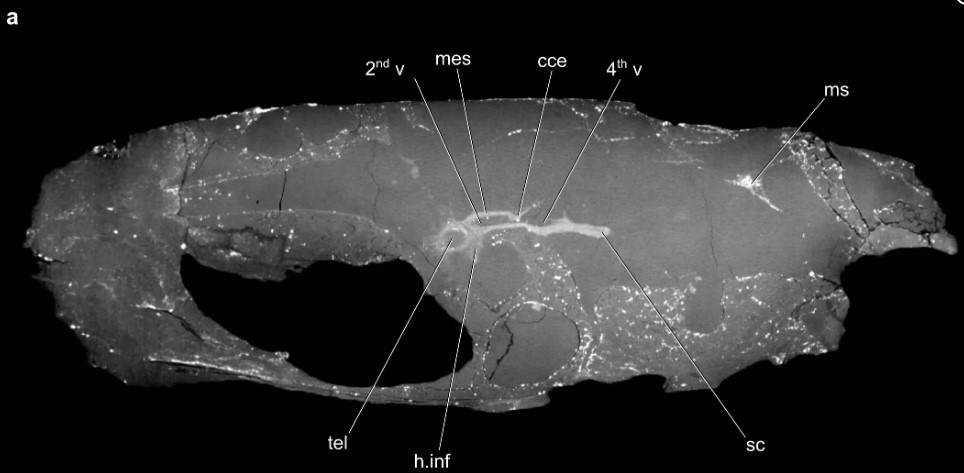 One of the CT images of the skull of Coccocephalus wildi. The lines indicate the parts of the brain inside. Credit: Figueroa et al./Nature
Coccocephalus wildi is a species of ray-finnedfish, including swordfish and trout. It is a diverse group with approximately 30,000 species. The brain of Coccocephalus wildi resembles that of the paddlefish and sturgeon, which are considered “primitive” fish because they diverged from other ray-finned individuals more than 300 million years ago.
The fossil itself was found in a coal mine in England more than a century ago.
Read more:
Scientists have named the top 6 ways to "save" the memory of older people
A mysterious imprint underground surprised scientists. He is over 1000 years old
Sword thought to be fake turns out to be a 3,000-year-old Bronze Age artifact
On the cover: Artist's impression of Coccocephalus wildi, Marcio L. Castro