The world's largest communications satellite, which outshines almost all stars at night, scientists warn
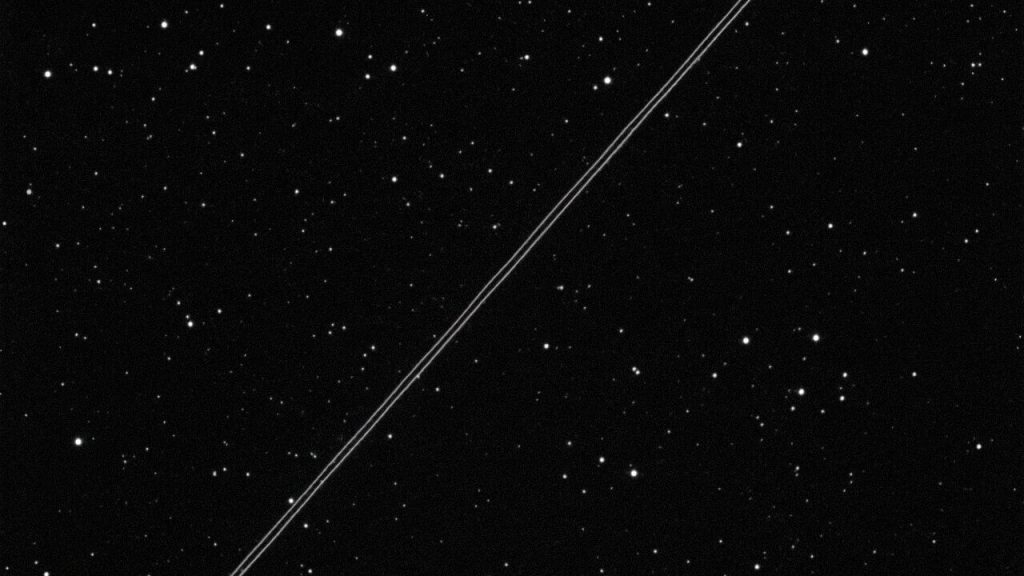
However, the massive orbital "cell tower"communications" creates not only visible but also invisible interference that could "seriously interfere with our understanding of the cosmos," representatives of the International Astronomical Union said.
BlueWalker 3 is a prototype antennadesigned and built by Texas communications company AST Space Mobile. The satellite was launched into low-Earth orbit on September 10, and the massive communications system has been operational since November 14. BlueWalker 3 is equipped with a mirror dish whose surface area is approximately 64 m². This makes the satellite the largest commercial communications system ever launched into orbit.
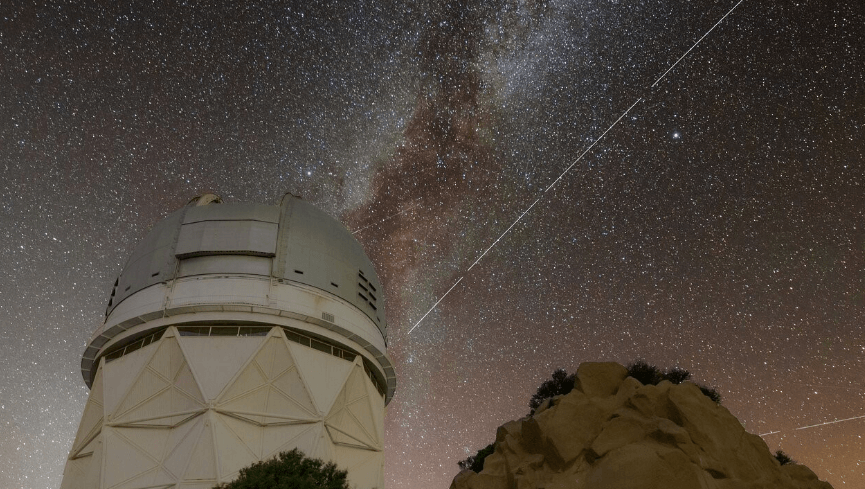 Footprints in the night sky left by BlueWalker 3compared with the 4-meter Nicholas W. Mayall Telescope at the Kitt Peak National Observatory in Arizona. Image credit: KPNO/NOIRLab/IAU/SKAO/NSF/AURA/R. Sparks
The problem is that the huge satellite dishreflects enormous amounts of sunlight onto the Earth's surface, the IAU's Center for the Protection of Dark and Calm Skies from Satellite Constellations (CPS) said in a statement. Astronomers have published photographs taken at observatories around the world that show the satellite as a continuous bright white line in the sky.
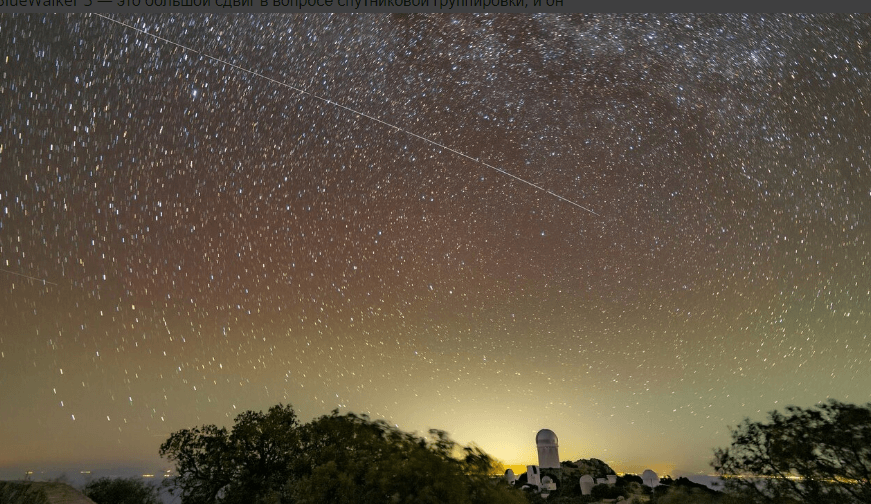 Footprints in the night sky left by BlueWalker 3compared with the 4-meter Nicholas W. Mayall Telescope at Kitt Peak National Observatory. Image credit: KPNO/NOIRLab/IAU/SKAO/NSF/AURA/R. Sparks
In the future, AST plans to launch a fleet of "more than 100 similar or larger satellites" to build a worldwide mobile network.
IAU representatives stated that astronomicalThe community recognizes that commercial satellites play an important role in improving global communications systems, but argues that their deployment "should be done with consideration of their side effects and efforts to minimize their impact on astronomy."
Read more:
Does science exist in extreme conditions? We answer in numbers
The Yellowstone supervolcano turned out to be many times more dangerous than scientists thought
The egg was dropped from space: look what happened to it
Cover: BlueWalker 3, image courtesy of AST Space Mobile
</ p>