During mating season, many seals spend hours spotting the beach.Biologists have well studied their habits in such
The researchers placed on the head of theseanimal electrodes for collecting electroencephalogram (EEG) to monitor brain activity. The electrodes and data recorder were covered with a special protective neoprene cap. In addition, the scientists used tracking equipment, including time and depth recorders and accelerometers, to monitor the seals' movements.
The researchers collected EEG and dive data from13 northern harbor seals and supplemented them with dive depth data previously obtained for 334 other adult seals during hunts. Analysis shows that while living at sea, these animals sleep only about two hours during the day. In this case, sleep is divided into short periods of about 10 minutes. at once.
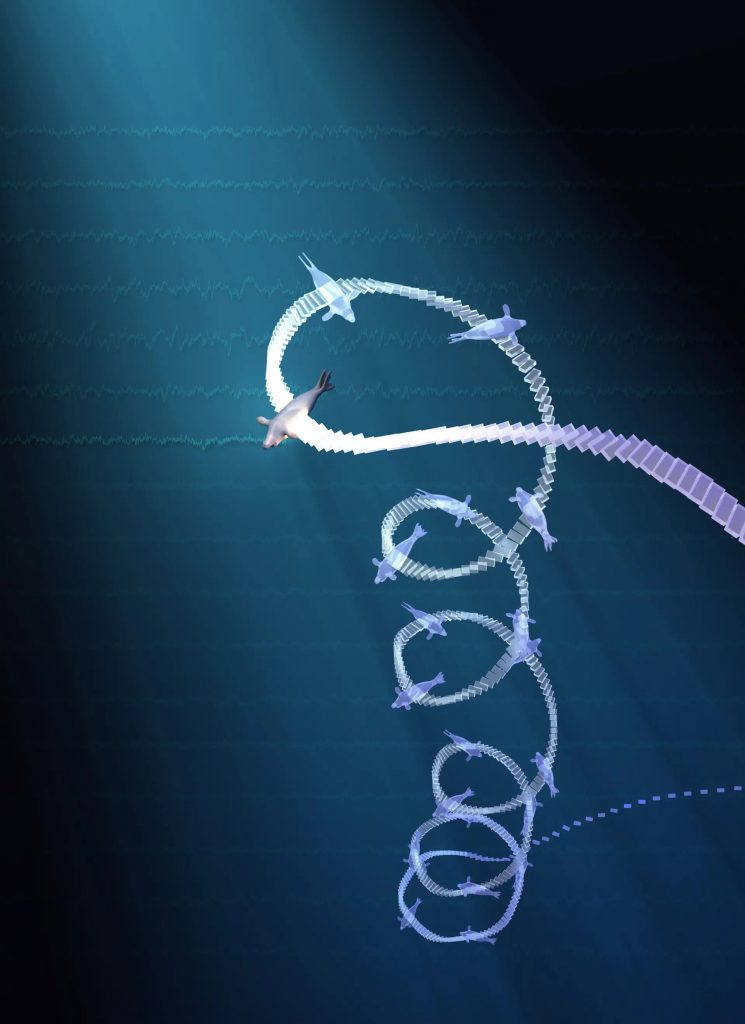 During deep sleep, seals descend to the bottom, moving in a spiral. Image: Jessica Kendall-Bar
The seals slowly descend in a spiral duringsleep, sometimes actually lying on the seabed. At the same time, animals reach depths where their predators are rare. Scientists note that most shark and killer whale attacks on elephant seals occur when the seals are awake and come to the surface to breathe.
Elephant seals are unusual in that they switchbetween long sleeps of more than 10 hours a day when they are on land and two hours or less when they are at sea. These animals can hold their breath for a long time, so they can fall into deep sleep while diving deep below the surface, where they are not in danger.
Jessica Kendall-Bahr, study co-author
Read more:
There was a photo inside the second deepest underwater sinkhole in the world
See what happened to Mercury when it got as close as possible to the Sun
Scientists are ready to recognize the new tree as the oldest in the world