Color images taken by astronauts and cosmonauts aboard the International Space Station -
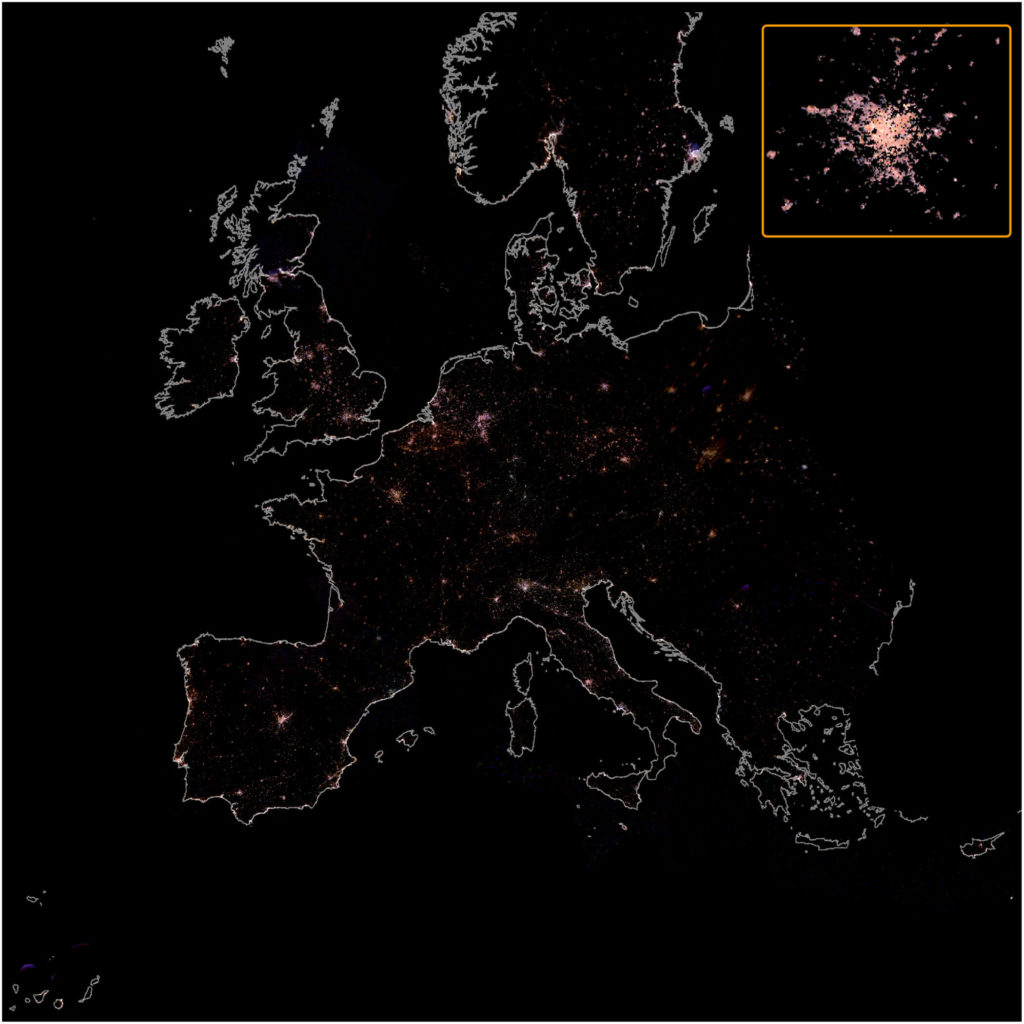 Color map of Europe at night (2014–2020), inset shows Paris. Image: ESA, NASA, A. Sánchez de Miguel
The created color map of night Europe showsthat the majority of residents of this part of the world live in conditions of constant heavy pollution: cities have become lighter at night, and the radiation spectrum has shifted towards white and blue colors. If general trends continue, by the end of the decade all of Europe will look from space like one continuous white spot, scientists warn.
Biggest impact on the lightscapethe spread of energy-saving technologies has had an impact. This is confirmed by uneven changes. They vary by country and reflect different approaches to street lighting.
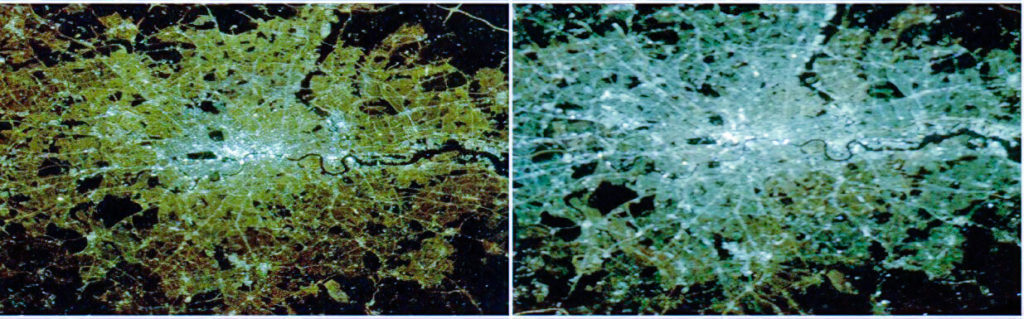 London from space at night.The image on the left was taken in 2012 by astronaut André Kuipers, while the image on the right was taken in 2022 by Samantha Cristoforetti. By early 2019, over half of UK street lighting had been converted to LED. Image: ESA, NASA, A. Sánchez de Miguel
In Italy and Great Britain, which were the firstswitched to the use of LED lights, for example, there is a noticeable increase in light noise. And in countries such as Germany and Austria, which still use a large number of fluorescent and mercury lamps, the shift is not so noticeable.
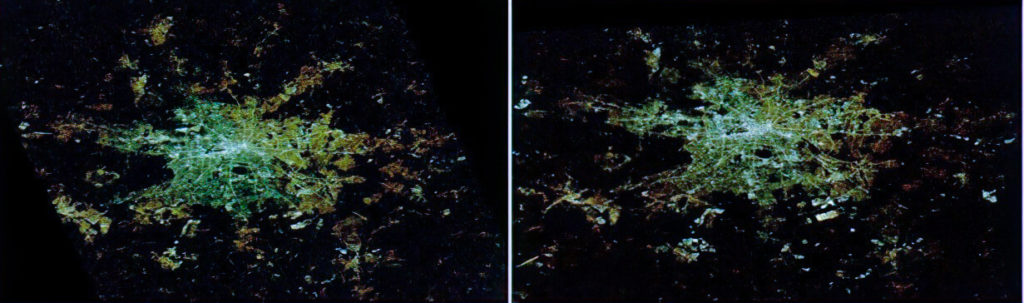 Berlin from space at night. The image on the left was taken in 2012 by astronaut André Kuipers, while the image on the right was taken in 2022 by Samantha Cristoforetti. Image: ESA, NASA, A. Sánchez de Miguel
Scientists note that all changes lead to threenegative effects. Firstly, light noise at night suppresses the production of melatonin and negatively affects the quality of sleep and health of a European. Second, bright light has a direct effect on nocturnal insects and bats, altering their ability to move and causing phototoxic reactions. Finally, pollution limits opportunities for stargazing.
The transition to LED lighting wasreduce energy consumption, but cost reductions have led to massive demand for additional lighting. Paradoxically, by reducing consumption from one flashlight, people began to install several times more sources of "cheap" light, the scientists conclude.
The researchers believe that further planning of street lighting energy efficiency programs should take into account the potential harmful effects on humans and animals.
Read more:
NASA satellite detects massive gas release near Russia
Scientists have seen what is on the territory of the Mayan capital. The find surprised them.
It turned out what happens to the cells of the body when the heart dies
On the cover: The Iberian Peninsula from space in 2022. Image: NASA, B. Hines