The image was taken when the mission orbited Jupiter 43 times.This happened on July 5, when Juno flew over
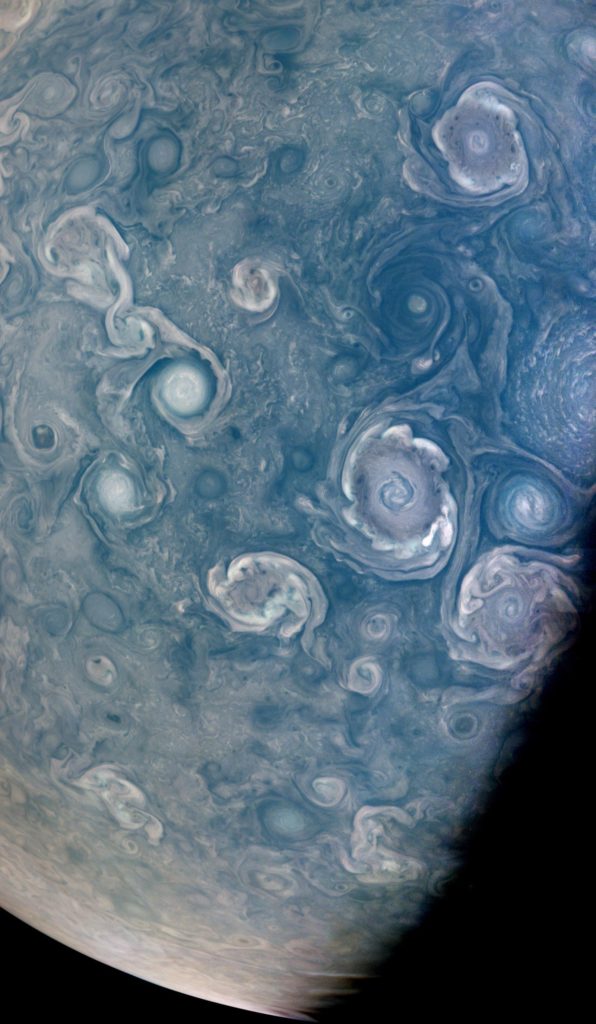 Photo: NASA
The storms seen in the image can be about 50 km high and stretch for hundreds of kilometers.
If it is possible to understand how such weather patterns are formed, it will helplearn a lot about the structure of Jupiter's atmosphere.
Each of Jupiter's poles has its own storms.There were six cyclones at the south pole, each of which is comparable in size to the continental United States. One cyclone is located in the center and five around it in an almost perfect pentagon. They all rotate clockwise.
The North Pole is even stranger: Scientists have found nine storms there, eight of which are located around one.They all rotate counterclockwise.
And in the high-latitude regions, other vortices rage around these polar clusters.
Read more:
Scientists filmed a strange creature with tentacles, which they mistook for a flower
The supersonic plane will fly at a speed of 2,000 km/h and cross the ocean in 3.5 hours
Created a quantum computer that "went beyond the binary system"