Utopia Planitia is a large, rounded depression located in the eastern part of the northern hemisphere of Mars.
A large number of ice deposits have been found in this region. Ice was found both on the surface itself and at great depths.
 Panorama of the Utopia Plain, The European Space Agency
To the left and right of the panoramic image are largeflat areas of the surface, known as latent deposits. These are deep layers of rock rich in ice and dust that have "polished the surface". Scientists believe that the icy deposits were formed when Mars' axis of rotation was tilted much more than it is now.
Two impact craters are visible in the center of the image.Mars Express took a detailed picture of this area. To the left of the smaller crater, structures known as the "brain area" can be seen. The deformation of the surface led to the formation of frozen structures resembling convolutions.
 Detail shot. The brain area is located in the center at the top edge of the image, the dust zones are on the left side of the image. The European Space Agency
The area to the right of this craterformed as a result of compression and deformation of the ice-rich surface. These processes have led to the formation of patterns and cracks in which dust gets stuck, making them noticeably darker (can be seen in the detailed images).
In addition, in different parts of the image are visiblerecesses of a round or elliptical shape. The depth of these structures is several tens of meters, and the diameter varies from several tens of meters to several kilometers. Scientists believe that such depressions were formed as a result of the melting of underground ice or its transformation into gas. The release of water vapor leads to the collapse of the surface and the formation of depressions.
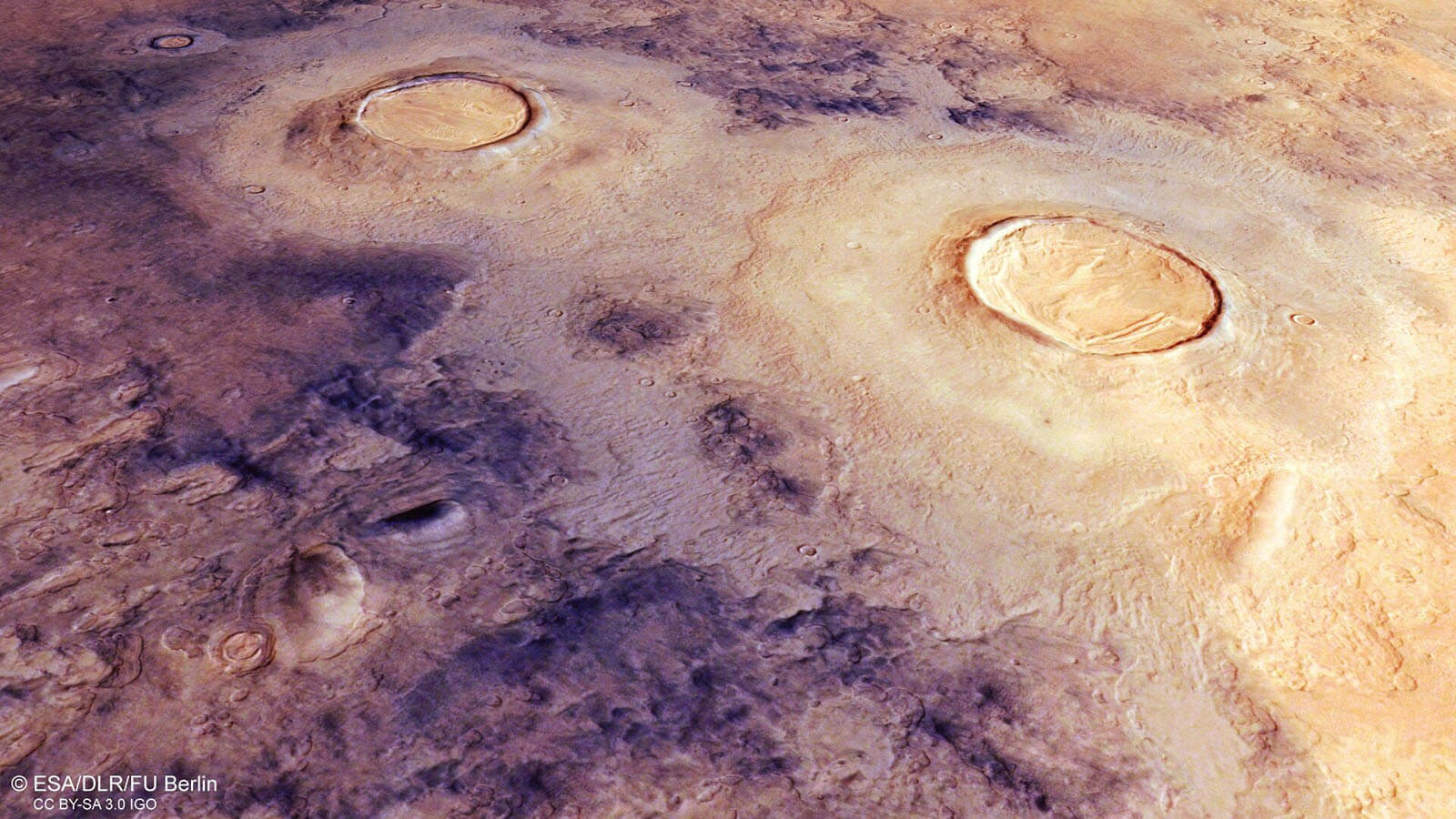 Detail shot. The brain area is on the left, the dust zones are on the right. The European Space Agency
Read more:
Scientists have named the first sign by which to look for extraterrestrial life
Potentially dangerous asteroid will approach Earth on April Fools' Day
Genetics Beat Cat Allergies With CRISPR