Tiny Devices Examining Human Internal Organs, And Surgeons In The Operating Room, Researchers
But all these complex devices would not be possible without individual elements that bring humanity closer in small steps to the creation of "omnipotent" helpers.
My own doctor
No one is immune from harm, and neither are robots.By replicating the appearance and function of humans, humanoids can establish more harmonious and natural interactions with humans, the researchers say. And it's hard to imagine people without skin. Engineers from the University of Tokyo have developed a coating that skillfully mimics human skin and can be used on any android.
Moreover, scientists immediately thought about howthe robot will deal with scratches and cuts: its skin can heal on its own. The whole secret is in human cells. A two-layer epithelium based on living cells not only outwardly imitates the properties of the skin, but can also be restored.
More about development at the link.
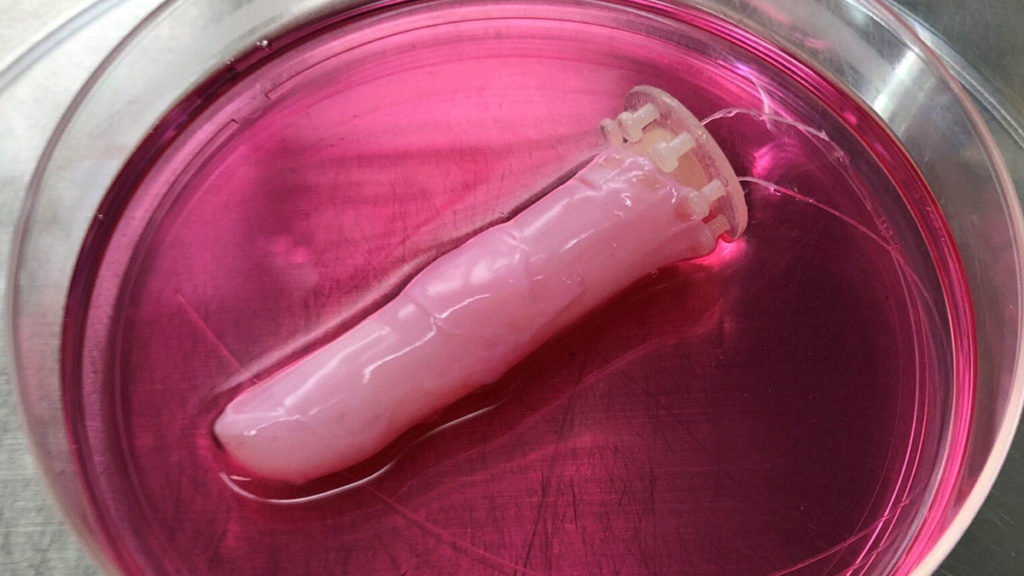 Image: Shoji Takeuchi
The taste of "chewed" foods
Chefs often taste food in the processcooking, to evaluate the content and taste of dishes. Chewing is an important part of tasting. Since different ingredients in a dish undergo certain changes when chewed, chewing helps to understand the composition of food.
Engineers from the University of Cambridge have created an installation that usesmixing to simulate chewing and tasting the dish in two different chewing phases.
More about development at the link.
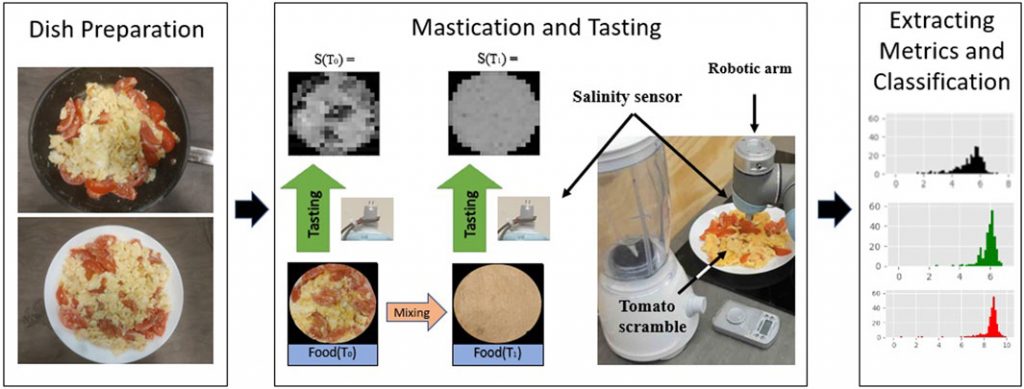 Image: Grzegorz Sochacki et al., Frontiers in Robotics and AI
The secret becomes clear, and the invisible becomes visible
Eyes are one of the main sources of informationfor a person. Computer vision has undergone a significant evolution in recent years, but it also has its own blind spots. Transparent objects remained one of them for a long time - the beam of the computer vision system ignored such obstacles, making them invisible to sight.
But there is a way out.Researchers at the Fraunhofer Institute for Applied Optics and Precision Engineering have combined infrared laser projection and thermography. Together they leave no object unnoticed.
More about development at the link.
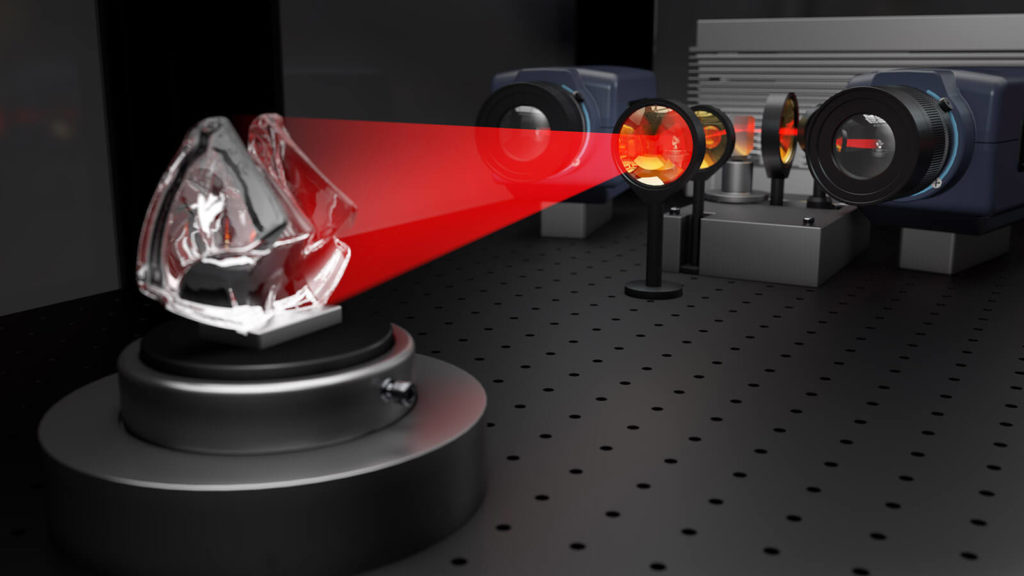 Image: Fraunhofer Institute for Applied Optics and Precision Engineering
What is the strength? Strength in the muscles!
Electrostatic actuators have a simpledesign and low weight, which makes them potentially in demand in robotics. But there is a problem. The scope of such devices is limited, since high voltages in excess of several kilovolts are required for practical use.
Engineers from the Tokyo Institute of Technologyfigured out how to solve this problem. They used ferroelectric materials that exhibit spontaneous polarization. In their study, they showed that such a drive generates 1200 times more force at the same voltage.
More about development at the link.
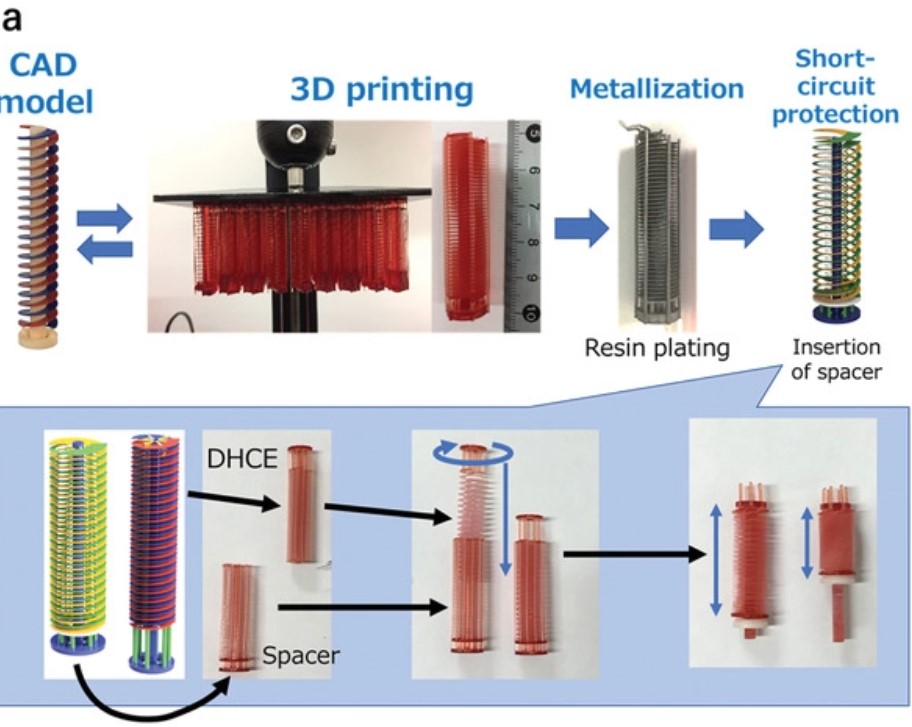 Image: Suzushi Nishimura et al., Advanced Physics Research
"Self-awareness" for a robot
Ideas about oneself and one's body help humans and animals to plan and execute movements.Although we are not yet talking about full-fledged consciousness and intelligence for a robot, still individual components are quite realizable.
For example, researchers at Columbia University have developed a system that helps a robot from the outside "observe" itself, assessing how the body reactsto different impulses, learn and adjust their movements.
More about development at the link.
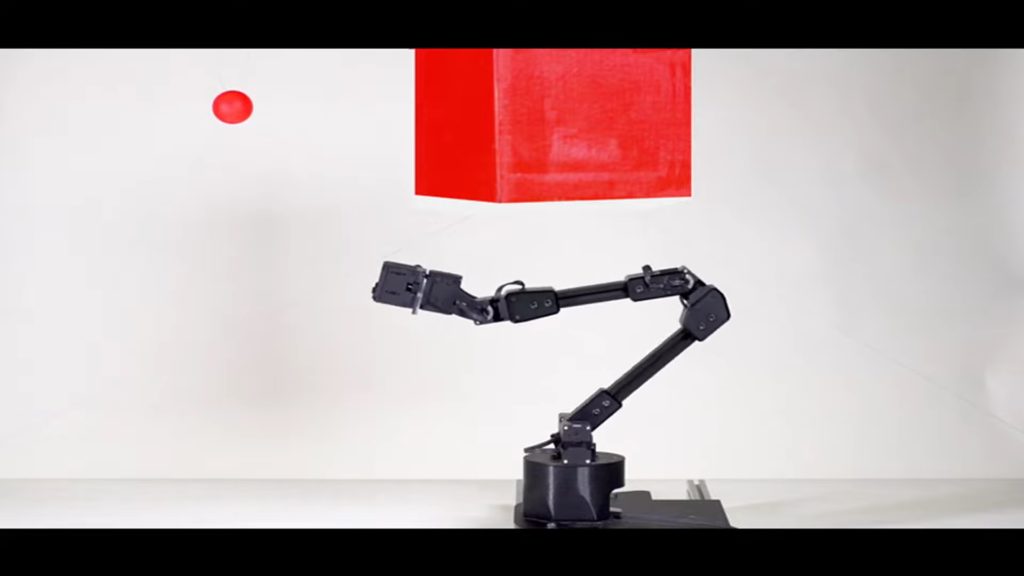 Image: Boyuan Chen et al, Science Robotics
Strong and strong fingers
A robot, like a person, often has to work in unpredictable conditions. Sometimes they need to work with fragile and delicate devices, and sometimes they need to operate in a dangerous environment and avoid injury.
Researchers from Harbin TechnologicalUniversity has developed a compact robotic finger that combines the efficiency of manipulating objects, small size and resistance to external influences. Its secret is in the variable stiffness mechanism suggested by nature.
More about development at the link.
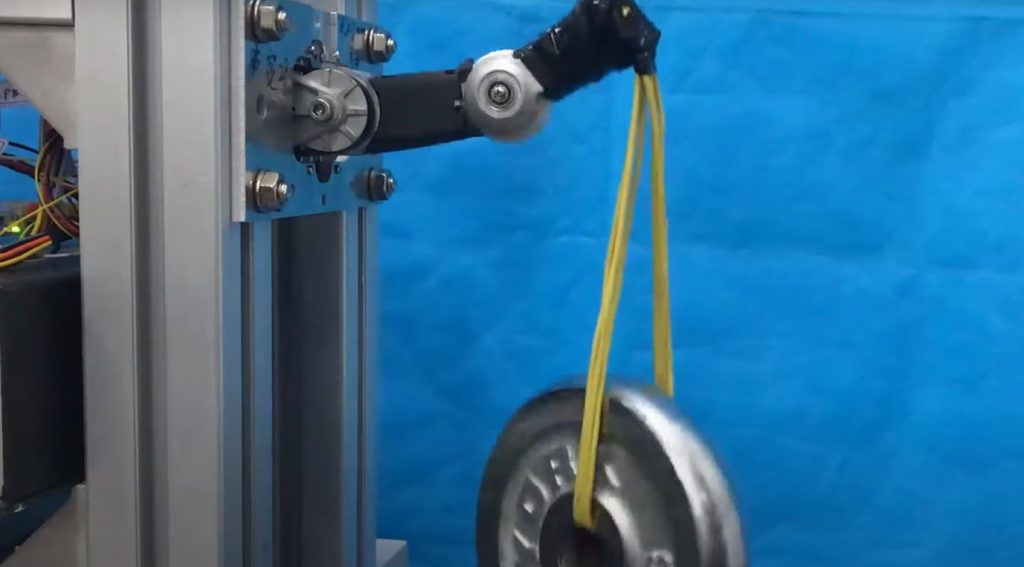 Image: Handong Hu, Yiwei Liu, Zongwu Xie, Jianfeng Yao, Hong Liu
Sensitive palms
Tactile sensations are another source of information about the outside world.Researchers from the University of Bristol have managed to endow a robotic arm with these properties.As in the previous development, it was inspired by living organisms.
The robotic finger can sense through small, pin-shaped papillae at the tip of the finger. Similar structures lurk, for example, inside human skin.
More about development at the link.
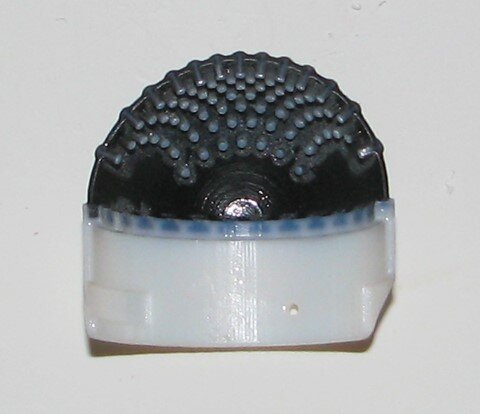 Image: Nicholas Pestell et al., University of Bristol
Ready-made robot from the printer
Even a single hand requires many complexelements, what to say about a full-fledged android. However, scientists at the University of Colorado at Baudelaire dream of building a robot that can simply be 3D printed. This requires a printing method that mixes solids and liquids.
Although it is too early to talk about a full-fledged android,but the technology seems promising; it can be used to print a finished structure with embedded wires, or even models that mimic the softness of real human organs.
More about development at the link.
Read more:
A shock wave from the Sun has opened a crack in the Earth's magnetic field
17-year-old engineer came up with a magnetless motor: it can be used in electric vehicles
Two planets have been found not far from Earth. Perhaps they are inhabited