Engineers from Ritsumeikan University in Japan have developed a soft micro-robotic finger that
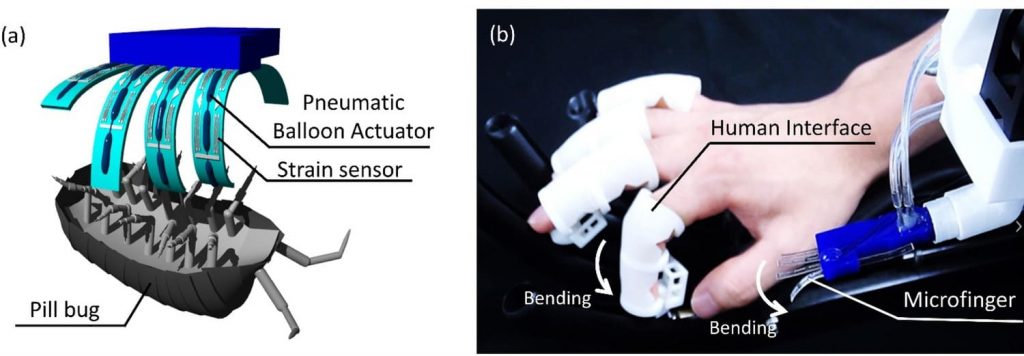 Sensitive microfinger. Image: Satoshi Konishi et al., Scientific Reports
Although the microscope allows us to see and observebehind tiny animals and even bacteria, it is still difficult to interact with it directly, scientists explain the idea of their work. A tiny finger solves this problem: it can directly affect microorganisms and record their behavior.
The tactile properties of the microfinger are provided withusing a flexible liquid metal strain gauge. The soft pneumatic actuator acts like an artificial muscle that controls and moves the transducer. With the robotic glove, the human user can directly control the microfingers.
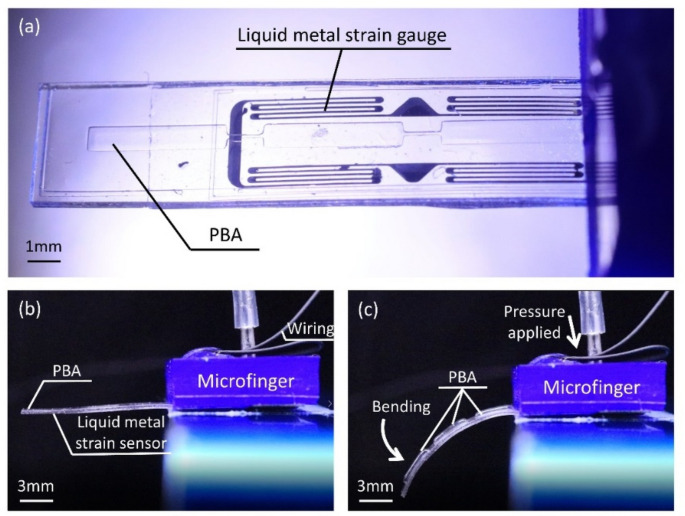 Robotic finger device. Image: Satoshi Konishi et al., Scientific Reports
To check the performance of the device,Scientists have measured the reaction force of the legs of a beetle from the family of wood lice. The beetle was fixed in place with a special clamp, and a microfinger was used to apply force and measure the reaction force of the beetle's legs. The data showed that the resistance force that the beetle's legs exert under external influence is about 10 mN.
Researchers believe that usingWith robotic gloves and sensitive instruments such as tiny fingers, it is possible to realize many augmented reality technologies concerning human-environment interaction at the micro level.
Read more:
Named the consequences of the last solar storm that hit the Earth
A massive impact from a space object triggered the Earth's magnetic field
A huge tunnel under the Egyptian temple “hidden” mysterious artifacts