Researchers at the Cold Spring Harbor Laboratory have developed an antibiotic that resists
At the heart of the development is a molecule calledbullvalen. This is a flux molecule, the atoms of which can change places. The scientists used click chemistry (a method that was awarded a Nobel Prize in 2022) to create a structure from two molecules of the existing antibiotic vancomycin connected by bullvalene.
The changing order of atoms in bullvalene leads tothe fact that the finished drug does not have a rigid chemical structure and can take more than a million configurations. As a result, the drug overcomes the defenses developed by resistant bacteria, and the active substance effectively fights deadly infections.
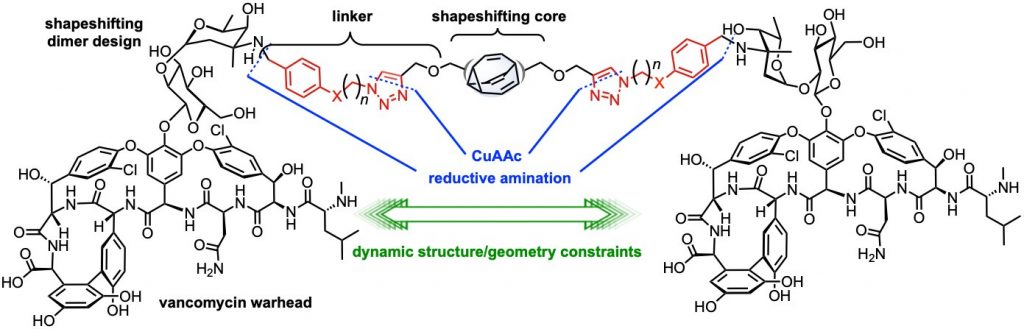 The structure of the drug: two molecules of vancomycin linked by a component with a dynamically changing structure. Image: CSHL
Researchers tested the effectiveness of a newmedicines on wax moths infected with bacteria resistant to vancomycin enterococcus. These animals are used as model organisms in many antibiotic studies. The analysis showed that molecules with a dynamically changing structure were more effective in treating infection than classical vancomycin. At the same time, the intake of the modified drug did not cause the formation of resistance in bacteria.
Antibiotics are necessary and effective, but theyactive use has led to the fact that some bacteria have developed resistance to them. Infections are so difficult to treat that the WHO lists antibiotic resistance as one of the top ten global public health threats. The researchers believe that using the proposed method, it is possible to restore the effectiveness of existing drugs.
Read more:
Scientists have figured out the nature of strange radio signals from a planet similar to Earth
Experts have predicted how many people will live on Earth by 2100
New type of black hole found lurking in Earth's 'cosmic backyard'