In a study published in the journal Science Advances, scientists from Ohio State University presented
The device is made of ultra-thin materials.This design makes it very flexible, protects the functionality of the device and ensures safe contact with human skin. Biosenesr is fixed on the chest like a necklace. The device does not need a battery. To work, it uses a resonant circuit that reflects the RF signals sent by an external reading system.
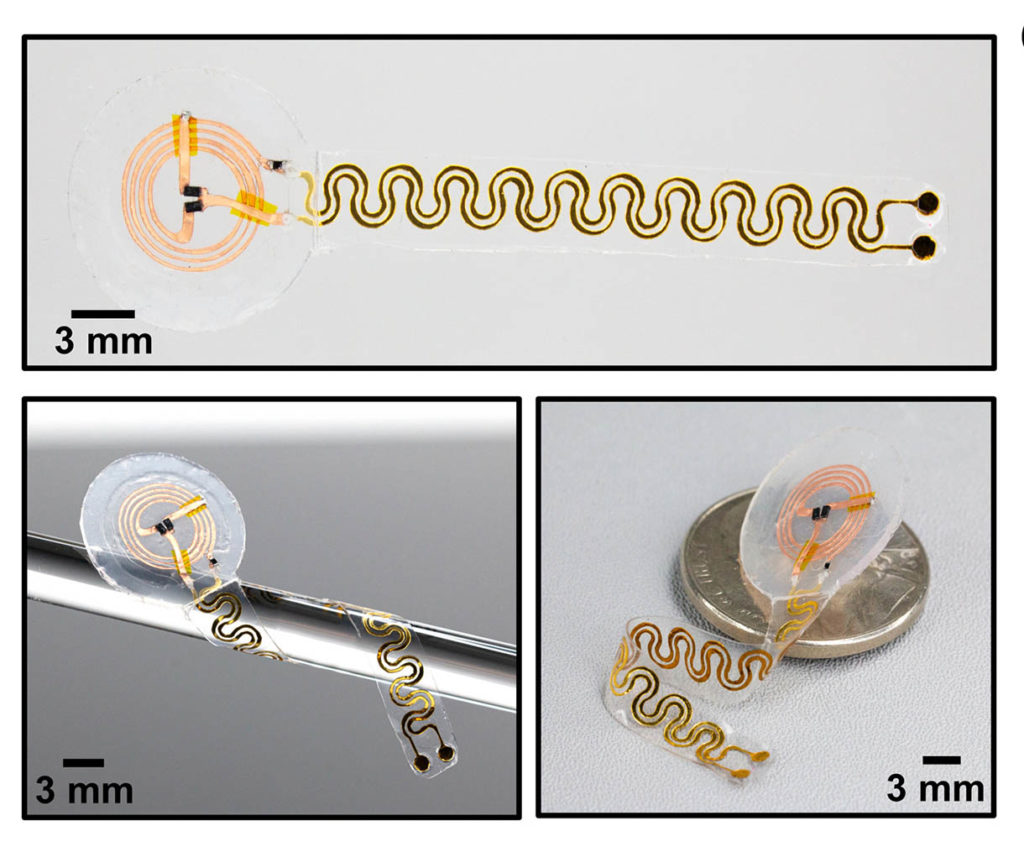 Wearable sensor. Image: Tzu-Li Liu et al., Science Advances
Scientists tested the operation of the device on a seriesvolunteers. Participants in the experiment performed exercises on exercise bikes, and drank sweetened water in between. The study showed that the sensor correctly detects the change in blood glucose levels based on a small amount of sweat.
Biomarkers are substances that canreveal the innermost secrets of the body, say the authors of the work. Human body fluids, including sweat, tears, saliva and urine, can contain everything from disease, infection to evidence of emotional trauma.
In addition to analyzing the composition of sweat,the researchers believe this sensor could be used as a bioimplant to detect neurotransmitters and hormones. This will help to identify, for example, ionic disorders in the cerebrospinal fluid associated with secondary brain damage, and to learn more about the internal processes in the human body.
We hope that eventually these sensorscan be easily integrated into our personal belongings. Someone will wear a necklace, someone - earrings or rings. We think these sensors can be put into something we all wear and that will help us better track our health.
Jinghua Li, study co-author at Ohio State University
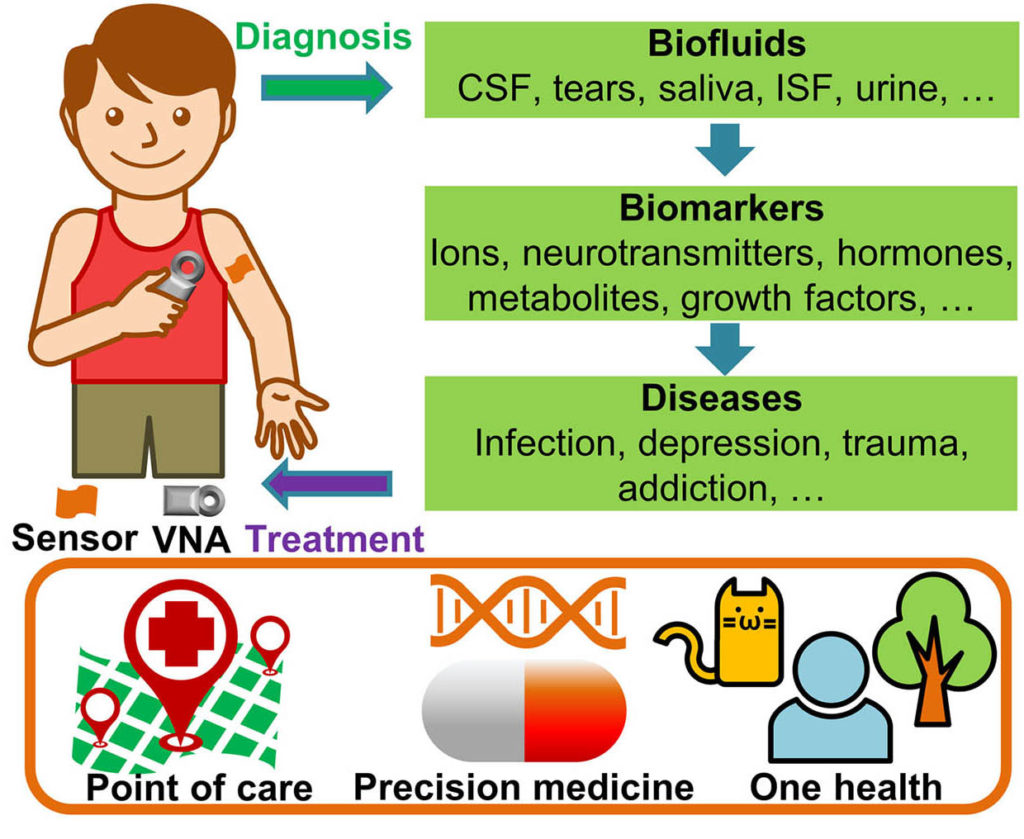 The proposed scheme of the device.The sensor reads health indicators, determines the risk of a disease and informs the user about the need to contact the clinic using an external device. Image: Tzu-Li Liu et al., Science Advances
Read more:
A strange phase of matter has been discovered that occupies two time dimensions at once
Archaeologists have found drawings of creepy people with huge heads: who they were
Archaeologist robot dives 1,000 meters underwater to inspect sunken ship