Many modern fitness trackers and smartwatches have built-in LEDs. Green light emitted
A team of scientists from ETH Zurich usedLEDs to control genes and change cell behavior through the skin. To do this, they developed a molecular switch that, once implanted, is activated by the green light of the smartwatch. It is linked to a gene network that researchers have inserted into human cells.
For the prototype, HEK 293 elements were used.Depending on the configuration of this network - in other words, the genes it contains - it can produce insulin or other substances as soon as cells are exposed to green light. Turning off the light, in turn, stops the process.
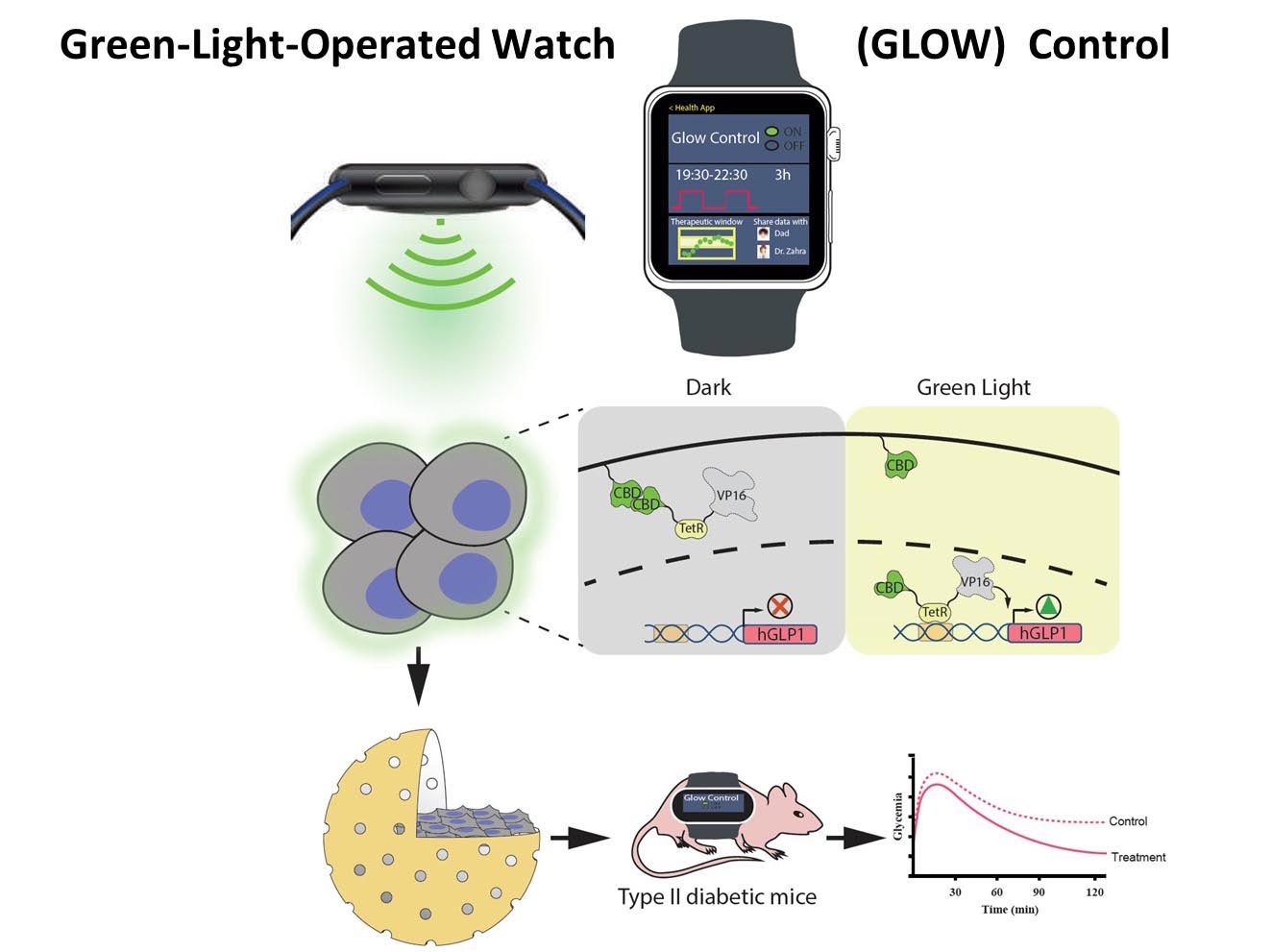 Gene network regulated by green light.Mansouri M, Hussherr MD, Strittmatter T, Buchmann P, Xue S, Camenisch G, Fussenegger M, June 7, 2021, Nature Communications. DOI: 10.1038/s41467-021-23572-4
The scientists used standard software for smartwatches; there was no need to develop special programs.
However, the molecular switch is more complex.Scientists have integrated a complex of molecules into the cell membrane with a special element. As soon as the green light turns on, the component that is projected into the cell is separated and transported to the cell nucleus. There, it triggers the insulin-producing gene. When the green light goes out, the disconnected element reconnects with its double embedded in the membrane.
The system has already been tested on mice, and it showed good results.
Read more
It's cool: how smart clothes work Under Armor Iso-Chill and what does titanium dioxide have to do with it
Physicists have recreated the first substance that appeared after the Big Bang
Tiny hydrogen engine replaces fossil fuel counterparts