On Friday, August 6, 2021, the Perseverance rover transmitted data to Earth according to which it drilled on Mars
NASA believes the samples failed due toan unusually soft Martian rock. The engineers determined that the rock was not strong enough to obtain a core sample, or that small powdery fragments remained in the well, or both happened.
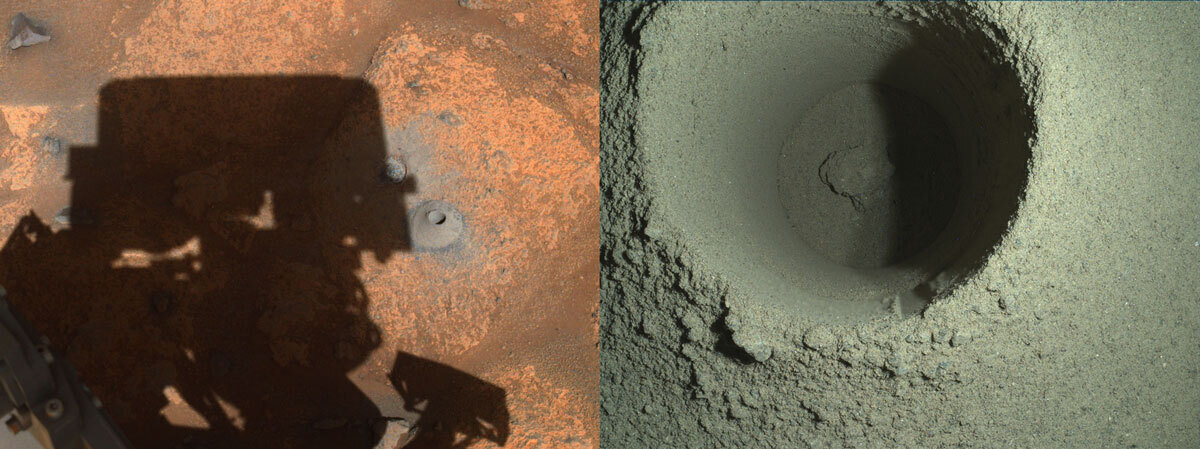
The rover is now heading to the next sampling site, looking for signs of ancient Martian life. He should be there by early next month.
Images taken by the rover and itssatellite helicopter show that the sediment there should be much better for sampling, said Louise Jandura, chief engineer of the Perseverance sampling campaign.
This is not the first time that a Martian spacecraftencounters problems due to the ground. Previously, a German excavator from the InSight apparatus was unable to bury itself more than a couple of tens of centimeters. The lumpy soil does not provide enough friction for the heat measuring device, so the experiment failed.
Read more:
See the fastest hypersonic aircraft
The slowing down of the Earth's rotation caused the release of oxygen on the planet
What Happens to Cryptocurrency: From Rise and Fall to State Recognition